Joe's Vintage Guitars - Preserving History One Guitar at a Time
2026 Value Guide

Martin D-28, D-18 & D-45 Dreadnought Value Guide

Current vintage Martin values by model and era, plus the construction, originality, repairs and provenance that set the final number.

The Short Answer

How Much Is a Vintage Martin Dreadnought Worth?

An excellent, all-original vintage Martin D-18, D-28 or D-45 from 1931 through 1969 can be worth about$3,000 to $675,000. The model and year establish the starting range. Original finish, tonewoods, bracing, repairs, condition, provenance and the original case decide where the guitar falls inside it.

That spread is wide because a 1960s D-18 and one of the 91 pre-war D-45s are completely different markets. Start by identifying the model and serial-number year, then evaluate the wood and construction before using any price. For an exact figure on your guitar, get a free appraisal and I’ll give you a straight answer.

Original 1959 Martin D-28 dreadnought in its green-lined case
An original 1959 Martin D-28. The serial establishes the year; the rosewood body, finish, bridge, pickguard, tuners, condition and case all contribute to the appraisal.

Know the model first

Find the Model and Year Before Estimating Value

The letter D identifies the dreadnought body. The number describes the style and appointment level, including the traditional wood family and trim. It is not a quality grade that can replace the exact year and condition.

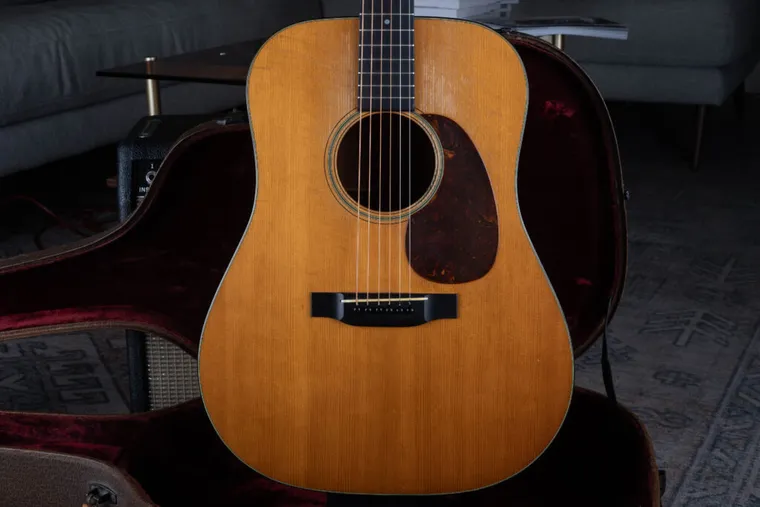
Original 1945 Martin D-18 mahogany dreadnought resting in its case
A 1945 Martin D-18 with the model’s restrained Style 18 appointments.

Martin D-18

The D-18 pairs a spruce top with mahogany back and sides. It is usually the least expensive of these three models, but clean 1930s and wartime examples can still reach six figures. See the complete Martin D-18 guide for year-by-year changes.
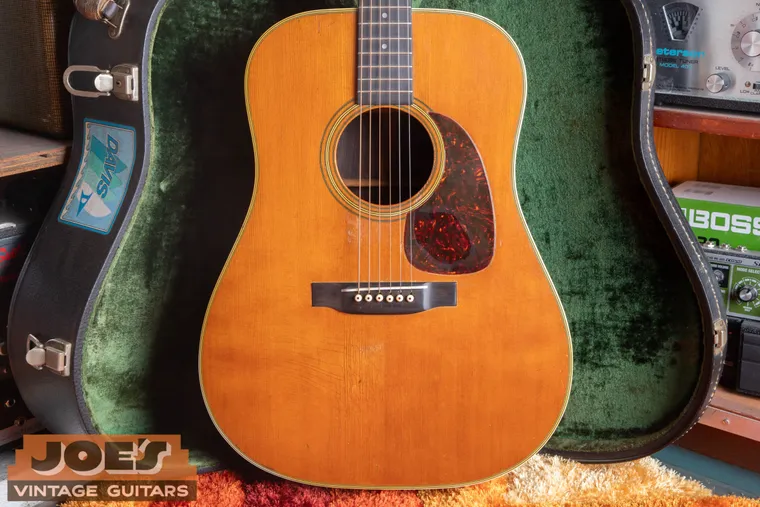
Original 1959 Martin D-28 rosewood dreadnought in its green-lined case
A 1959 D-28 with spruce top, rosewood body and Style 28 trim.

Martin D-28

The D-28 uses rosewood back and sides and sits at the center of the vintage dreadnought market. Pre-1947 herringbone guitars bring the strongest prices, but 1950s and 1960s Brazilian-rosewood examples remain highly collectible. See a documented one-family 1946 herringbone D-28.

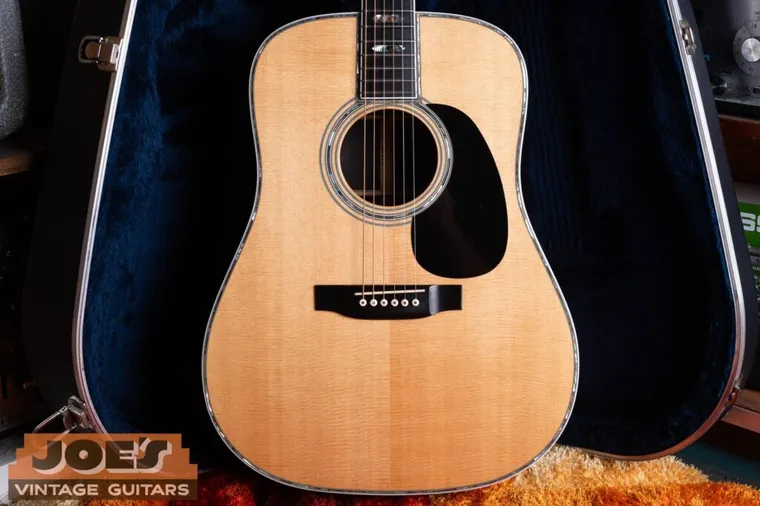
Martin D-45 dreadnought with pearl top border and fingerboard inlays
Style 45 pearl trim is unmistakable, but the neck-block stamp must still confirm the model.

Martin D-45

The D-45 adds extensive pearl trim and Martin’s highest appointment level. Martin made only 91 before discontinuing the model in 1942, then returned it to production in 1968.

Vintage Martin Dreadnought Values

These estimated current retail-market ranges are for excellent, all-original guitars with the original case. They are reference points, not automatic cash offers, auction predictions or insurance replacement values.

Reviewed September 2026. The market moves, and the broad era rows contain important year-to-year differences. Early custom-order D-45s from 1933 to 1935 require individual research rather than a generic range.

Estimated 2026 values for excellent, all-original Martin D-18, D-28 and D-45 dreadnoughts with the original case
Model and EraEstimated Value
D-45 (pre-war, 1936 to 1942)$450,000 to $675,000
D-45 (1968 to 1969)$35,000 to $55,000
D-28 (pre-war, 1931 to 1944)$80,000 to $300,000
D-28 (1944 to 1949)$19,000 to $80,000
D-28 (1950 to 1959)$12,000 to $19,000
D-28 (1960 to 1969)$6,000 to $11,500
D-18 (pre-war, 1931 to 1944)$25,000 to $110,000
D-18 (1944 to 1949)$12,000 to $45,000
D-18 (1950 to 1959)$7,000 to $11,000
D-18 (1960 to 1969)$3,000 to $6,000

Why the year matters

The Martin Changes That Matter to Value

“Old Martin” is too broad for a useful appraisal. These milestones explain why prices can change sharply between guitars that look similar from the front.

1916 and 1931

The Dreadnought Arrives

Martin developed the first Dreadnought for the Ditson company in 1916. Martin-branded D-18 and D-28 production followed in 1931, which is where the value table begins.

1934

The 14-Fret Body Becomes Standard

Martin moved its Dreadnoughts to the longer-looking 14-fret neck layout in 1934. Earlier 12-fret examples are rare and need individual evaluation.

Late 1944

Scalloped Bracing Ends

The wartime change from scalloped to straight bracing is one reason values can move sharply within the 1944 period. Do not price every 1944 guitar from one broad label.

1946

The Original Herringbone Era Closes

The 1946 D-28 is a transition-year guitar and the last original-production year associated with herringbone top trim before the postwar Style 28 look took over.

1968

The D-45 Returns

Martin reintroduced the D-45 after a production gap that began after 1942. A 1968 or 1969 D-45 belongs in a different market from one of the 91 pre-war examples.

1969

Rosewood Changes

Martin ceased using complete Brazilian-rosewood back-and-side sets in standard production during 1969 and moved to East Indian rosewood. Serial number and wood identification both matter on a transition-year guitar.

Martin’s museum history identifies the 1916 Dreadnought origin, the 1931 D-18 and D-28 and the 1934 14-fret transition. Its pre-war D-45 history confirms the 91-guitar total, and Martin’s official FAQ dates the end of complete Brazilian-rosewood back-and-side sets in standard production to 1969.

Look at the back and the year

Brazilian vs. East Indian Rosewood: How It Affects Martin Value

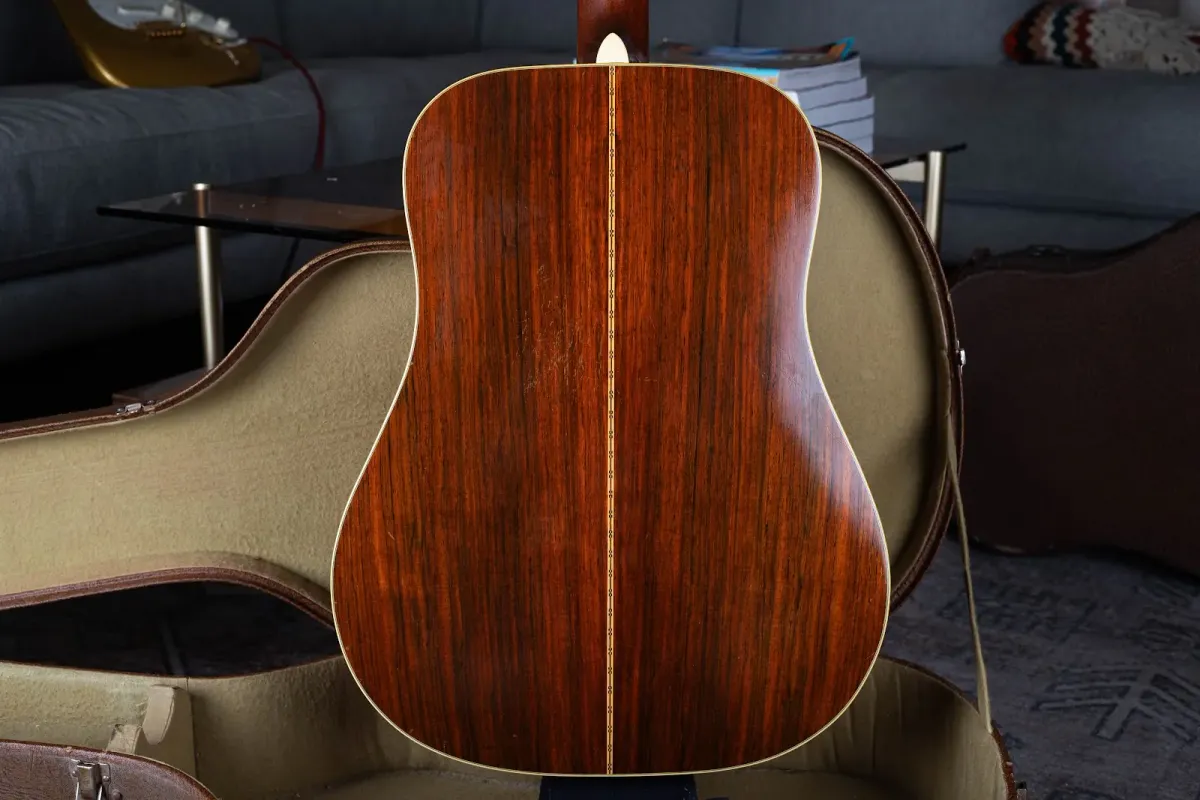
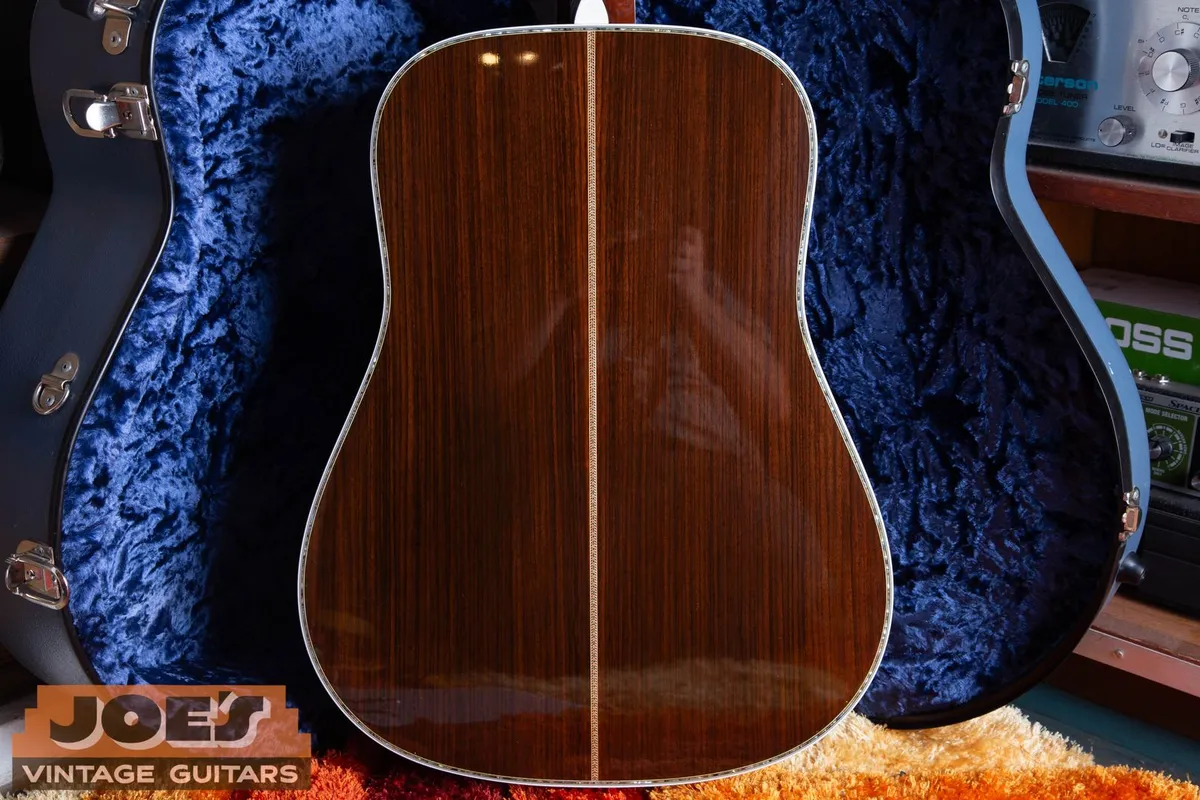
Brazilian and East Indian rosewood can overlap in color and grain, so a photograph is a clue rather than proof. Start with the serial-number year and factory specification, then use the back and sides as supporting evidence. These two Martins show useful real-world examples under different lighting.

Back of a 1947 Martin D-28 showing Brazilian rosewood grain
1947 Martin D-28: Brazilian rosewood

Brazilian Rosewood

This 1947 D-28 has a warm red-brown field, strong dark lines and visible variation through the bookmatched back. Brazilian sets can also be much straighter or more dramatically figured than this one.

Back of a Martin D-45 showing East Indian rosewood grain
Martin D-45: East Indian rosewood

East Indian Rosewood

This D-45 shows the tighter, straighter and more parallel grain often seen in East Indian rosewood, with a dark brown to purplish cast. Other East Indian sets can be lighter, wider-grained or more figured.

Use the Date First

Martin states that it ceased using complete Brazilian-rosewood back-and-side sets in standard production during 1969 and moved to East Indian rosewood. A transition-year guitar still deserves individual review.

Do Not Rely on Color Alone

Finish aging, photography, lighting and natural variation can make either species look red, brown, purple or nearly black. Straight grain does not automatically mean Indian, and dramatic figure does not automatically mean Brazilian.

Confirm the Wood Before Applying a Brazilian-Rosewood Premium

Check the serial number, model specification, repair history and provenance together. The Brazilian-rosewood premium should not be applied from one back photo without supporting evidence.

Source for Martin’s production change: C. F. Martin & Co. official FAQ.

What Determines a Vintage Martin’s Value?

I work from permanent construction details toward replaceable parts. The serial number establishes the year, but a serial number by itself cannot tell you whether the top, finish, bridge or braces are original.

Age

A 1937 scalloped-brace dreadnought and a 1967 guitar are not in the same market. Date the guitar from the neck-block serial, then confirm that its construction fits the year.

Model

D-18s use mahogany back and sides. Vintage D-28s and D-45s use rosewood, and standard production changed from Brazilian to East Indian rosewood in 1969.

Originality

The finish, top, bridge, bridge plate, braces, tuners, pickguard and hardware all matter. A replaced bridge is not the same deduction as a replacement top or full refinish.

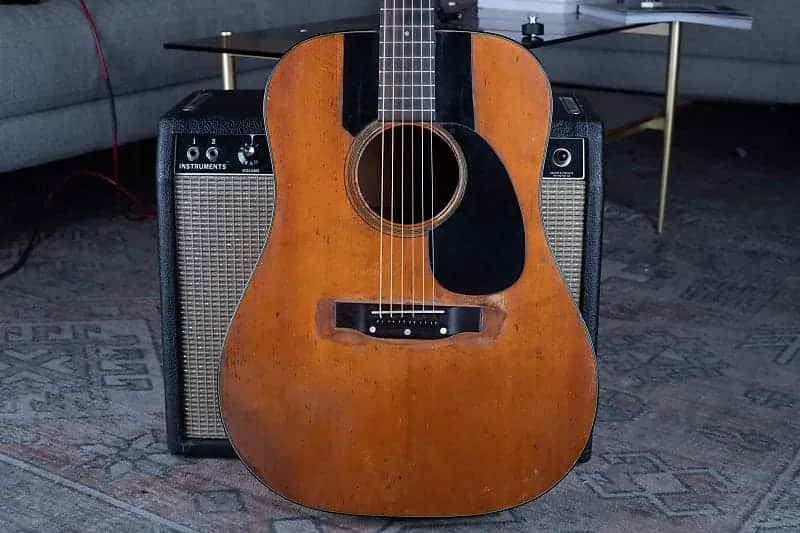
Full front of a heavily played 1951 Martin D-18 showing honest wear across the spruce top
Honest play wear on a 1951 D-18 is not the same thing as a refinish or structural damage. Condition has to be described, not reduced to whether the guitar looks new.

What Lowers a Vintage Martin’s Value?

The largest deductions come from missing original material, altered wood and work that is difficult to undo. Routine maintenance and irreversible modification should never be put in the same bucket.

Common repairs, changes and condition issues that affect vintage Martin dreadnought values
IssueWhy It Matters
Refinish, Overspray or Heavy Touch-UpOriginal lacquer carries a major premium. The size of the deduction depends on how much finish was changed and whether the work hides other repairs.
Replacement Top or RetopThe top contains the bridge, bracing and much of the guitar’s acoustic identity. A retop is a much larger change than routine maintenance.
Replaced or Enlarged Bridge PlateAn oversized plate adds weight and changes the interior. Originality, footprint and the quality of any repair all affect the appraisal.
Shaved or Replaced BridgeA shaved bridge can signal an attempt to postpone a needed neck reset. A correct replacement is preferable to poor work but is still not the original part.
Cracks and Brace RepairsLocation, length, stability and repair quality matter. A cleanly repaired side crack is not priced like a damaged top or a poorly repaired headstock.
Changed Tuners, Pickguard or HardwareReversible changes usually cost less than altered wood or finish. Keep every original part with the guitar, even if it is no longer installed.
Needed Neck ResetHigh action with little saddle remaining creates a real repair expense. A well-executed, documented reset can improve saleability and usually carries less penalty than leaving the guitar unplayable.

Do not refinish, reglue, replace or aggressively clean anything before an appraisal. Keep loose tuners, bridge pins, pickguards, cases, receipts and repair invoices with the guitar.

Joe’s appraisal process

How I Determine a Vintage Martin Dreadnought’s Value

  1. 01
    Read the Neck Block

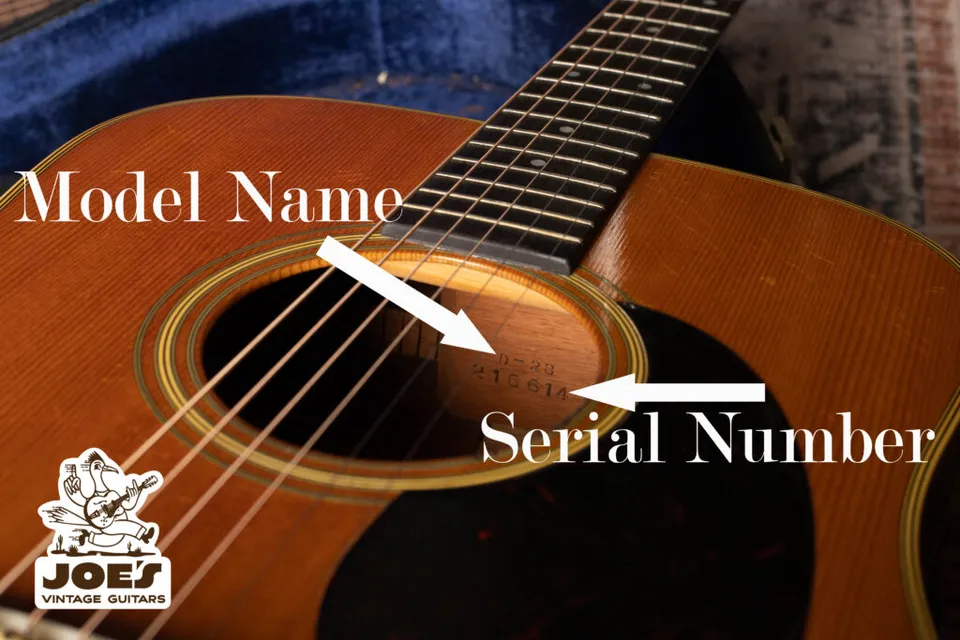
    Photograph the model and serial stamped inside the soundhole. Martin’s sequential serial chart establishes the year.

  2. 02
    Confirm the Specification

    Check the body shape, tonewoods, bracing, trim, neck, bridge, pickguard and tuners against the model and year.

  3. 03
    Separate Maintenance From Modification

    Document neck resets, refrets and crack repairs separately from refinishing, retopping, bridge-plate alteration or replaced braces.

  4. 04
    Inventory the Original Parts

    Record the bridge, tuners, pickguard, pins, nut, saddle and case. Keep removed parts, receipts and repair invoices with the guitar.

  5. 05
    Compare the Right Market

    Compare sold and offered guitars of the same model, era, originality and condition. A record price for a famous pre-war example is not a general price guide.

Martin model and serial number stamped on the neck block inside the soundhole
Look through the soundhole toward the neck. Photograph the model and serial stamp without adding chalk, pencil or cleaner.

Selling Your Vintage Martin

Consign It

I handle the photography, listing, authentication, buyer questions and insured transaction. Consignment runs from as low as 8% on top-tier instruments.

Sell It Outright

Get a straightforward cash offer and payment up front, with me handling the rest. Sell your Martin to me directly.

Sell It Privately

Price it from comparable guitars with the same year, originality and repairs. Disclose every issue and use a written agreement plus trackable, insured shipping.

FAQs:Vintage Martin Dreadnought Values

How much is a vintage Martin D-18, D-28 or D-45 worth?
For the 1931 to 1969 period covered here, excellent all-original examples range from about $3,000 for some 1960s D-18s to $675,000 for the strongest pre-war D-45s. The exact model, year, finish, originality, repairs, provenance and case determine where an individual guitar belongs.
Which is worth more: a Martin D-18, D-28 or D-45?
As a general hierarchy, the D-45 is highest, followed by the D-28 and then the D-18. The exact year can overturn that simple order: a clean pre-war D-18 can be worth more than a much later D-28 or D-45.
What is the difference between a Martin D-18, D-28 and D-45?
The D-18 has mahogany back and sides with restrained Style 18 trim. The D-28 uses rosewood with Style 28 appointments. The D-45 is also a rosewood dreadnought but adds Martin’s highest pearl and inlay treatment.
What does pre-war Martin mean?
Sellers use pre-war loosely, so always ask for the exact serial-number year. In the dreadnought market, the phrase commonly points to the 1930s and wartime Golden Era guitars, especially the scalloped-brace production that ended during 1944.
How do I tell what year my Martin is?
Find the serial number stamped on the neck block inside the body and match it to Martin’s sequential chart. The model is normally stamped on the same block. Use my Martin serial number lookup to check the year.
How can I tell Brazilian rosewood from East Indian rosewood?
Start with the year. Martin stopped using complete Brazilian-rosewood back-and-side sets in standard production during 1969. Grain appearance can help, but photographs and serial context should be reviewed together before applying a Brazilian-rosewood premium.
Does a neck reset lower a vintage Martin’s value?
A needed neck reset lowers the current value because the buyer inherits cost and uncertainty. A clean, correctly performed reset is accepted maintenance on many old Martins and usually matters less than a refinish, replacement top or altered bridge plate.
Should I restore or clean my Martin before an appraisal?
Do not refinish it, replace parts, glue cracks or aggressively clean aged finish and hardware before an expert sees it. Save every loose part and case item. Clear photographs are enough to begin an appraisal.
What photos do I need for a Martin appraisal?
Send the full front and back, both sides of the headstock, the neck-block model and serial, bridge and saddle, pickguard, tuners, case, visible cracks and every repaired area. Add interior bridge-plate and brace photos only if you can take them safely.

Talk With
Joe Today

Have a vintage guitar to sell or a question? I’m here to help.

Best way to reply: (optional)

*If you have photos, you will have the option to upload them after clicking submit