

Les Paul Deluxe Identification · 1969 To 1985
Gibson Les Paul Deluxe Authentication Guide
Start with the mini-humbucker installation, then compare the body, neck and factory markings with the correct production period.
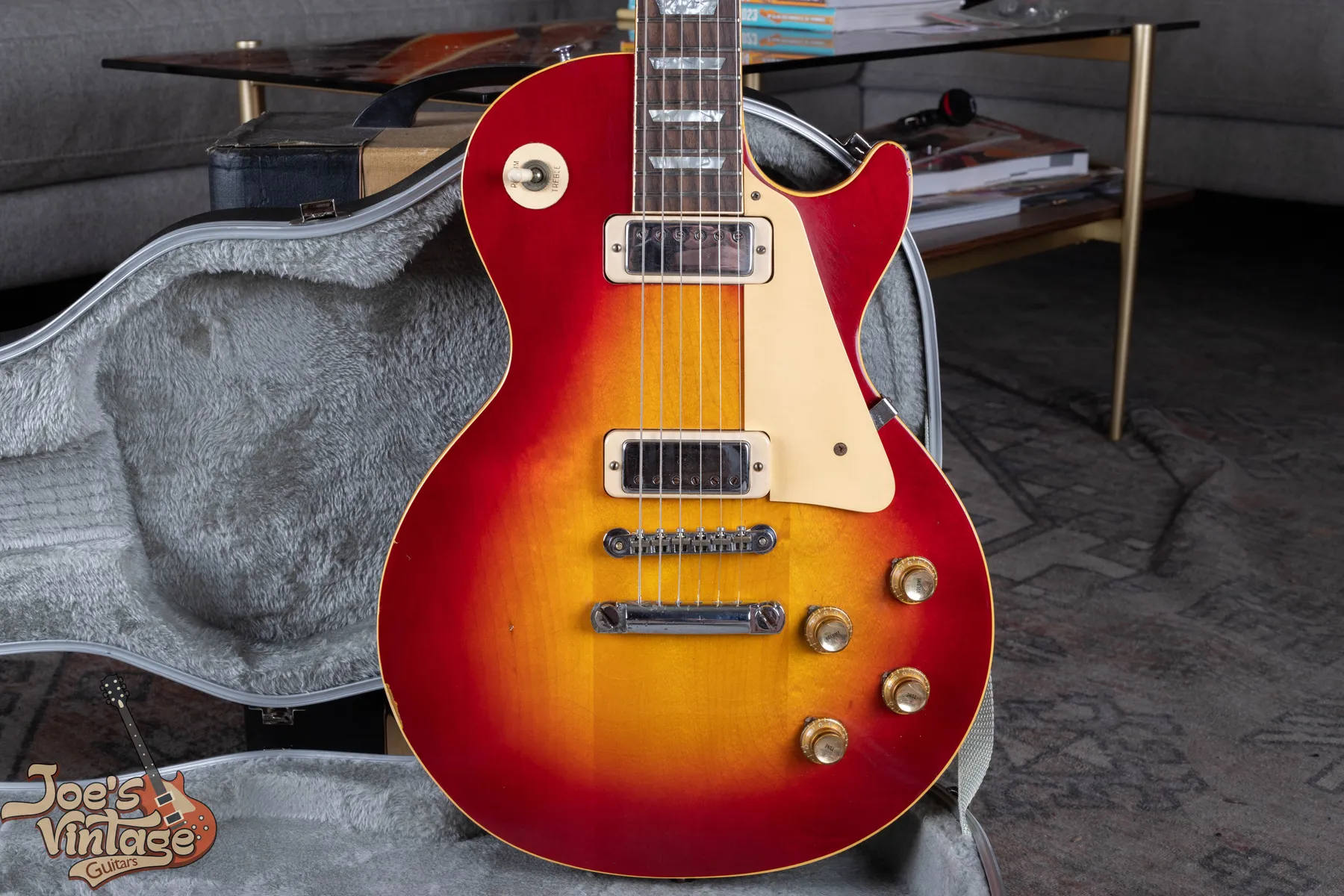
A vintage Gibson Les Paul Deluxe is identified by a combination of construction and its mini-humbucker installation. The original 1969 to 1985 run includes changes to neck laminations, body construction and serial systems. Joe’s archive examples compare a 1971 sunburst, a goldtop with embossed mini-humbuckers, a routed 1969 goldtop and a faded wine-red 1975 Deluxe. Use their documented differences to examine the guitar in front of you, then follow the Les Paul Deluxe value guide once the guitar’s identity is established.
Authenticity And Originality Are Assessed From The Information Provided. A Hands-On Inspection Can Change The Conclusion.
Begin With The Factory Layout
What Identifies A Les Paul Deluxe?
The Deluxe combines a carved maple cap, a mahogany body, a set neck, a bound rosewood fingerboard and two mini-humbuckers in mounting surrounds. Gibson’s 1970 catalog describes a 24¾-inch scale, 22 frets, trapezoid inlays, two volume controls, two tone controls and a three-way selector. Its pictured gold-finish guitar is a useful dated reference for the early model.
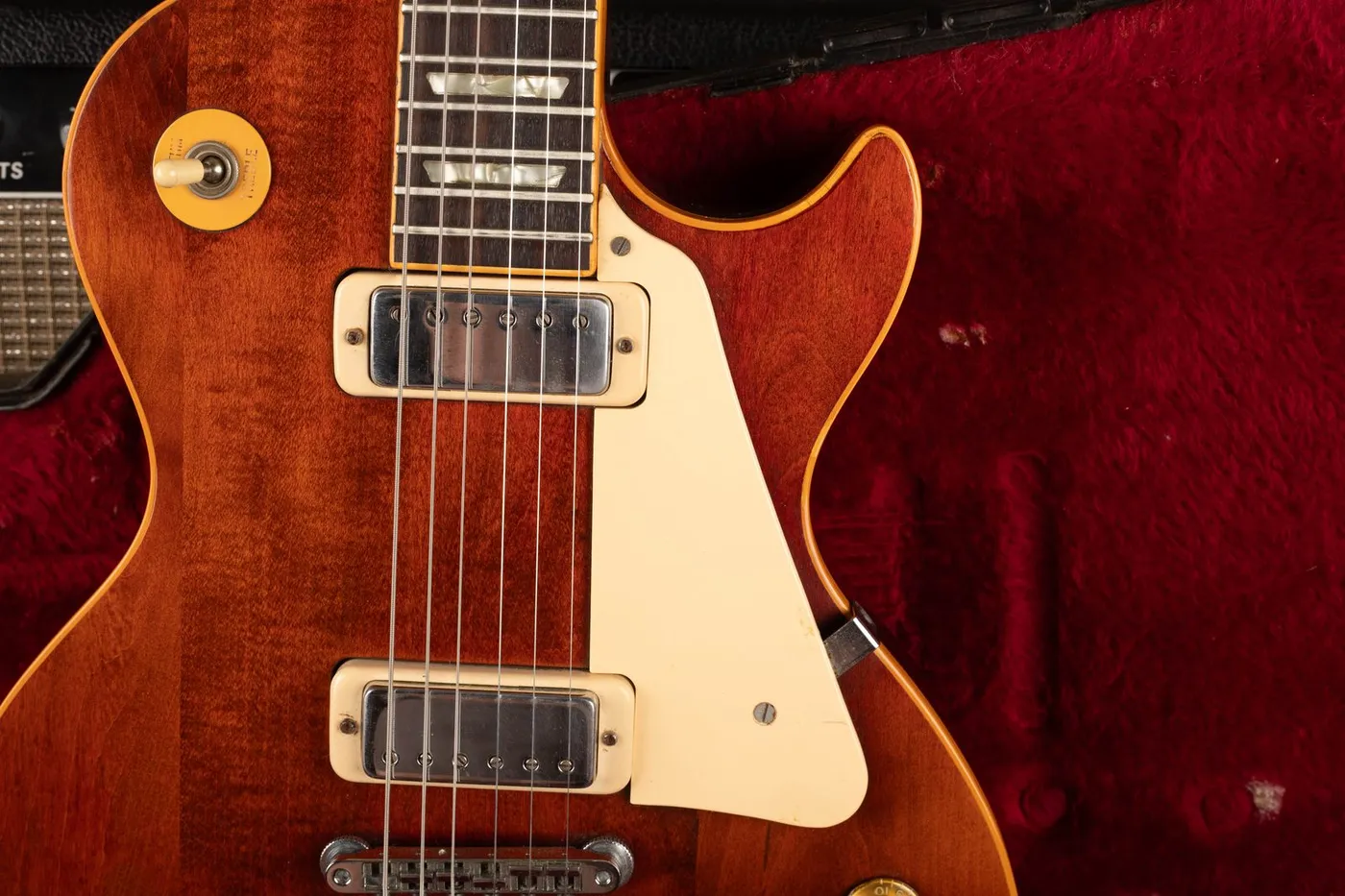
The pickups are the first distinction from a conventional full-size-humbucker Les Paul Standard. Each Deluxe mini-humbucker has a visible row of adjustable pole screws. A Firebird pickup with a similar small cover belongs to a different design; the terms should not be used interchangeably. A modern replacement made to fit the opening also needs to be identified independently.
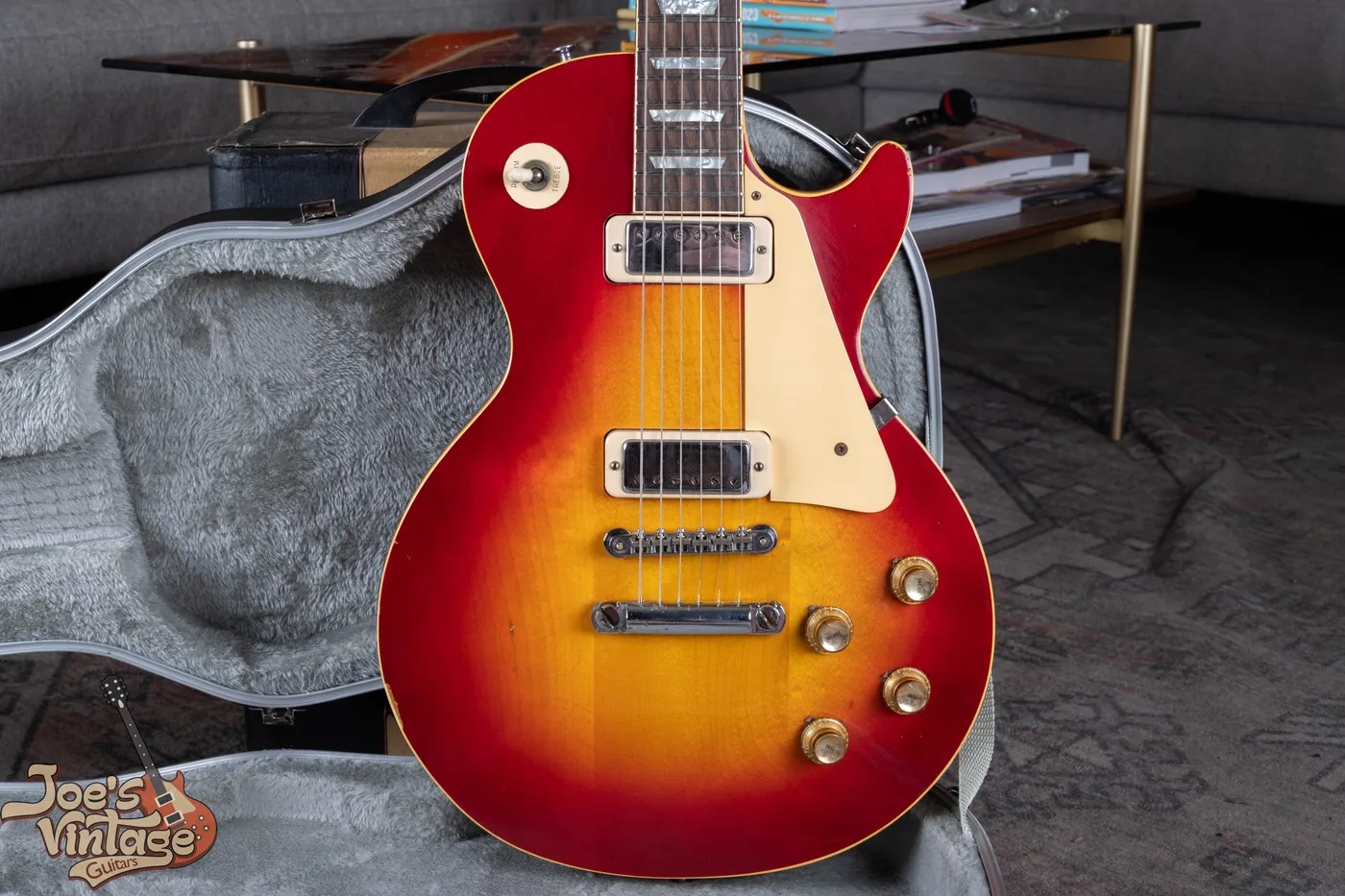
Read the truss-rod cover as one part of the record. Covers can be exchanged with a few screws, and a Deluxe inscription doesn’t prove that the body retains its original pickup cavities. Include a full front photograph so the pickup size, rings, bridge, tailpiece and control arrangement can be examined together.
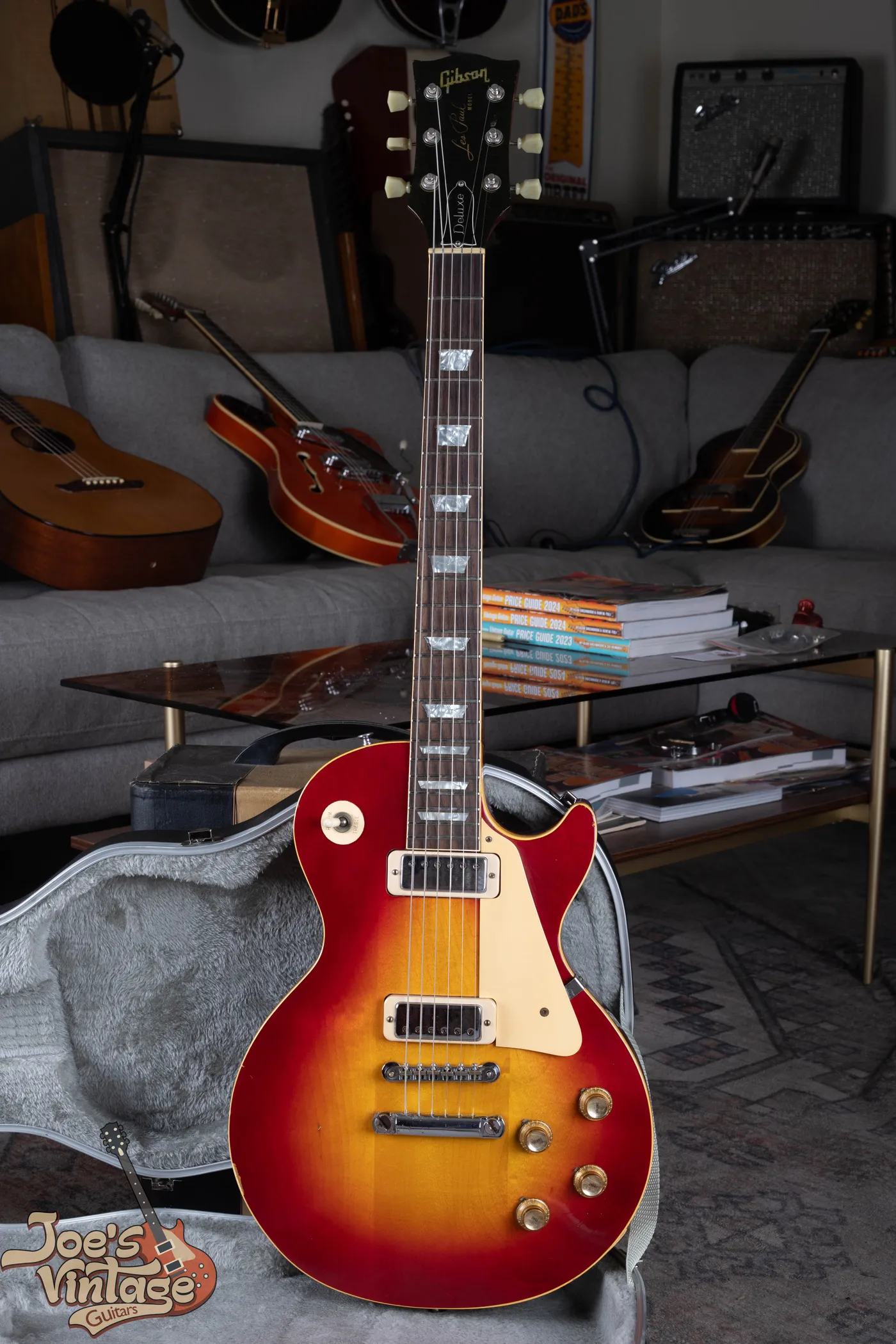
Keep the Les Paul Pro Deluxe with P-90s separate from the mini-humbucker Deluxe covered here. A broad Les Paul family name can hide a different factory specification. Likewise, a later reissue requires its own construction and serial reference rather than being dated from the appearance of an early instrument.
Compare Several Features At Once
Les Paul Deluxe Construction Through The Original Run
The Early Deluxe
The original run begins in 1969. Gibson’s 1970 catalog documents the mini-humbucker model with a laminated mahogany neck and body back. The physical-features guide places the move toward three-piece mahogany necks in 1969, with overlap during the change. An early-year claim needs more evidence than a single seam.
Look for the horizontal layers of a pancake body at the rim. This construction appears from late 1969 and continued into the 1970s. The seam should be assessed around the body, where finish wear or repairs can make it easier or harder to see. A front-only picture rarely resolves the question.
Neck And Bridge Changes
Three-piece maple necks occur on Les Pauls from around 1975 into the early 1980s. Compare the grain and visible laminations at the rear of the neck, rather than treating the color of the finish as a wood identification. The return toward a non-pancake body also happened during the later 1970s.
The ABR-1 and Nashville bridge families need different comparisons. The Nashville design appears in the mid-1970s, but a later bridge can be installed on an older guitar. Show the posts and mounting arrangement before using the bridge to date the instrument.
Read The Later Serial Format
The eight-digit YDDDYRRR system introduced in 1977 provides a more specific date framework. The first and fifth digits give the year, while the middle three give the day of the year. Read the complete stamp and compare its format with the neck and body.
Later original-run Deluxes still need a parts inspection. A readable date doesn’t establish that the pickups, tuners or wiring remained untouched. Record the manufacturing evidence first, then list later work without changing the supported model name.
Pickup Covers And Body Details
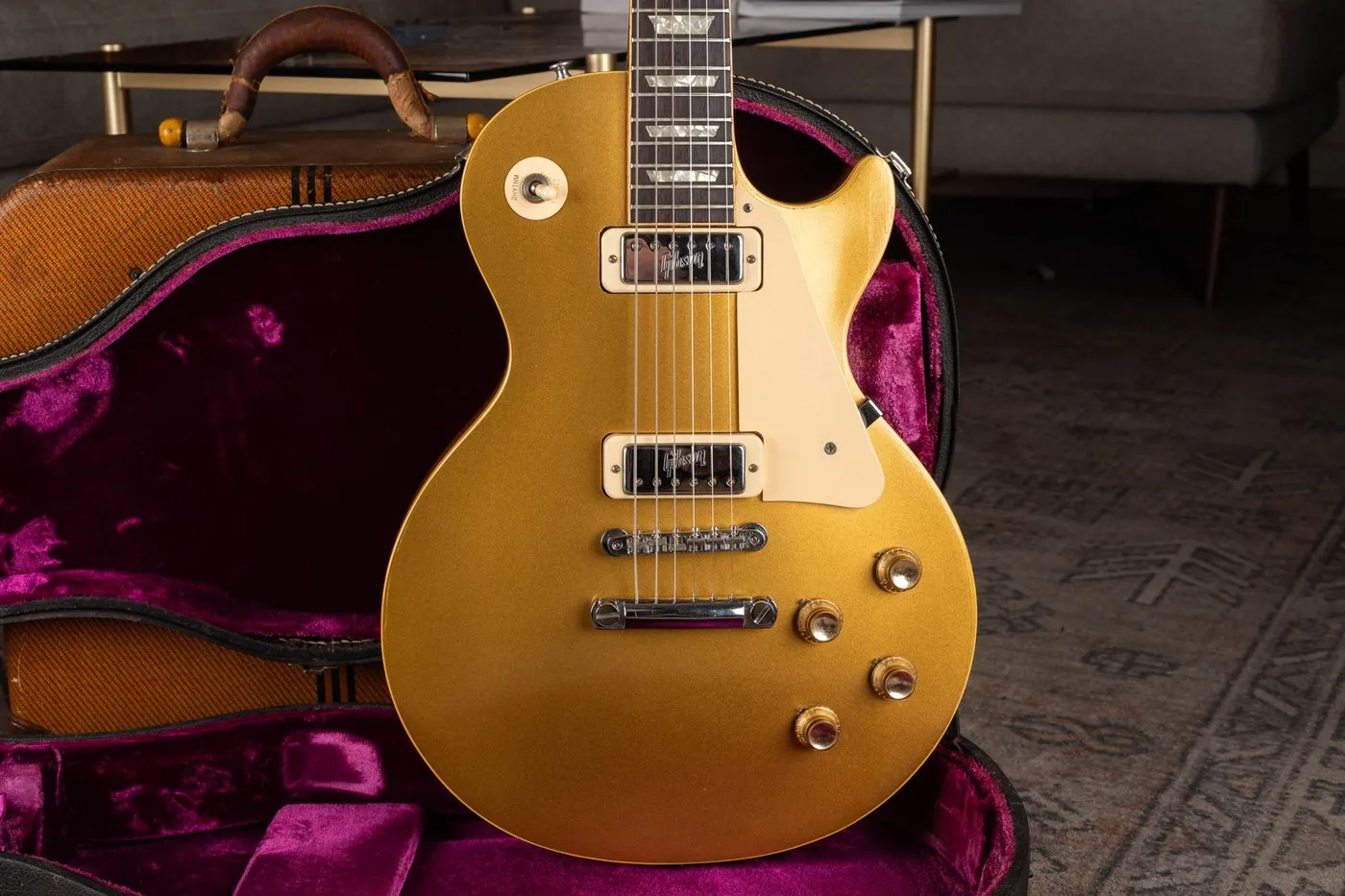
A 1971 Goldtop With Embossed Mini-Humbuckers
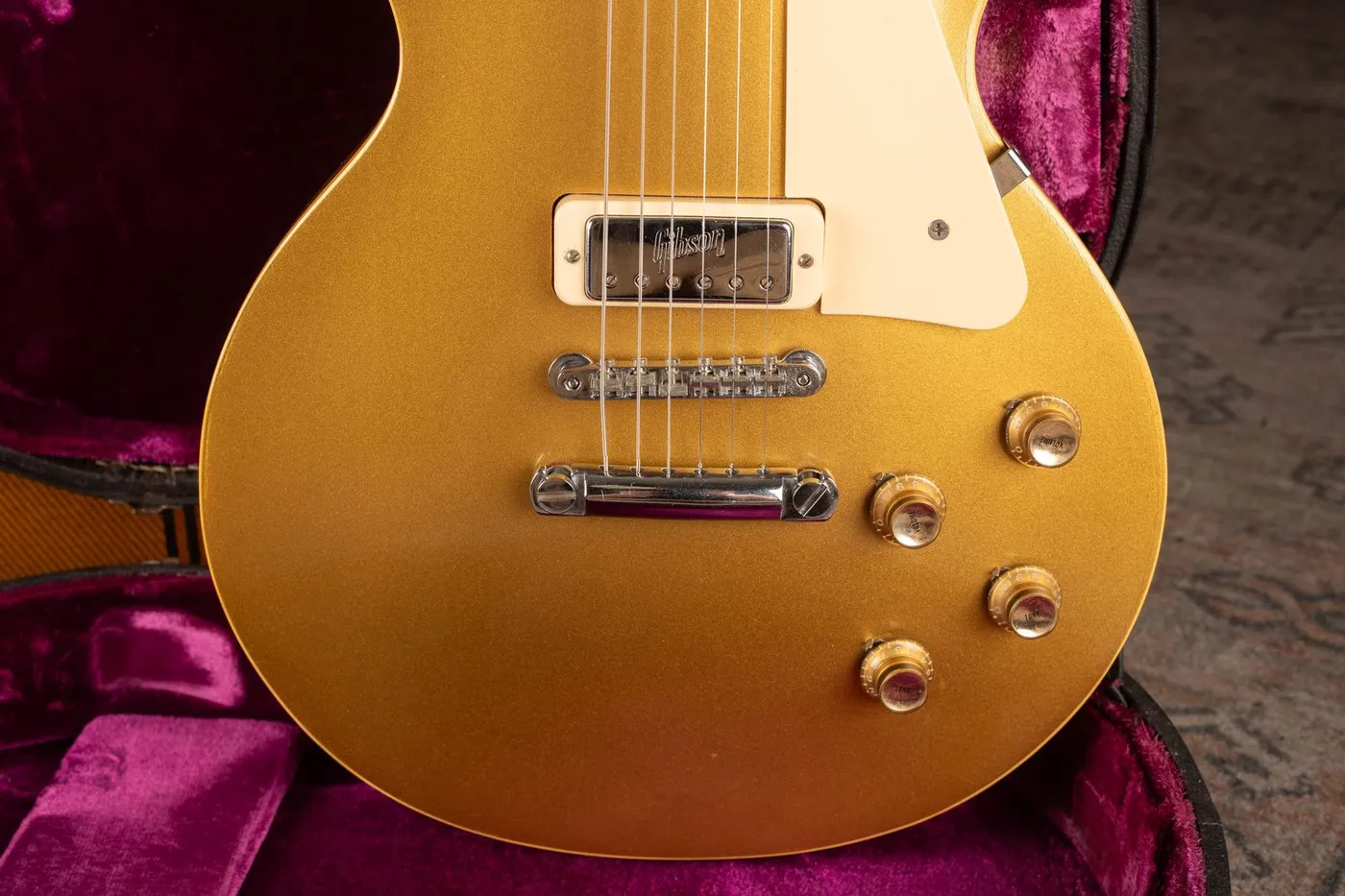
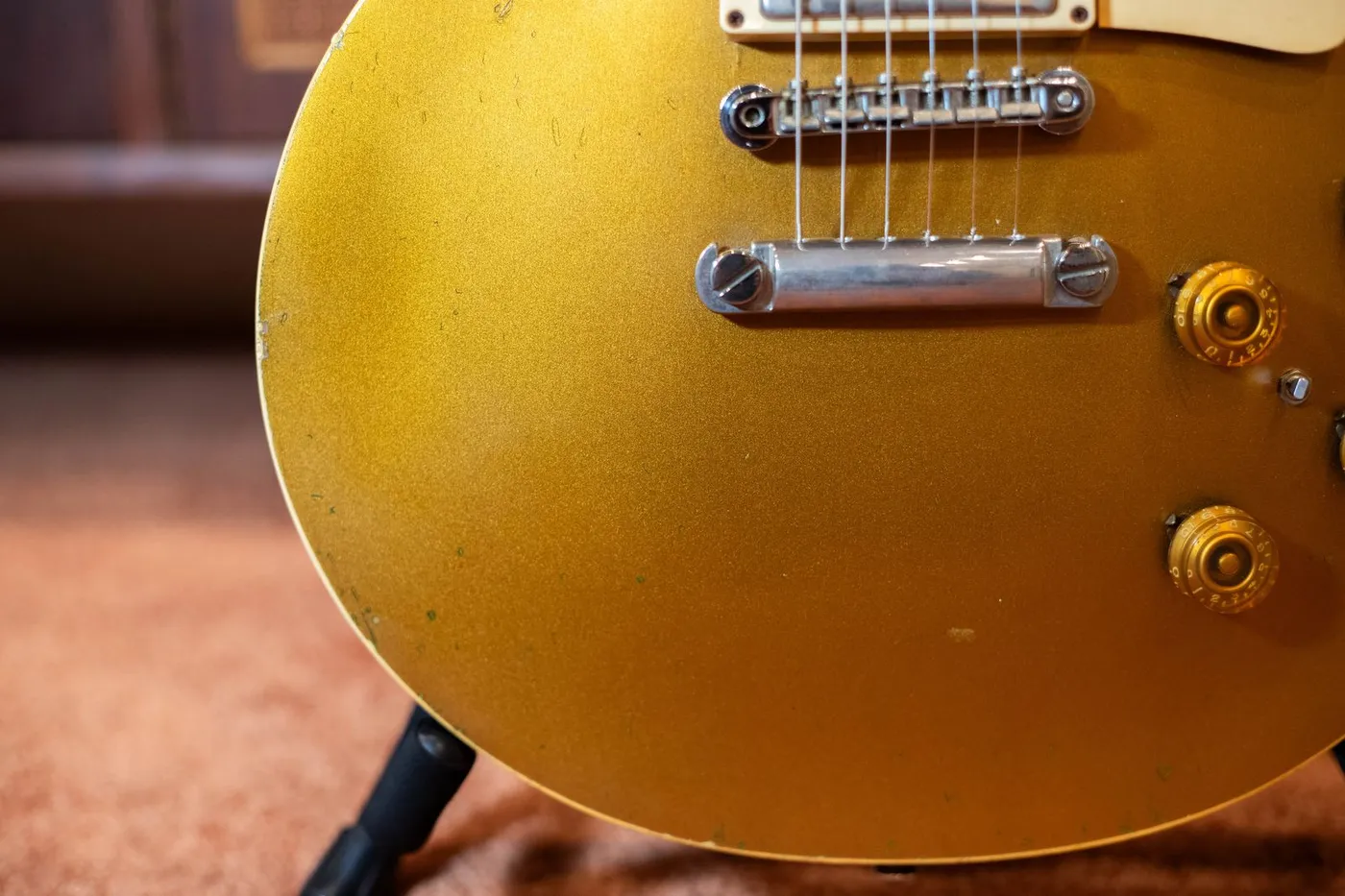
The Gibson name is embossed into the metal pickup covers on this 1971 goldtop. The close-up also shows the row of adjustable pole screws and the cream mounting surround. These details make a useful comparison with the plain-covered mini-humbuckers on the sunburst guitar above. Both instruments belong in the Deluxe discussion.
An embossed cover is a component feature. It can survive a pickup repair or move with a complete pickup to another guitar. Dating the instrument still requires its neck, serial format, body and electronics to agree. A photograph of the cover can establish the visible lettering; the pickup’s underside and service history are needed to investigate a changed assembly.
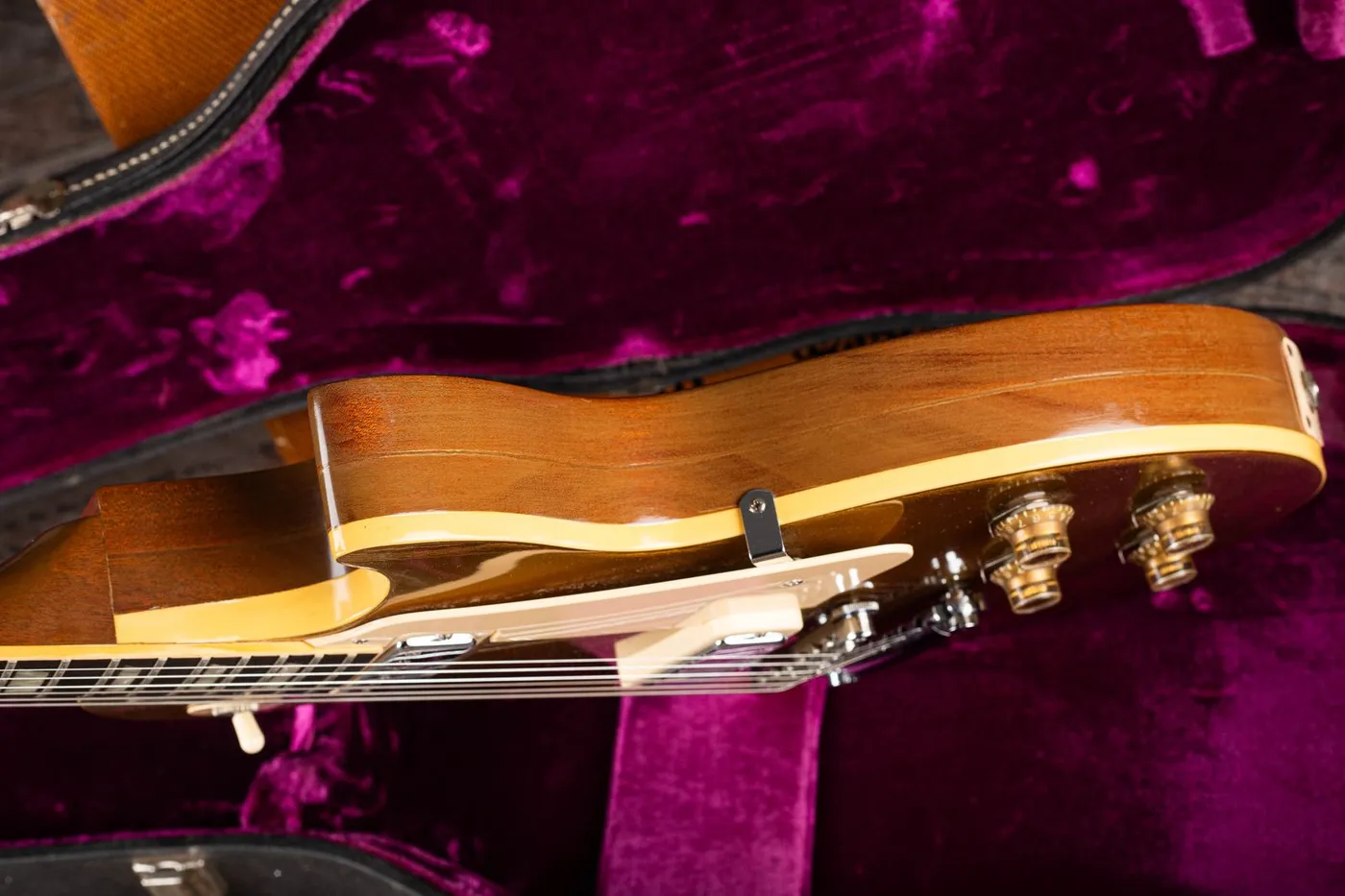
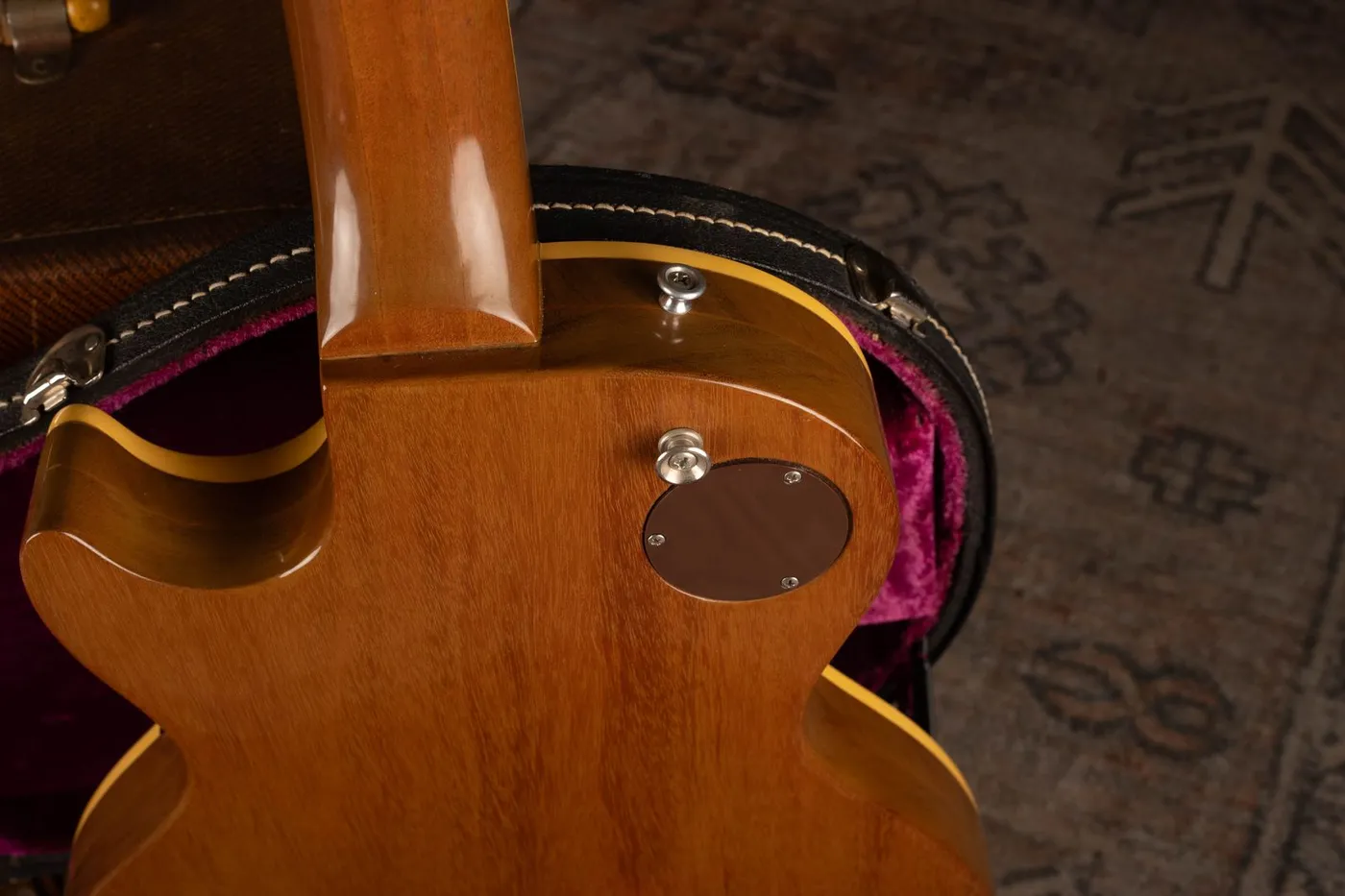
Follow the body rim around the instrument when assessing laminated construction. The maple cap is a separate top plate; a pancake-body inspection concerns the layers beneath it. A line at the top binding, a grain line on the back and a horizontal body-layer seam describe different things. An oblique rim view helps locate each one. The rear neck should be photographed separately so vertical neck laminations aren’t confused with body construction.
This guitar also has an added strap button on its back. That small alteration belongs in its description even though the principal pickup configuration remains intact. Inspect the button’s mounting and surrounding finish, and record any extra hole if a previous owner relocated it. A useful originality report names the changed part or hole instead of applying one label to every component.
A Documented Conversion From Joe’s Archive
A 1969 Deluxe Routed For Full-Size Humbuckers
This 1969 goldtop demonstrates a common Deluxe modification: enlarging the mini-humbucker openings to accept full-size humbuckers. Joe’s record documents professional routing and the installation of Lollar Imperial pickups. Earlier replacement pickups had also been fitted. The present front shows the larger pickup bodies and rings, while the actual cavity walls remain underneath them.
The guitar remains a modified Les Paul Deluxe in its description. Larger pickups don’t establish that it began as a Les Paul Standard, and a gold finish with full-size humbuckers doesn’t turn it into a 1950s goldtop. Identify the underlying instrument from its construction and dating evidence, then describe the conversion as part of its history.
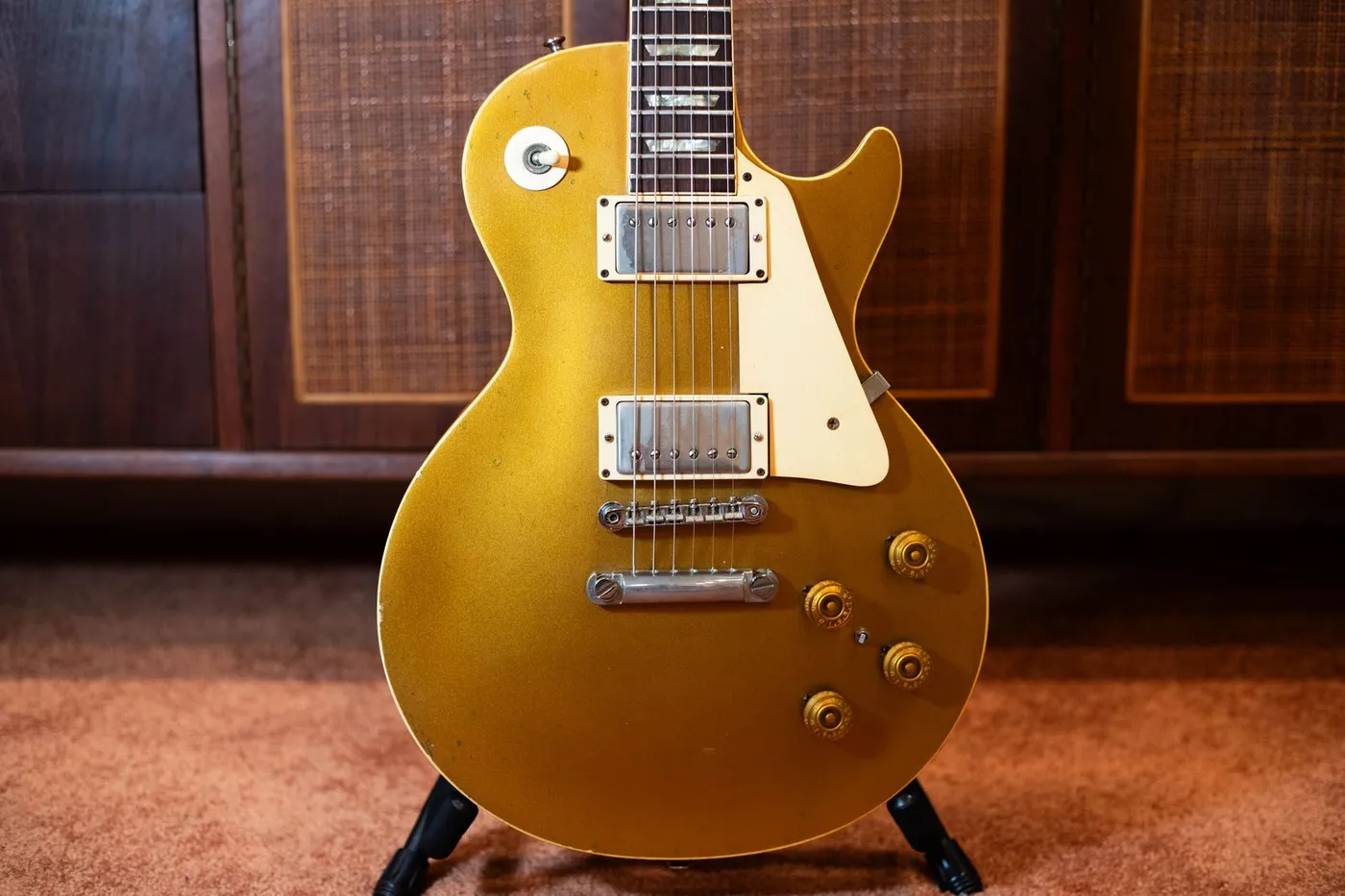
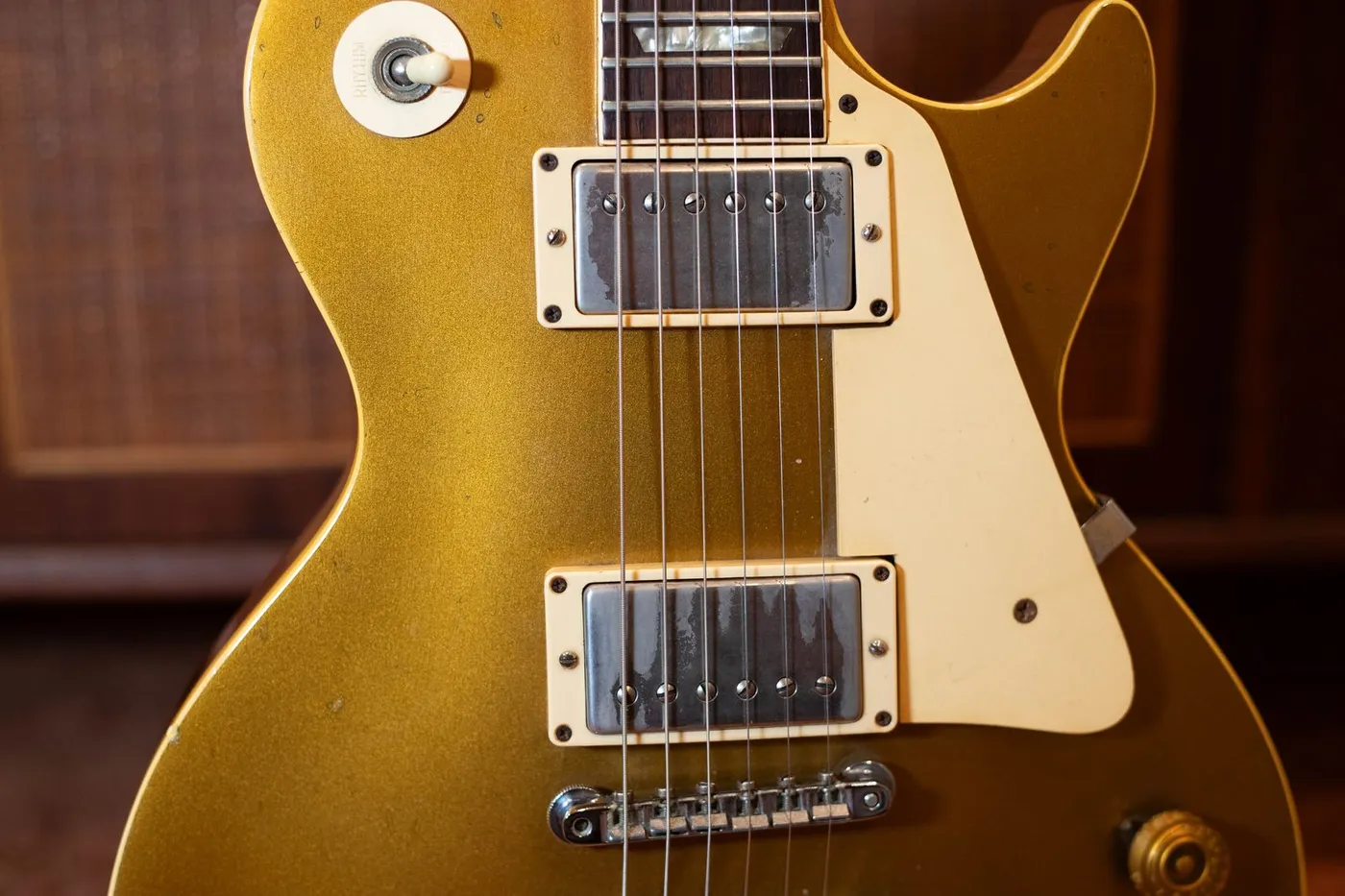
The extra small toggle is a neck-pickup coil-split switch. Its added mounting hole is separate from the larger pickup cavities. The neck-pickup pots were replaced, while the bridge-pickup pots and capacitor were retained according to Joe’s inspection record. This mixed harness explains why reading a single pot code can give an incomplete account: a replacement dates that component, and a retained older component must still be checked against the rest of the guitar.
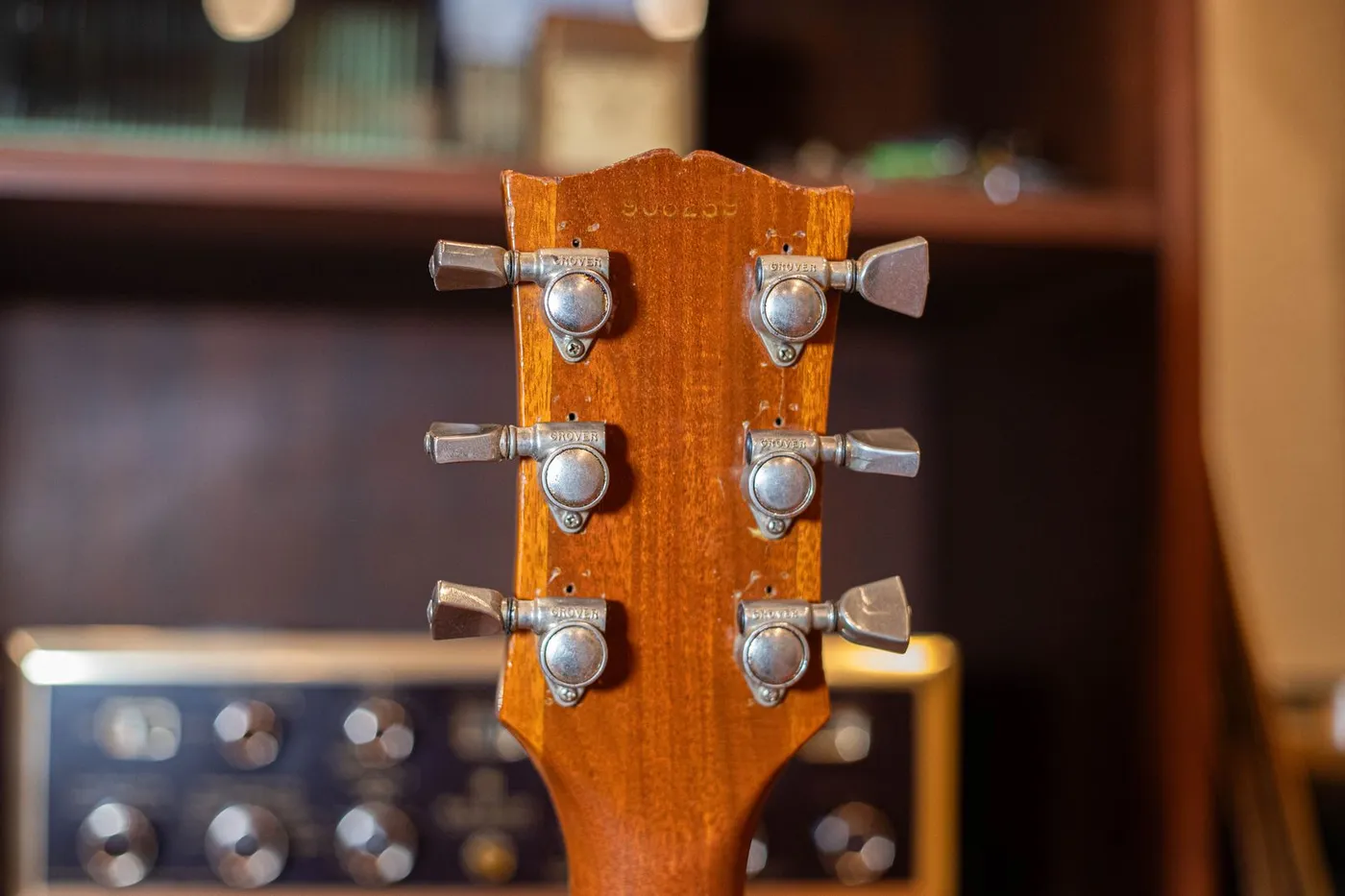
Other recorded work includes a refret, replacement Grover tuners and 1950s-style knobs. Each change answers a different question. The refret concerns playing surfaces and workmanship; the tuner installation concerns hardware and any mounting alterations; the knobs concern replaceable exterior parts. None of those descriptions should conceal the permanent wood removed for the pickup conversion.
If a converted guitar has later been returned to mini-humbuckers, the smaller pickups may sit over enlarged openings, adapter plates or repaired wood. Ask for existing repair photographs and invoices. The presence of the expected pickup covers at the end of that history can’t settle what remains beneath the rings. Filling a cavity is another documented repair, rather than a return to an untouched factory body.
Factory full-size-humbucker Deluxes require a different conclusion. The shipping-record reference below documents that category, so a large pickup alone is insufficient to diagnose aftermarket routing. For this particular 1969 example, the conversion history is known. For an unknown guitar, cavity workmanship, finish, component history and original paperwork must be assessed together before making the same claim.
Finish Evidence And The Decal Serial
A Faded Wine-Red Deluxe From 1975
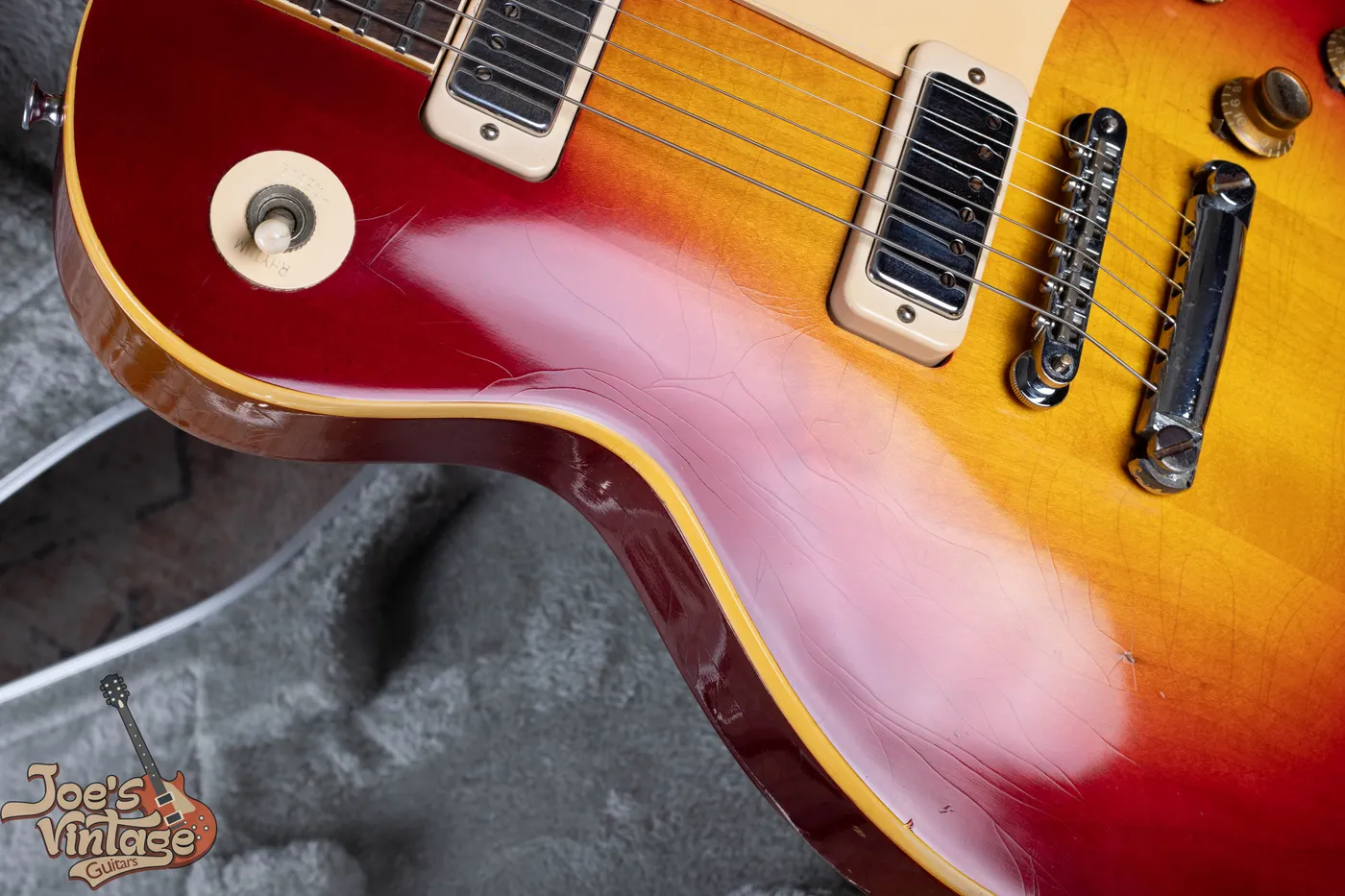
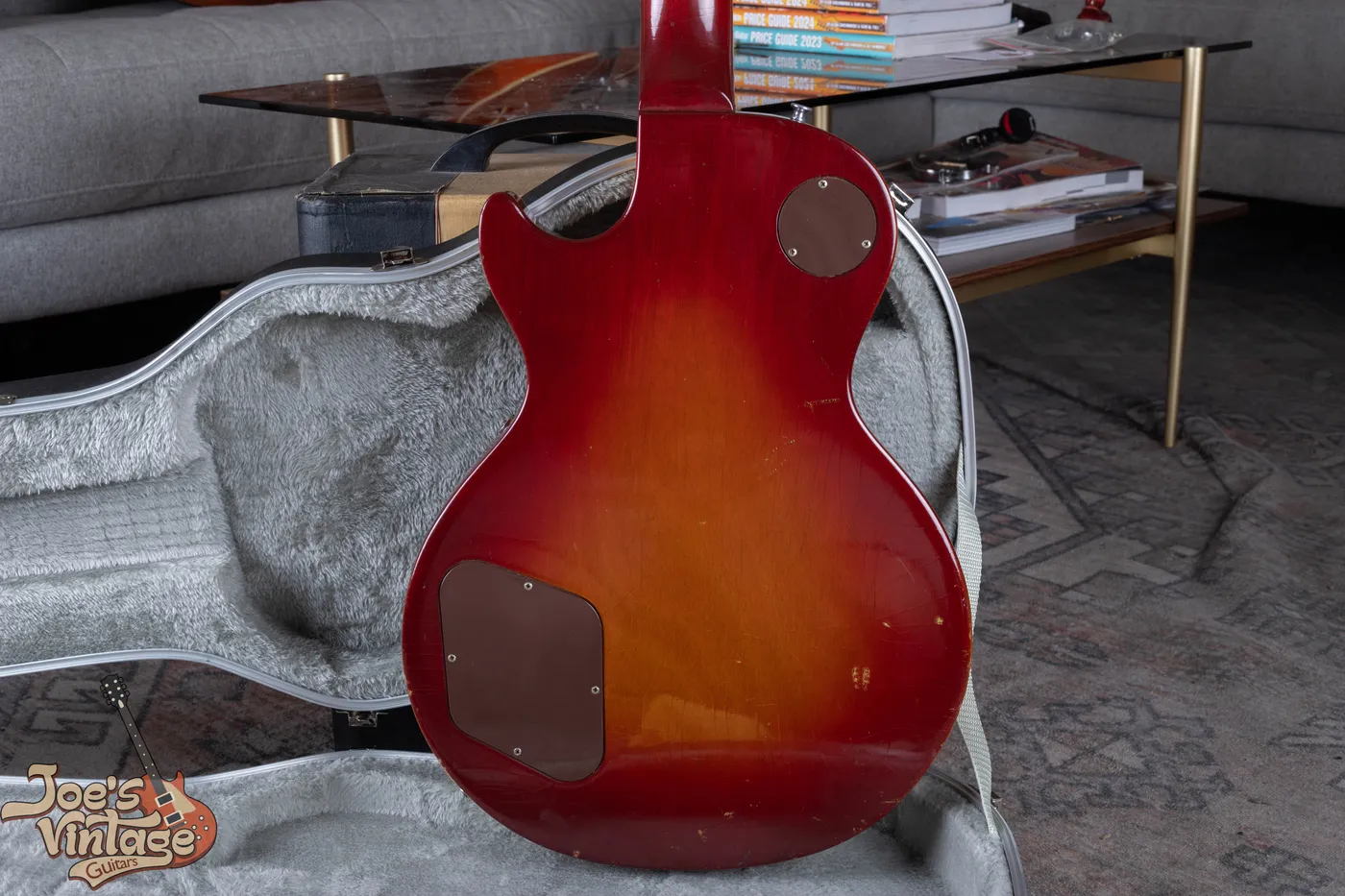
The exposed top of this 1975 Deluxe has faded toward a warm orange-brown, while the back retains a deeper wine color. Joe’s in-hand record also notes darker wine finish in protected areas beneath the bridge and tailpiece. Those protected areas aren’t exposed in the photographs here. The combined record identifies the finish more reliably than naming the guitar from one brightly lit front view.
Fading, overspray and refinishing are separate findings. Compare exposed surfaces, wear edges, the neck and any existing service photographs of covered areas. Color variation can support an aging history, but it doesn’t by itself prove that every surface is untouched. Avoid removing hardware just to chase a hidden patch for an initial appraisal; send the available views first.
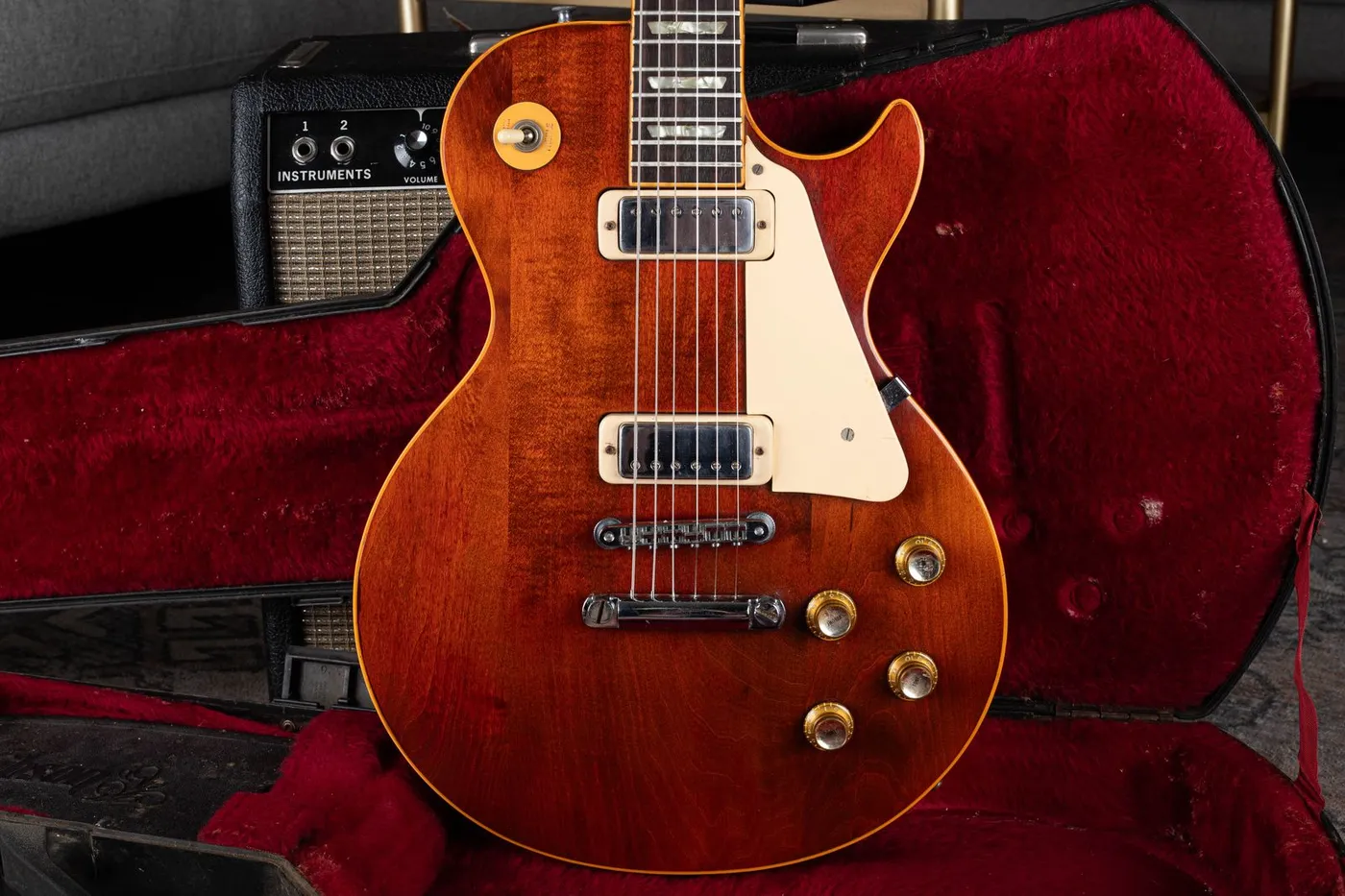
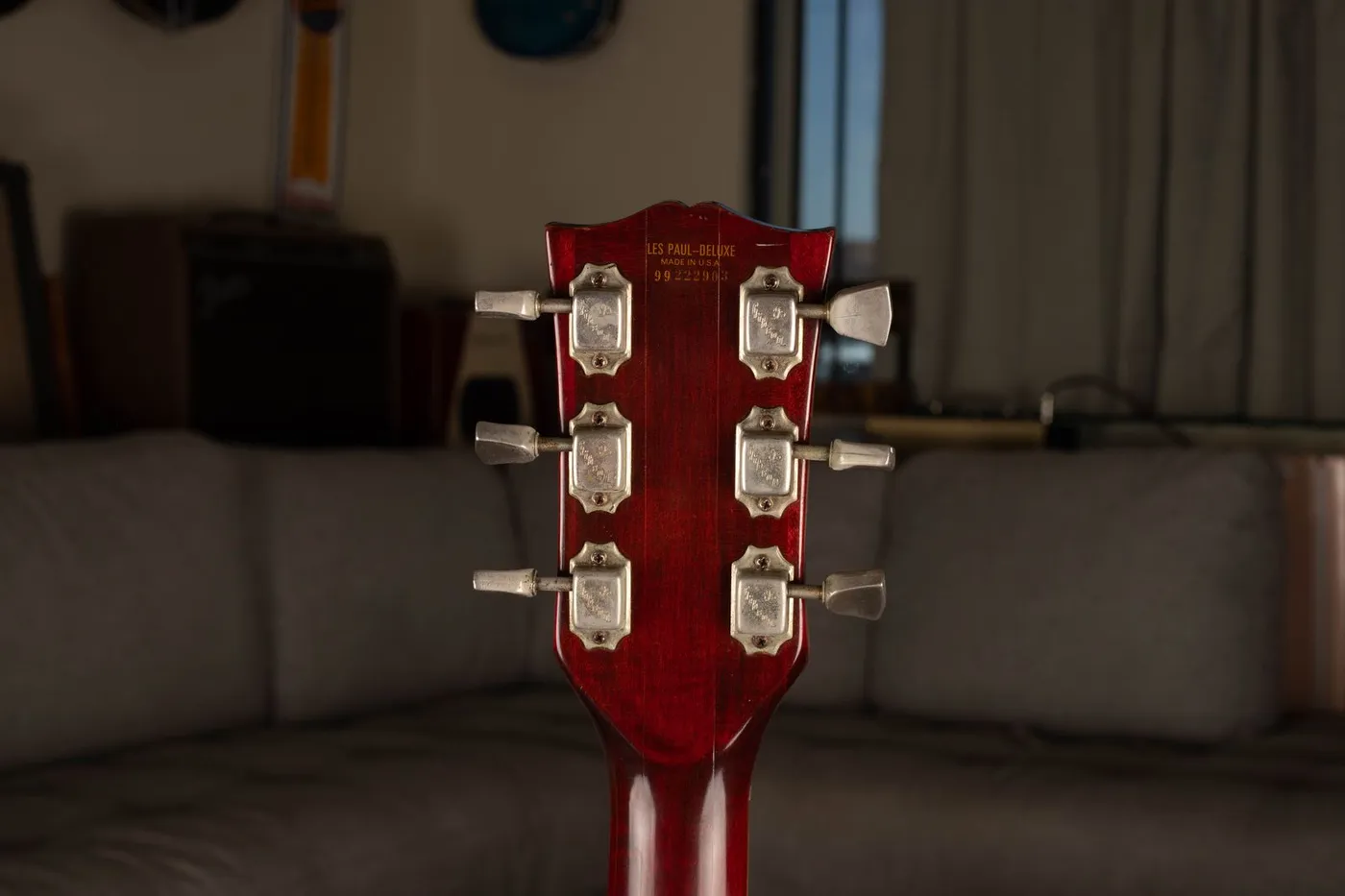
The rear-headstock decal uses a 99 prefix, consistent with Gibson’s 1975 decal system. This format differs from the later YDDDYRRR stamp introduced in 1977. Applying that later formula to the decal can produce a false date even though both serials contain eight digits. Compare the method of application, complete format and the guitar’s construction before decoding the number.
This example has plain mini-humbucker covers and a documented refret. Its fret work should be described independently of its faded color and factory date. Mid-decade construction changes also need their own photographs: inspect the neck grain before naming its wood, and the bridge posts before deciding whether the bridge matches the period. Dark red lacquer can obscure neck seams that would be obvious on a lighter finish.
Mini-Humbuckers, P-90s And Larger Replacements
Separate The Pickup Type From The Installation
| Visible Configuration | What To Establish |
|---|---|
| Mini-humbuckers with adjustable pole screws | Confirm the pickup assembly and its mounting; inspect records for earlier enlarged cavities. |
| Small covers without the usual adjustable pole row | Investigate Firebird-style or other replacements before calling them standard Deluxe pickups. |
| P-90 single-coil pickups | Establish whether this is a Pro Deluxe, another Les Paul model, or a changed mini-humbucker Deluxe. |
| Full-size humbuckers | Distinguish a documented factory configuration from a later conversion, then describe the actual pickups. |
A pickup’s resistance measurement, if already recorded by a repairer, can help describe its electrical condition. It can’t establish its maker, originality or mounting history on its own. Covers, internal coils and mounting parts may have separate repair histories. Keep any repair notes tied to the neck or bridge position so two different assemblies don’t become one vague claim about original pickups.
For an initial inspection, supply a clear front, a close-up of each pickup and ring, the control layout, and any photographs taken during previous servicing. Joe can identify what remains uncertain before asking for further work. This preserves the distinction between what the photographs show and what an in-hand inspection still needs to establish.
Front, Back And Electrical Details
A 1971 Sunburst Deluxe From Joe’s Archive
1971 Gibson Les Paul Deluxe
Small Pickups In The Les Paul Body
The front photograph shows the two mini-humbuckers within their surrounds. The pickup close-up includes the adjustable poles and the bridge area. These are more useful identification views than a cropped headstock image because they show the features that distinguish the Deluxe configuration.
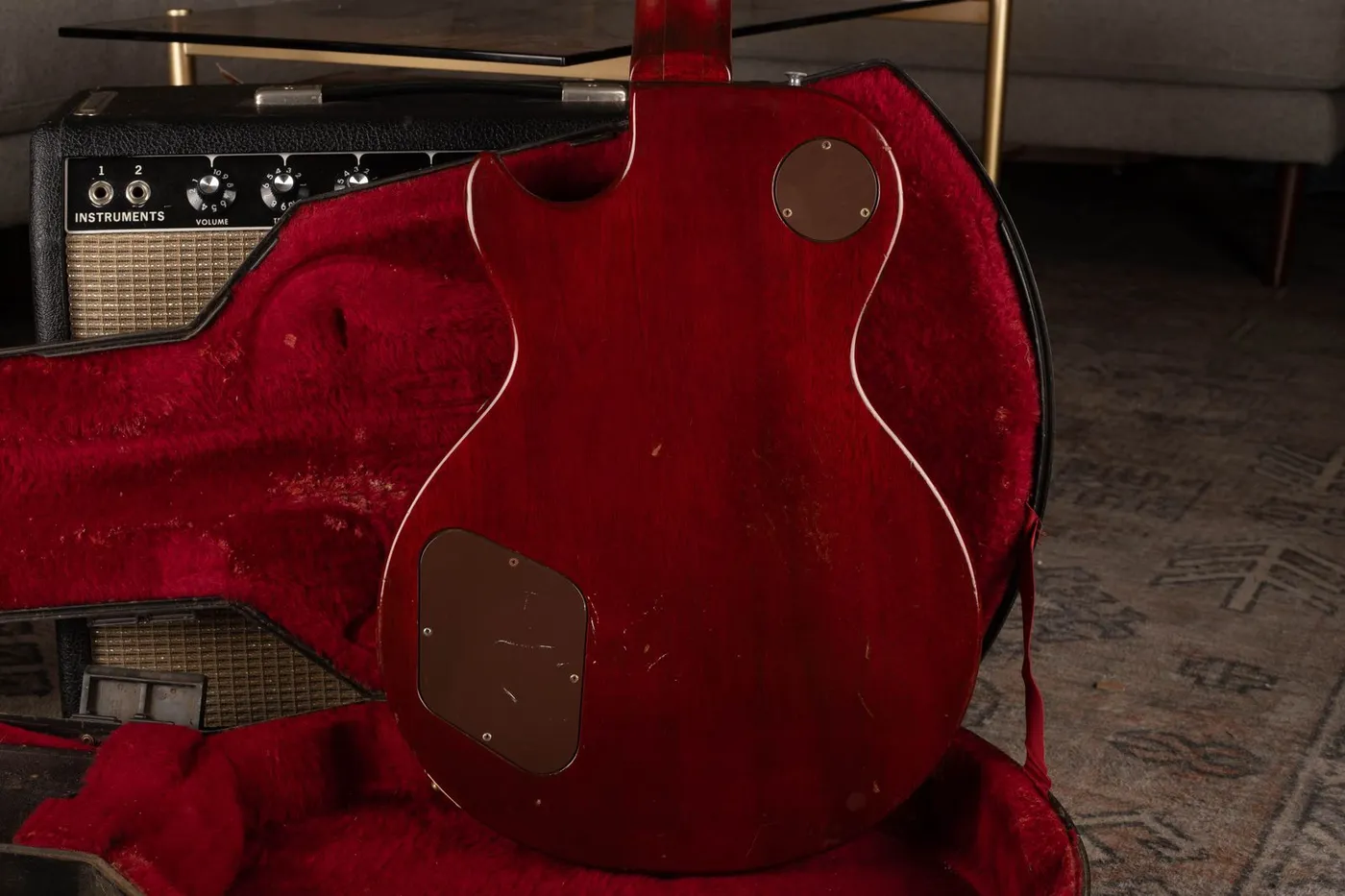
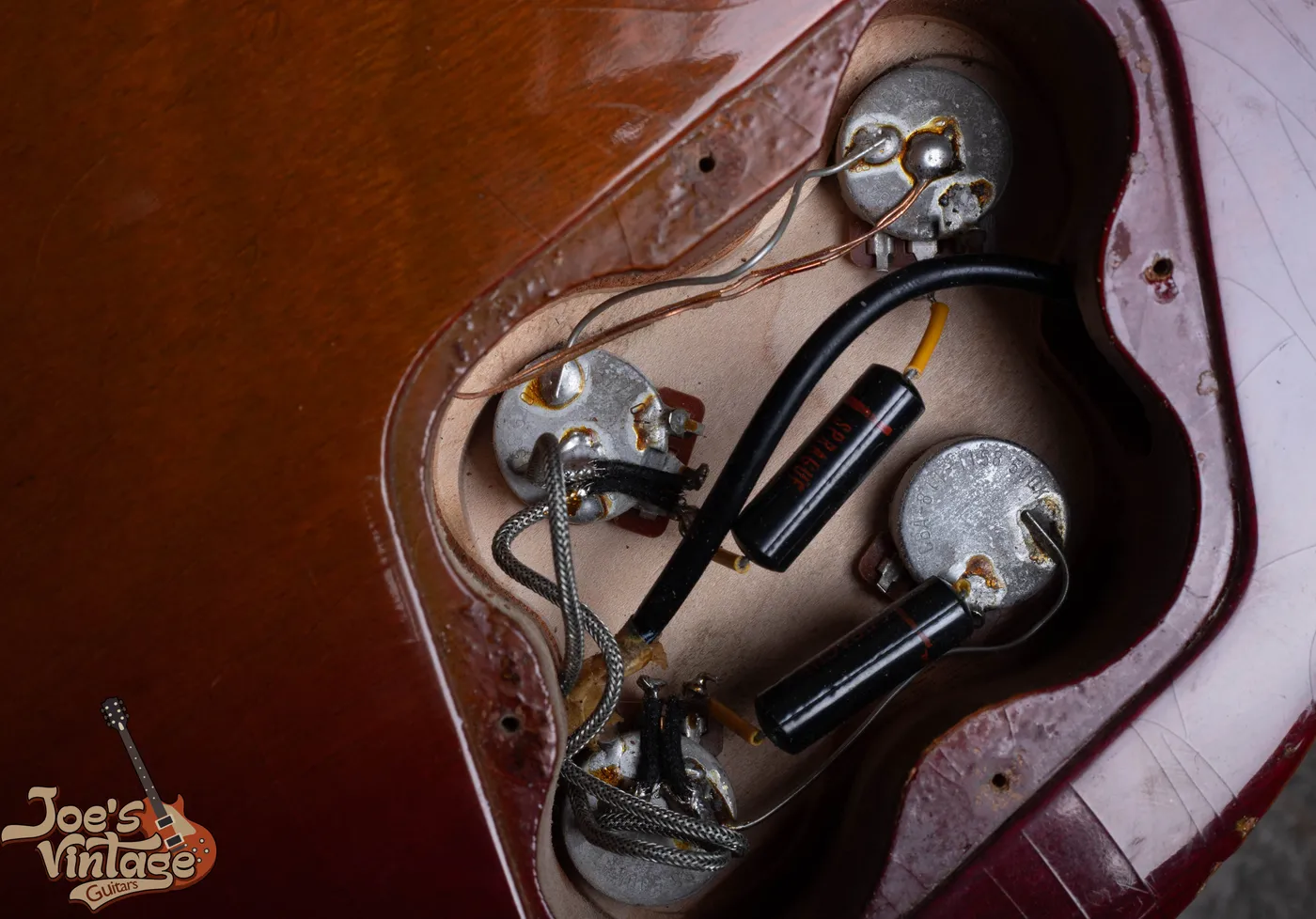
The back view records the control and switch covers, finish and neck joint. The open-cavity photograph is an existing archive image; owners don’t need to disturb an intact wiring assembly to request an initial review. Start with accessible photographs and describe any known changes.
Separate The Part From Its Installation
Mini-Humbuckers, Replacement Pickups And Routing
A pickup can have the correct dimensions while being a replacement. Compare the visible cover, mounting and lead arrangement, then consider any existing photographs of the underside. A resistance reading can help diagnose a working pickup, but it can’t establish manufacturer, age or installation history by itself.
A full-size humbucker conversion may require enlargement of the original cavity. Oversized rings can cover part of that work from above. If the owner already has service photographs, include them. Otherwise, a qualified repairer can document hidden routing when the instrument is inspected; don’t remove covers or disturb solder merely to make an appraisal submission.
Some instruments have been returned to mini-humbuckers after a conversion. A correct-looking front can conceal changed wood beneath the surrounds. Describe any known restoration and keep before-and-after pictures. Installing the expected type of pickup doesn’t reverse the physical alteration to the body.
When discussing Gibson pickups, use the actual design name. The Deluxe’s Epiphone-derived mini-humbucker and the Firebird pickup have different internal construction. Neither should be described as a small PAF solely because of its size or a seller’s terminology. If an older full-size PAF has been installed, it needs a separate authentication assessment, including the fact that factory baseplate sanding can be normal.
Serial Numbers Need Physical Support
How To Date A Deluxe With Factory Markings
The Archive Guitar’s Headstock
The photograph shows the impressed number area and Made In USA marking. The complete serial isn’t transcribed here because all digits aren’t equally clear in the available view. A partly legible stamp should remain partly legible in the record.
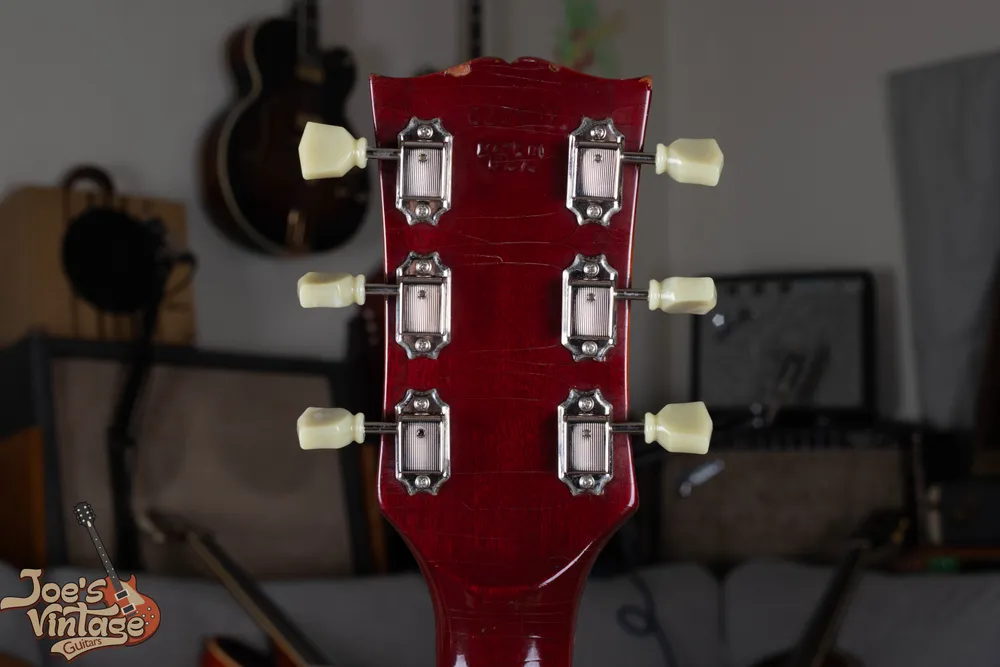
Use the Gibson serial-number guide to distinguish the reused six-digit ranges, the mid-1970s decal formats and the later eight-digit code. The Made In USA stamp supports the post-1970 era but doesn’t supply an exact year on its own.
For the mid-1970s decal system, the house serial reference identifies 99 for 1975, 00 for 1976 and 06 for 1977. Those prefixes should be read within the correct decal format. They aren’t ordinary two-digit years and should not be carried over to other Gibson numbering systems.
Potentiometer codes provide another date clue when they are visible in an existing cavity photograph. The Gibson pot-code guide explains manufacturer and date fields. A pot was made before it was installed, and replacement pots may be much newer than the guitar. Treat the code as component evidence and inspect the wiring context.
Compare the Gibson logo chronology and the tuner guide after reading the serial. Changed tuners can leave extra mounting holes or outlines beneath the current machines. Those marks establish work that needs explanation even if the replacement set is itself old.
Record What The Wood Shows
Neck Construction, Volutes And Repairs
Photograph the full rear neck, the heel and the transition behind the nut. A volute is a factory reinforcement feature on many guitars of this period, while a repaired break is a separate condition issue. Finish lines, shadows and grain changes need a clear view before either is identified from a photograph.
The number of neck pieces is useful only when the seams can be followed. A dark finish or a repaired area may obscure them. Use broad daylight views from more than one angle. Don’t scrape finish or remove a tuner to expose wood for an initial identification request.
Inspect the binding and fret ends for evidence of fret work, but avoid declaring a refret from one small irregularity. A fret job can preserve some original details or change them, depending on the work. Ask for the repair history and describe the current fret height, wear and playing problems.
Use the Gibson construction and hardware guide to compare neck, body and bridge changes as a group. A replacement neck, a repaired headstock and a changed truss-rod cover are very different findings. Keep the description precise enough that the next reviewer can understand what is actually supported.
Include The Areas That Can Be Changed
Prepare A Deluxe Authentication Photo Set
Show The Complete Front And Back
Keep the body outline, all controls, pickup surrounds and cavity covers in view. Include a separate rim photograph so the body layers can be examined where the finish permits.
Photograph Both Sides Of The Headstock
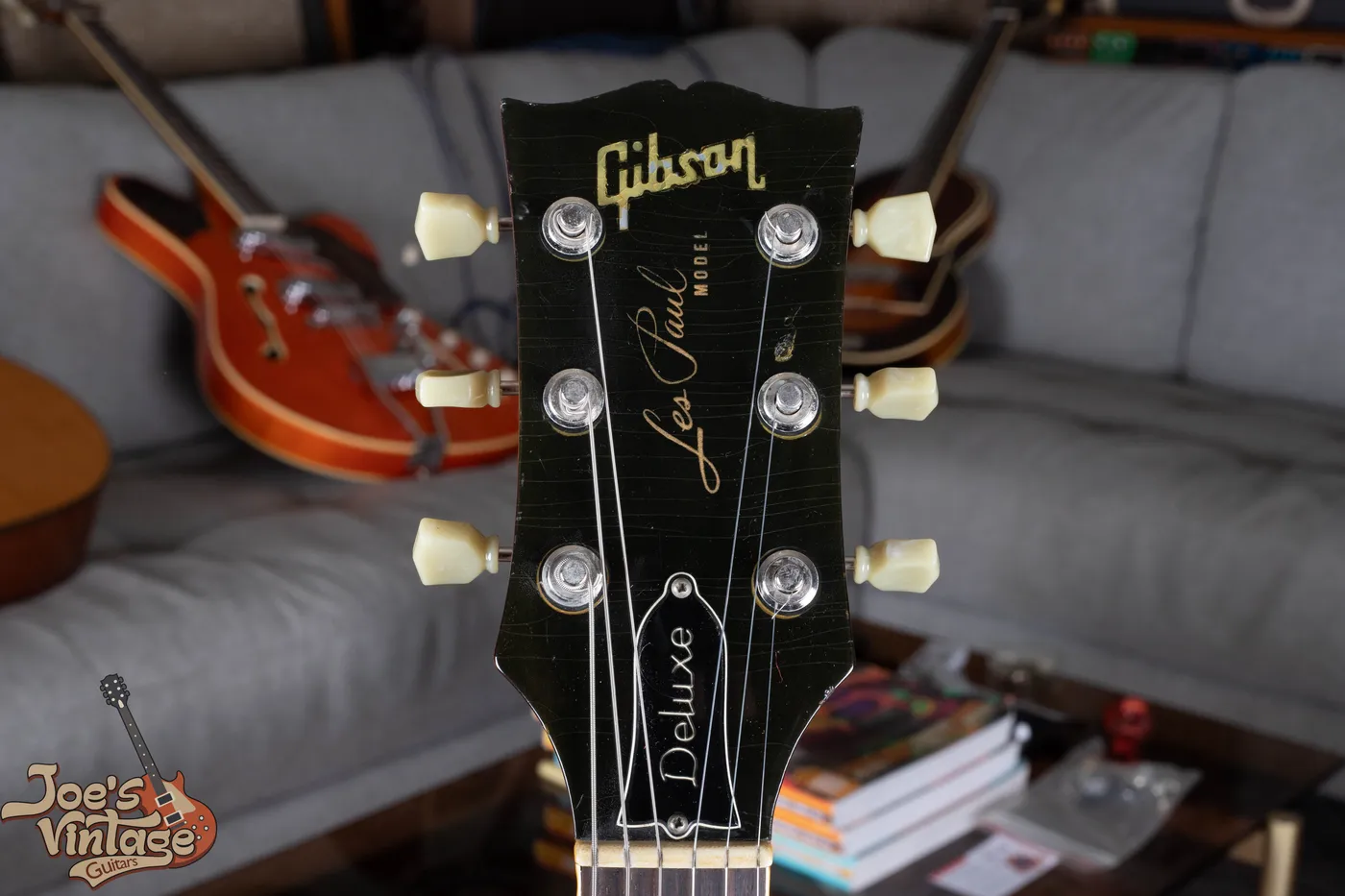
Include the logo, tuner installation, serial and Made In USA mark. Use several lighting angles if the stamp is faint, without tracing or filling the digits.
Record The Neck And Bridge Mounting
Show the rear neck laminations, heel, volute area and bridge posts. A detail photograph should be paired with a wider view that establishes its location.
List Pickup And Wiring Work
Include invoices and existing service photographs. State whether the guitar was routed for larger pickups and whether any original parts were retained.
Explain Finish And Structural Repairs
Identify known refinishing, overspray, neck work and repaired breaks. If the history is unknown, leave it unknown rather than assigning originality from appearance alone.
Once the configuration and date are supported, use the Deluxe price guide to select a condition comparison. Joe can begin with photographs and advise which unresolved points require an in-hand inspection before a final offer.
Send The Evidence
Ask Joe About Your Les Paul Deluxe
Send the instrument, pickup, serial and neck photographs with any known modification history. Include the case and any removed original parts.
An Exception To The Usual Deluxe Layout
Factory Full-Size Humbuckers Need Their Own Evidence
Some Deluxes left Gibson with full-size humbuckers. Reproduced factory shipping totals list a separate humbucker-equipped Deluxe category in the early 1970s. Pickup size alone therefore can’t establish that a guitar was routed after sale. Compare the cavity workmanship, finish inside the openings, harness and any original paperwork before calling it a conversion.
A Standard truss-rod cover or an old replacement pickup is only part of that record. An appraisal should distinguish a documented factory configuration from a later enlargement of the usual mini-humbucker cavities. Keep any service photographs and removed parts with the guitar so that the history can be checked.
Dated Specifications And House Dating Guides
Les Paul Deluxe Technical References
- Gibson Les Paul Deluxe Shipping Records
Reproduced factory totals distinguish Deluxes with full-size humbuckers.
- Gibson 1970 Les Paul Catalog, Page 4
Original Deluxe photograph and specifications for the 1970 catalog model.
- Gibson Physical Features And Hardware
Neck laminations, pancake bodies, volutes and bridge transitions.
- Gibson Serial Numbers
Six-digit, decal and eight-digit numbering systems.
- Gibson Pot Codes
Component-date interpretation and replacement-pot limits.
Questions AboutGibson Identification
Does A Les Paul Deluxe Have Firebird Pickups?
Is Every Deluxe Body A Pancake Body?
Can A Deluxe With Full-Size Humbuckers Still Be A Deluxe?
Does Made In USA Give The Exact Year?
The Last Word
Keep The Evidence Together
Identify the original body and neck, document the pickup installation and keep modifications in the description. The Les Paul Deluxe value guide then provides the matching price groups.
Authenticity And Originality Are Assessed From The Information Provided. A Hands-On Inspection Can Change The Conclusion.