

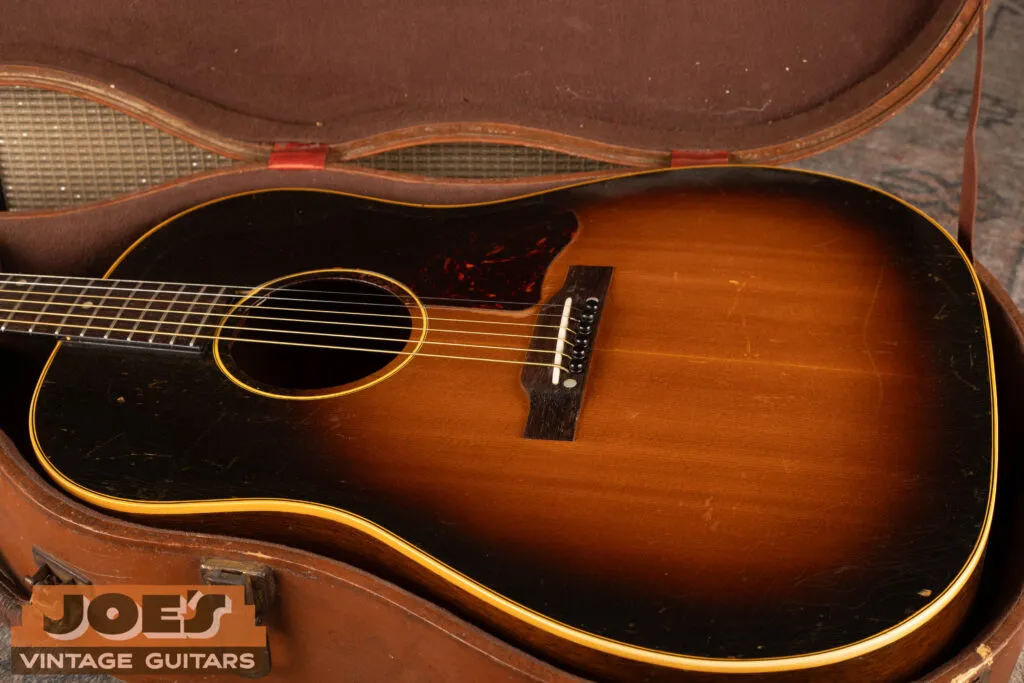
Vintage Gibson acoustic values differ sharply by model: an excellent, original 1955 to 1959 J-45 falls in the $6,000 to $8,450 range, while a 1952 to 1959 J-200 sits at $12,750 to $17,800. Both assume the original case. They aren’t interchangeable estimates for a large old Gibson acoustic.
I use this hub to connect the model guides and explain which table fits each guitar. The ranges were reviewed in October 2026. A repaired or modified guitar needs its own appraisal.
Choose Your Gibson Acoustic Model
Choose a model card for prices and condition notes. Each card also links to its authentication guide so you can check the model and original features before choosing a range.
Not sure which model you have? Start with the J-45, J-50 and Southern Jumbo identification guide for that family. The Southern Jumbo now has its own value and authentication guides above. A J-50 still needs model-specific comparisons.
Gibson Acoustic Values By Model
Match the model and era, then read its condition requirements. The Hummingbird figures are dealer asking ranges; the other rows are guide-value ranges.
| Model | Era Or Configuration | Value Range |
|---|---|---|
| J-45 | 1955 to 1959: Large-guard sunburst era | $6,000 to $8,450 |
| J-45 | 1970 to 1979: Square-shoulder J-45 and Deluxe | $1,700 to $3,100 |
| J-200 | 1952 to 1959: Standard natural or sunburst | $12,750 to $17,800 |
| J-200 | 1970 to 1979: J-200 and Artist period | $3,550 to $5,800 |
| LG-0 | 1958 to 1974: LG-0 | $700 to $1,600 |
| LG-1 | Postwar to 1968: LG-1 | $2,000 to $4,500 |
| LG-2 | 1950 to 1962: LG-2 | $2,700 to $5,350 |
| LG-3 | 1950s to early 1960s: LG-3 | $3,600 to $4,450 |
| Hummingbird | 1960 to 1962 | $7,500 to $11,000 asking |
| Dove | 1962 to 1964: Early Dove | $7,650 to $10,200 |
| Southern Jumbo | 1942 to 1944: Banner; Adirondack spruce top | $16,910 to $22,250 |
| Country Western | 1956 to 1959: Country Western / SJN | $6,160 to $8,360 |
| L-00 | 1932 to 1946: Original-production L-00; shared guide band | $5,280 to $6,600 |
| L-0 | 1926 to 1928: 13½-inch body; maple category in the guide | $4,840 to $6,160 |
The Dove, Southern Jumbo, Country Western, L-00 and L-0 examples above are adjusted references from the 2026 Vintage Guitar price guide; each full guide explains its condition baseline and the fixed 11% to 15% reduction applied to source rows. They are not recorded transaction prices.
I identify the model, year and condition before choosing a range. The individual guides explain which configurations and repairs each table covers.
J-45 Values And The Slope-Shouldered Family
The Gibson J-45 value guide covers every year from 1942 through 1979. Its table distinguishes the wartime, postwar and later groups with explicitly shared era ranges. It doesn’t assign a new independent price curve to each year.
The J-45, J-50 and Southern Jumbo identification guide handles the family comparisons. Use it when the model itself is uncertain. A natural finish, a label or a familiar body outline needs to be read with the rest of the instrument.
Use the Southern Jumbo value guide for SJ prices and its authentication guide for model and originality checks. The Country Western value guide covers the named natural-finish SJN family. A J-50 still needs its own model-specific comparisons.
The J-45 guide also labels its comparison photographs. A J-50 or Southern Jumbo photograph can help explain the family, but it isn’t evidence that the J-45 table applies to the guitar pictured. Model identity comes before price selection.
J-200 And SJ-200 Values
The Gibson J-200 value guide supplies annual postwar references from 1947 through 1979. It separates the early maple period, the 1950s, the 1960s and the later J-200 and Artist period. Its six archive photographs show the actual instruments identified in the captions.
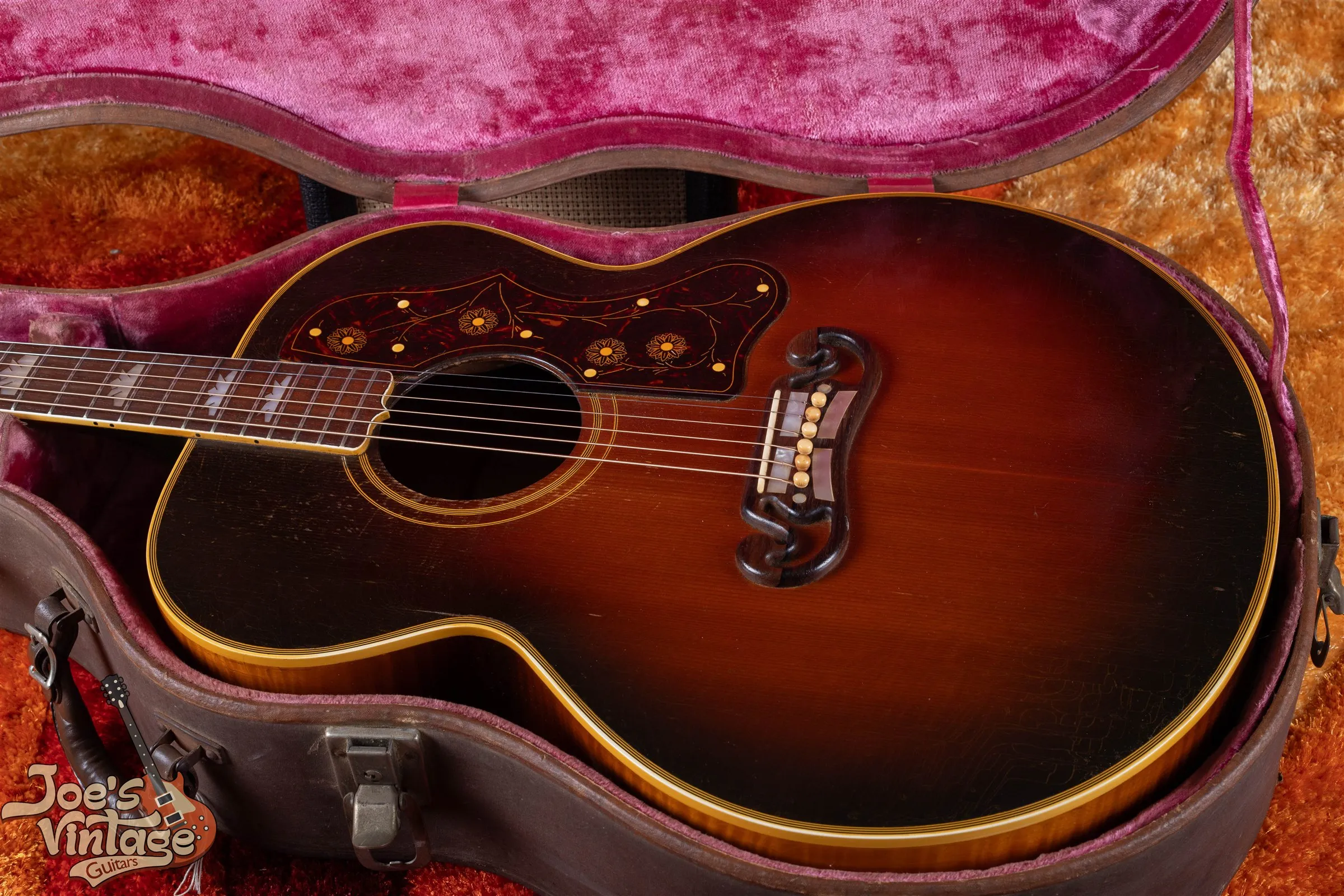
Prewar examples need individual appraisals and aren’t assigned a range here. Their construction, condition and documented history can put them in a different market from later J-200s.
SJ-200 means Super Jumbo in this family. It shouldn’t be confused with the Southern Jumbo merely because both names can be shortened to SJ. Check the full model before using either guide.
A converted saddle or changed internal structure also affects the comparison with an original collector example. A modification’s effect depends on the work and the instrument’s remaining originality. The actual work and current condition need to be recorded.
Hummingbird Values
The Gibson Hummingbird history and value guide keeps its existing page address and puts the annual table near the top. The early reference shown here is only one part of its coverage. Later configurations need the appropriate row.
Read the Hummingbird’s condition notes before applying a range to a repaired guitar. I assess originality and structural work together.
The name on the model guide also defines the scope. A related acoustic with similar decoration doesn’t automatically share the same price. I need the model, year and construction established well enough to choose matching comparisons.
LG-0, LG-1, LG-2 And LG-3 Values
The Gibson LG-series value guide separates the four models and their documented production coverage. Some bands describe a broad original-run envelope, while others are divided by era. The table labels that distinction.
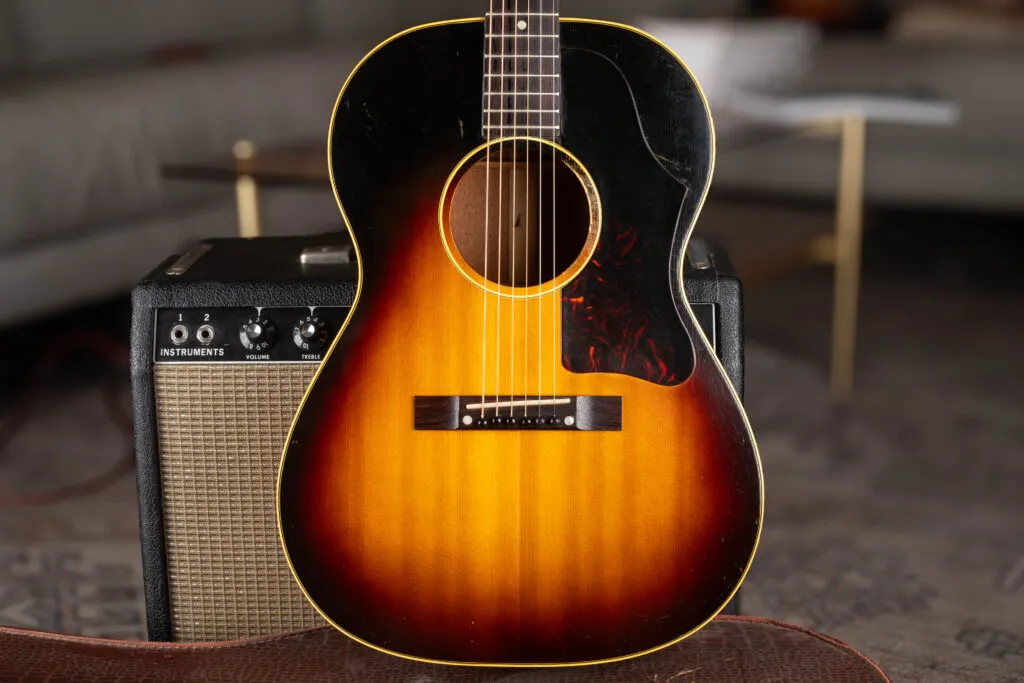
Don’t assume that every small Gibson acoustic belongs in the least or most valuable LG category. The model differences need to be established before choosing a range. The existing identification article carries the construction walkthrough; the value guide handles the pricing.
The LG ranges cover broad model and era groups. A wartime guitar and a later example can share a range while differing in construction and condition. I consider those differences in an individual appraisal.
Changed tuners, bridge work, a repaired seam or an added pickup can put a guitar outside the excellent-original category. A small body doesn’t make repair history less relevant.
Repairs And The Condition Assumption
For condition comparisons beyond this model, I explain how repairs and replaced parts affect vintage guitar value.
The clean-condition ranges generally assume original finish and major parts, excellent condition and the original case. I still need the repair details before deciding whether a particular guitar fits.
A neck reset, a bridge replacement and a small repaired crack are different kinds of work. Their effect depends on the instrument and the quality and extent of the repair. The type and extent of the finish work determine the deduction.
Neck Angle And Current Playability
A clean exterior doesn’t establish that a guitar is ready to play. The present setup and any work still needed belong in the condition description. A low advertised price can be less informative if the repair needs are unclear.
An old repair invoice helps explain work already done, but it doesn’t establish the current state by itself. I consider the guitar as it is now. If the condition is uncertain, the initial appraisal remains provisional.
Bridges, Plates And Internal Changes
The visible bridge is only part of the structure. A description may also involve the saddle, bridge plate, braces or repaired top. Those changes should be documented rather than hidden behind a general statement that the guitar has been serviced.
Keep removed parts with the instrument where possible. Their presence can help explain the history, even when they cannot simply be reinstalled. It doesn’t automatically restore the guitar’s original condition category.
Finish, Wear And Fretwork
Wear, localized finish touchup and a complete refinish aren’t equivalent descriptions. I need to know what is known about the finish and where the uncertainty remains. A photograph alone doesn’t establish all of that history.
A quality refret preserves otherwise all-original status while removing museum-quality status. Neck reshaping and structural work are separate alterations. They shouldn’t be described as routine fret maintenance.
What The Numbers Do And Do Not Represent
An advertised amount is an asking price, which may differ from the price ultimately paid. I assess the guitar and the terms of a proposed sale before making an offer.
The model guides distinguish clean originals from worn, repaired and modified instruments. Choose the condition group that describes your guitar before using a range.
An owner’s net proceeds can also differ from a retail transaction total. Selling costs and the terms of a direct purchase affect the amount received. The upper endpoint of a guide isn’t a guaranteed purchase offer.
Starting An Acoustic Appraisal
I can begin with the full front and back, both sides of the headstock, the bridge area, identifying numbers and any visible damage. Include the case and any repair documents or removed parts. Tell me what you know and what you’re unsure about.
You don’t need to authorize repairs or make the guitar look newer first. Documenting its present state gives the appraisal a clear starting point. If closer inspection is needed, I can explain which details remain unresolved.
For electric and archtop models, use the Gibson value hub. This acoustic hub focuses on the flat-top families above. The model pages contain the full annual tables and condition guidance.
For acoustic archtops, the L-4 and L-4CES values separate acoustic and factory electric versions, while the L-7 and L-7C prices distinguish body and cutaway groups. The L-48 value guide and L-50 value guide keep those two similar-looking models in their own condition comparisons.
Questions About Gibson Acoustic Value
How Do I Find The Value Of My Gibson Acoustic Guitar?
Start with the exact model, then match the year, configuration and condition. I can begin an individual appraisal with clear photographs and the history you know.
Are All These Prices Based On The Same Condition?
The guide-value ranges assume clean originals with their original cases. Wear, replacement parts and structural repairs need to be assessed before comparing an individual guitar.
Why Do Some Years Share A Price Range?
Adjacent years can share an era range. The annual row helps you find the year, but condition and configuration still determine the appraisal.
Can I Use A Current Listing As A Completed Price?
No. An advertised amount is an asking price, and a sold label doesn't always disclose the final negotiated amount. The final selling price can differ from the advertised amount.
Does A Quality Refret Remove All-Original Status?
A quality refret preserves the all-original classification of an otherwise original instrument while removing museum-quality status. Refinishing, neck reshaping and structural repairs are separate changes.
Are These Guaranteed Purchase Offers?
No. The ranges help organize an appraisal. A purchase offer depends on the actual instrument and sale terms, and selling costs can affect the owner's proceeds.