
Year of Manufacture
Earlier guitars bring the most. The 1954 debut year is the top of the market, but the neck, body, electronics, and hardware all need to agree with the claimed year.
2026 price ranges for 1954 to 1965 Stratocasters, plus the finish, originality, and condition details that move the number.
The short answer
An all-original 1954 to 1965 Fender Stratocaster in excellent condition can be worth about$12,000 to $220,000. Original custom colors can bring substantially more than sunburst, while a refinish, changed pickups, extra body routes, or assembled parts can cut the number dramatically.
That spread is wide because a first-year 1954 Stratocaster and a late-1965 transition guitar do not occupy the same market. Start with the year, then verify the finish, parts, condition, and case before treating any price as meaningful. For an exact figure on your guitar, get a free appraisal and I’ll give you a straight answer.
Quick price guide
These are current retail-value estimates for excellent, all-original guitars with the original case. Select a year to see its specifications, condition-dollar bands, authentication checks, and appraisal method.
| Year | Sunburst | Custom Color |
|---|---|---|
| 1954, first year | $68,000 to $220,000 | Individual appraisal required |
| 1955 | $40,000 to $64,000 | $80,000 to $160,000 |
| 1956 | $36,000 to $60,000 | $40,000 to $160,000 |
| 1957 | $32,000 to $48,000 | $40,000 to $160,000 |
| 1958 | $28,000 to $36,000 | $36,000 to $144,000 |
| 1959 | $20,000 to $28,000 | $32,000 to $128,000 |
| 1960 | $20,000 to $28,000 | $32,000 to $68,000 |
| 1961 | $17,000 to $27,000 | $28,000 to $64,000 |
| 1962 | $16,000 to $26,000 | $26,000 to $60,000 |
| 1963 | $15,000 to $24,000 | $22,000 to $52,000 |
| 1964 | $14,000 to $22,000 | $20,000 to $48,000 |
| 1965, early small headstock | $14,000 to $22,000 | $18,000 to $44,000 |
| 1965, late large headstock | $12,000 to $20,000 | $16,000 to $36,000 |
The year is only the starting point. Confirm the finish, neck, body, electronics, hardware, repairs, and case before applying a headline range. Read the Fender custom-color authentication guide before adding a finish premium.
I evaluate these in the same order every time: establish the production period, authenticate the finish, inventory the original parts, and then judge condition. A serial number is evidence, but it is never the appraisal by itself.
Earlier guitars bring the most. The 1954 debut year is the top of the market, but the neck, body, electronics, and hardware all need to agree with the claimed year.
Sunburst was standard. Factory custom colors are scarcer, and the rarest original finishes can be worth more than twice a sunburst from the same year.
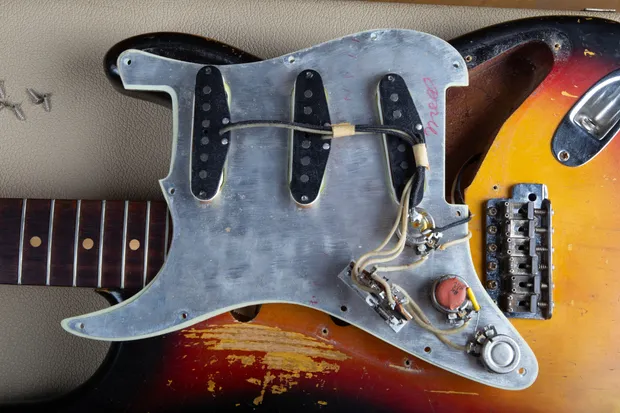
Pickups, solder, pots, pickguard, tuners, bridge, and plastics all matter. One changed part does not make the guitar worthless, but every change has to be identified and priced honestly.
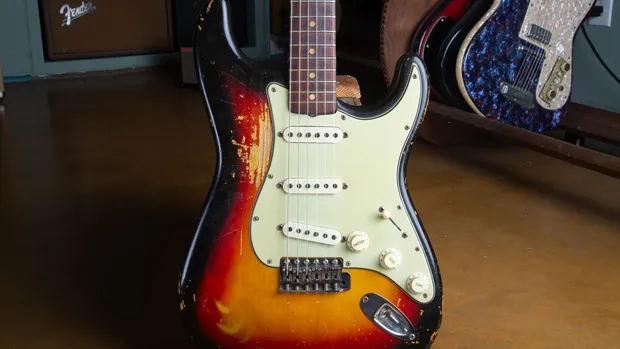
Clean examples sit at the top, but honest play wear is not the same as damage. Structural repairs, overspray, extra routes, and an altered neck affect value more than ordinary checking and buckle wear.
The headline ranges assume an excellent, all-original guitar. Use these broad bands only after matching the instrument to its correct year and finish. A changed part is not automatically the same as a refinish or a replacement body.
| Condition | Adjustment | What It Assumes |
|---|---|---|
| Excellent and all original | Use the headline range | Original finish, major parts, coherent dates, no structural changes, and the original case. |
| Very good and largely original | About 75% to 90% | Honest wear, a professional refret, or minor reversible service work, with the finish and major parts intact. |
| Professional refinish | Often about 45% to 60% | The result depends on the remaining original parts, quality of the work, and whether the body was altered. |
| Major parts mismatch | Price component by component | Replacement neck or body, extra routes, mixed-year parts, or an assembled partscaster. |
Transparent valuation
A useful guide should show its method, not just publish a number. I combine firsthand appraisal experience with comparable market evidence, then normalize every comparison for year, finish, originality, and condition.
Public asking prices show seller expectations. Completed comparable transactions carry more weight when the guitar and sale conditions are genuinely comparable.
My baseline also reflects more than 10,000 instruments personally appraised, including the real Stratocasters and internal details photographed throughout this guide.
I separate year, finish, originality, condition, repairs, case, and provenance instead of averaging clean originals with refinishes or mixed-part guitars.
Celebrity ownership, exceptional provenance, charity auctions, and bidding contests can be real results without representing the ordinary market.
Values were reviewed September 18, 2026. They are retail estimates for market orientation, not guaranteed sale prices, insurance replacement values, or automatic cash offers.
Finish and color
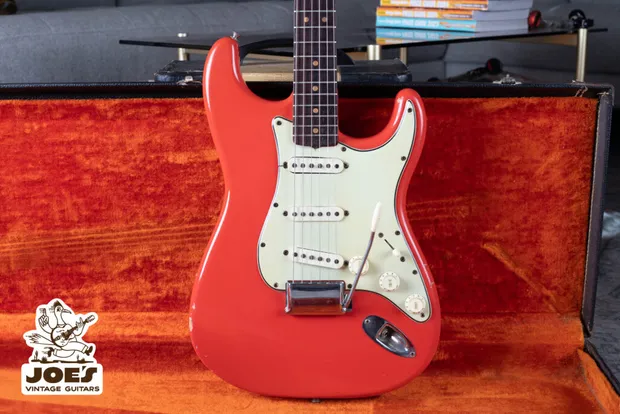
Sunburst was the standard Stratocaster finish. A factory custom color was the exception, so collectors pay for scarcity, but only when the finish is original. Fiesta Red, Candy Apple Red, Olympic White, Lake Placid Blue, and less common period colors do not all carry the same premium.
Color names alone are not authentication. I look for the paint process used in that period: wear into the right undercoat, paint-stick shadows or nail holes where appropriate, finish in the cavities, the way checking crosses the surface, and whether the neck pocket tells the same story as the visible body. See the full Fender custom-color authentication guide.
A convincing refinish can still be a good guitar. It simply belongs in a different price category from an untouched factory custom color.
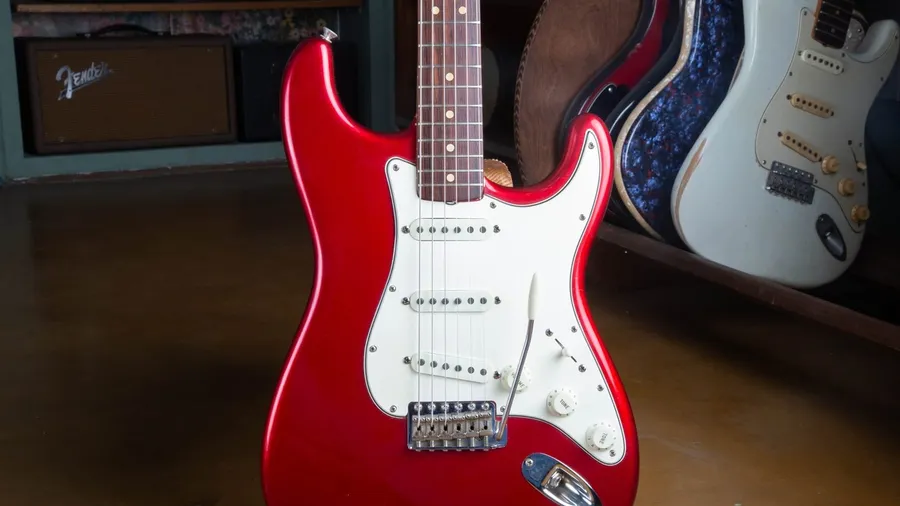
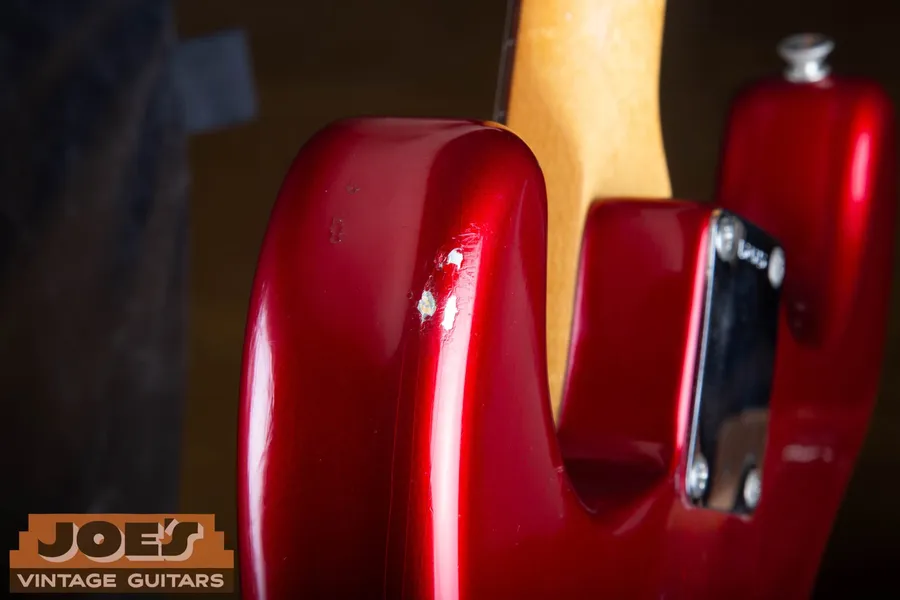
This hierarchy is a starting point, not a price formula. A clean, fully documented frequent color can be worth more than a scarce color with weak finish evidence, changed parts, or structural damage.
| Tier | Typical Finishes | How It Affects Value |
|---|---|---|
| Baseline | Two-color or three-color sunburst | Use the year table as the starting point. |
| Frequent custom colors | Olympic White, Candy Apple Red, Lake Placid Blue | Often a meaningful premium when the factory finish is convincingly original. |
| Scarce custom colors | Fiesta Red, Sonic Blue, Daphne Blue, Burgundy Mist, Shoreline Gold | Usually a stronger premium, but year, condition, and evidence still control the price. |
| Exceptional | Shell Pink, Sherwood Green, Foam Green, unusual gold hardware | Authenticate and appraise individually; there is no safe fixed multiplier. |
Date it before you price it
A serial number helps place a Stratocaster in the right production window, but it does not determine value by itself. “Pre-CBS” usually means a Stratocaster built before CBS took control of Fender in early 1965. The market treats 1965 as a transition year, so the physical specification matters more than the calendar label. A small headstock, spaghetti or transition logo, clay dots, L-series plate, period pickguard, and matching component dates help place the guitar accurately.
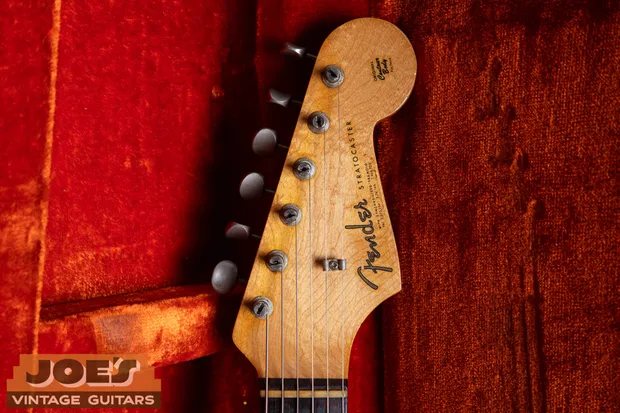
Every value in the table turns on the production period. The quickest visible check is the headstock: the small outline continues through 1965, while the larger CBS shape arrives late that year. The fingerboard is another strong clue: a thick slab rosewood board runs from 1959 to mid-1962, followed by a thinner veneer board.
Serial-number location narrows the era, but it does not prove it:
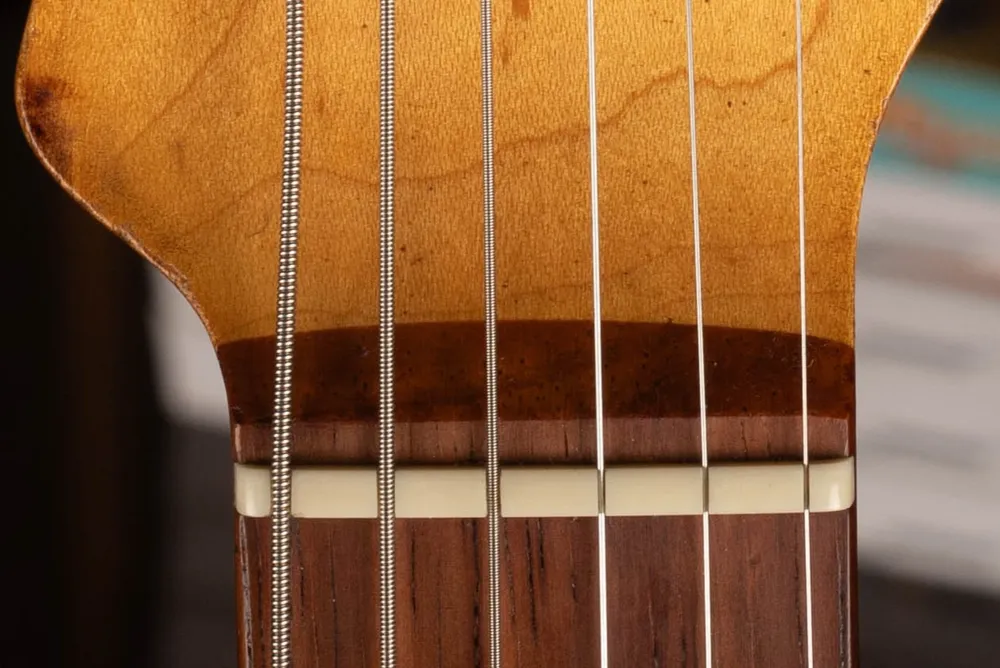
Annotated photo comparison
These real guitars show how the model changes across the period. Use the label on each photo as a visual checkpoint, then confirm the date with the internal evidence. No outside feature authenticates a guitar by itself.
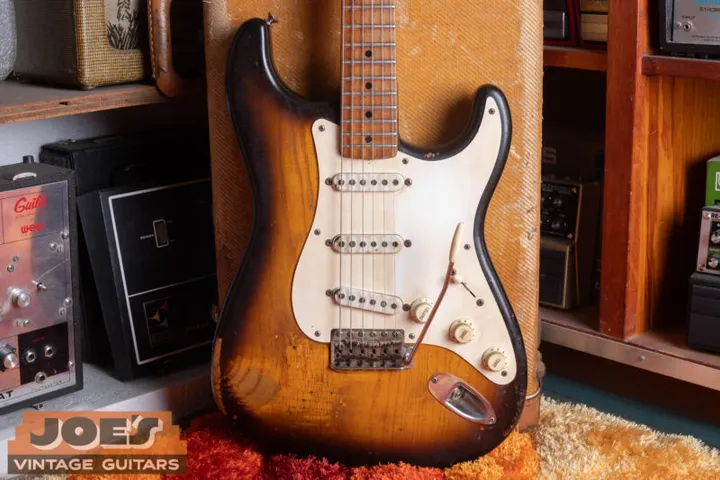 1954 to 1958
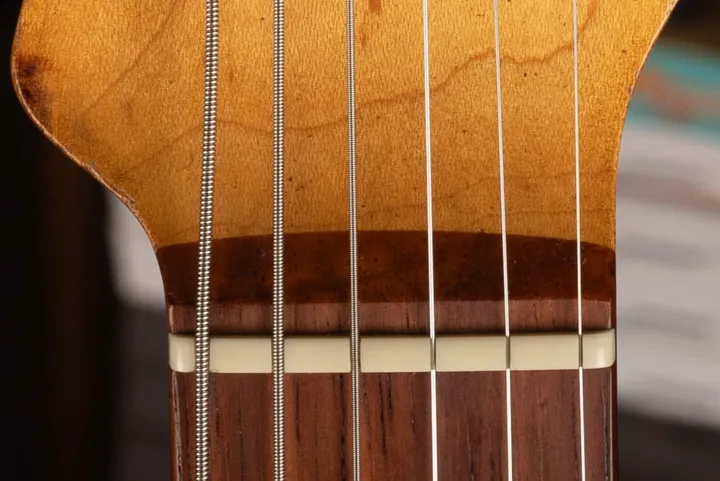 1959 to Aug. 1962
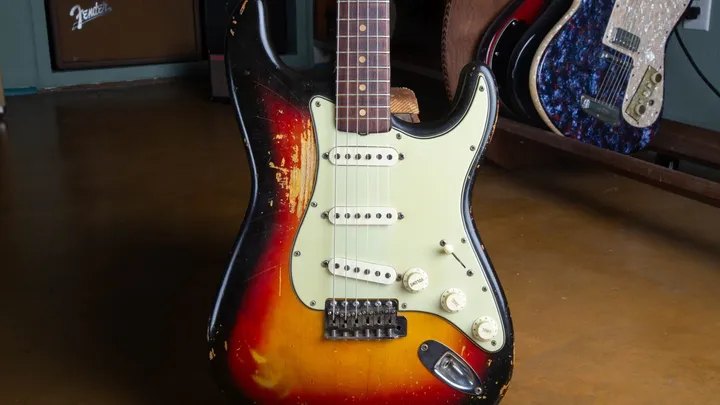 1963 to mid-1964
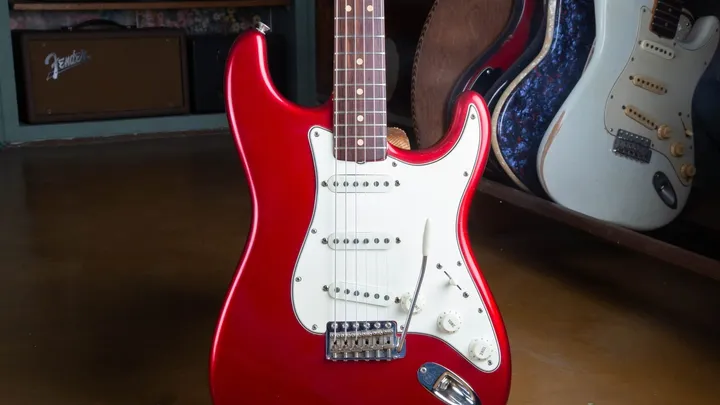 1965 transition
Later vintage Strats
Do not carry the pre-CBS table forward to a 1970 or 1976 Stratocaster. CBS-era guitars occupy a different market, and value depends on the exact year, finish, originality, weight, pickups, neck, routing, hardware, and case. The serial number establishes a window; it does not establish the price.
Large headstock, transition details, four-bolt neck construction, and late-1960s pickup and finish changes. Earlier, cleaner examples generally receive the strongest CBS-era interest.
Three-bolt necks, bullet truss rods, die-cast bridges, and changing finishes define this period. A 1976 Stratocaster must be compared with guitars of the same specification rather than with a pre-CBS example.
The serial moves to the headstock, but overlapping prefixes still require component dates and physical features. Weight, routing, finish, pickups, and originality create a wide spread.
Start with the year-by-year Stratocaster dating guide andFender serial number guide. For a current figure on a specific CBS-era guitar,request a free appraisal rather than borrowing a pre-CBS range.
The biggest deductions come from changes that remove original material or make the guitar’s history hard to verify. Ordinary play wear is visible; replaced wood, finish, and electronics change what the guitar actually is.
| Issue | Why It Matters |
|---|---|
| Refinished body or neck | Usually the largest single deduction. A full refinish can bring a guitar to roughly half the value of a comparable original-finish example. |
| Changed pickups or disturbed solder | Original pickups and untouched connections carry a large share of a pre-CBS Stratocaster’s collector value. |
| Extra body routes or wood removal | Permanent modification is more serious than a reversible hardware change because the original body cannot be restored. |
| Replacement neck, body, or assembled parts | A guitar assembled from genuine vintage parts is a partscaster, not an all-original example, and should be valued component by component. |
| Replaced pickguard, tuners, bridge, or plastics | The deduction depends on the part, its rarity, and whether the original part stays with the guitar. |
| Professional refret or normal maintenance | Good maintenance can preserve playability. It normally hurts less than a refinish, structural damage, or non-original electronics. |
Keep every removed part with the guitar. An original pickup, guard, tuner, bridge cover, tremolo arm, or case still has value even if it is no longer installed.
Joe’s appraisal process
A useful appraisal has to explain the number. I do not price a vintage Fender from the serial plate alone; I build the answer from independent details that should agree with one another.
Serial range, neck date, body date, pot codes, pickup dates, headstock, fingerboard, logo, and hardware should tell one consistent story.
I separate standard sunburst, genuine factory custom colors, overspray, touch-up, and full refinishes before applying any color premium.
Pickups, pots, solder, pickguard, tuners, bridge, saddles, knobs, switch, jack, neck, and body all affect the result.
Honest wear, refrets, cracks, extra routes, structural work, and replaced parts do not carry the same deduction.
I compare the guitar with examples of the same year band, finish, originality, and condition, not simply the highest asking price online.
The method in practice
These examples use real guitars photographed for this site to show the reasoning process. They are illustrative appraisals, not claimed public sale records, and no value is assigned until the internal evidence is reviewed.
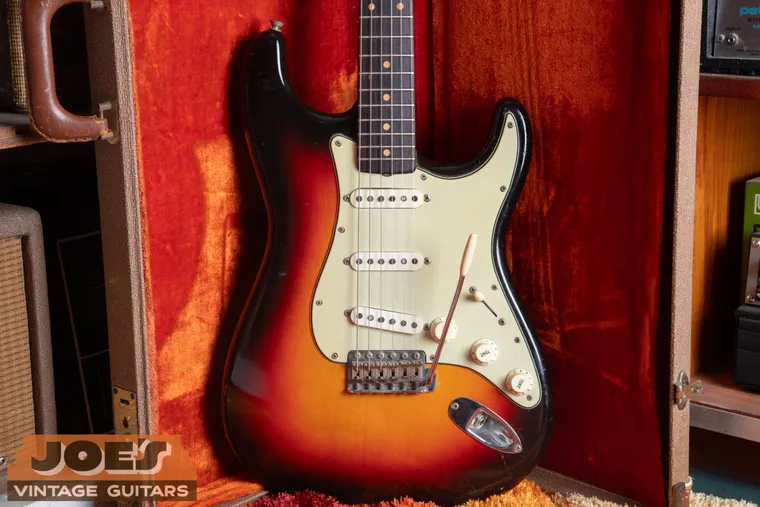
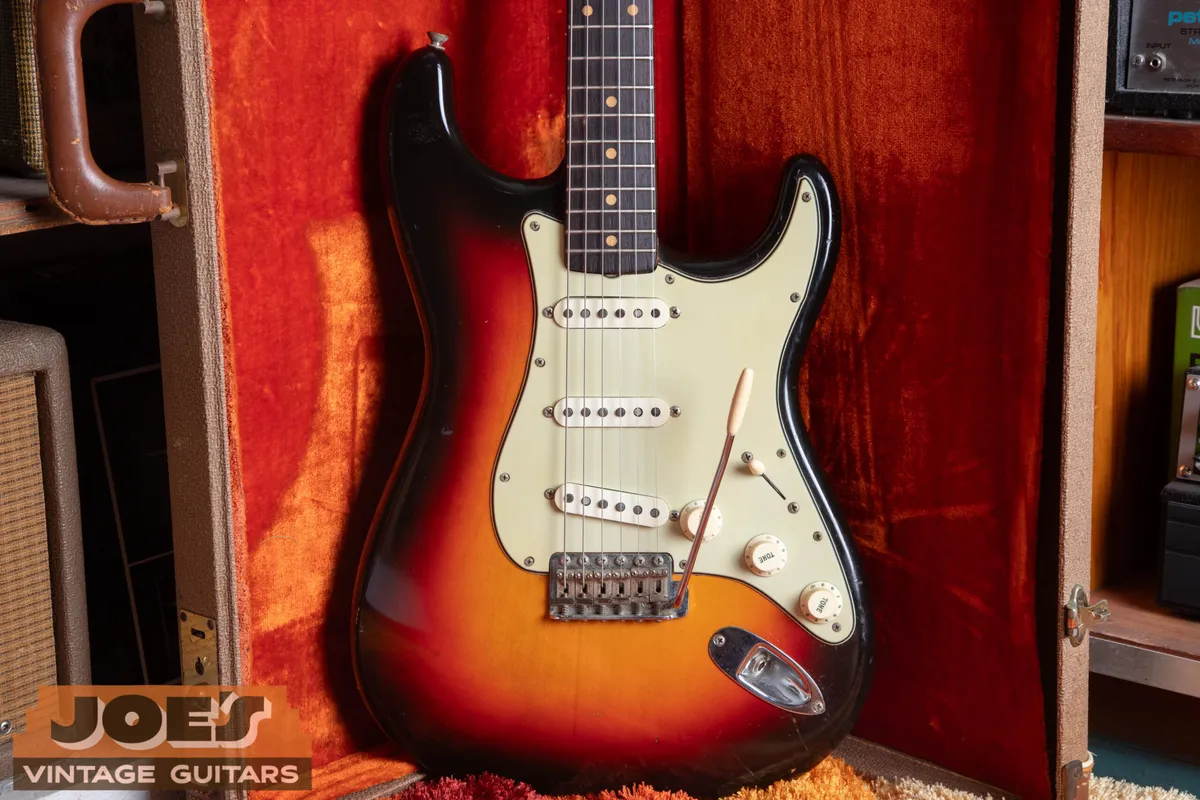
Start with the 1962 sunburst range. Confirm the slab or veneer board transition, neck date, pots, pickups, solder, guard, and finish before moving within that band.
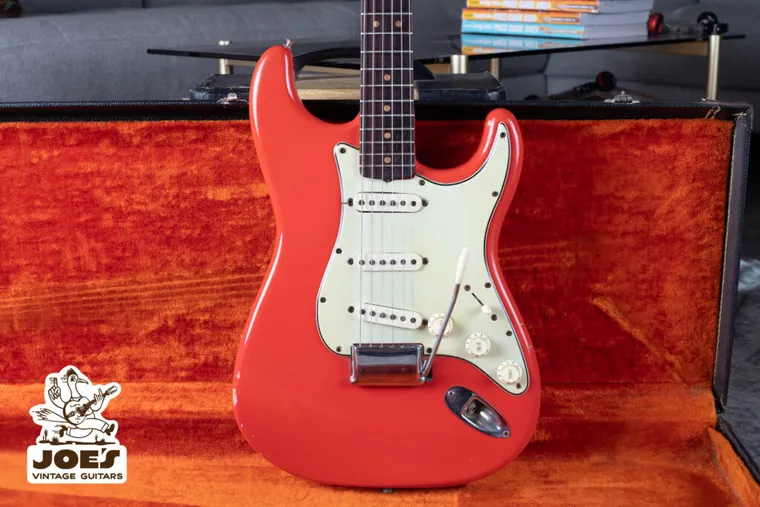
First authenticate the Fiesta Red finish. If the L-series details, transition-era features, dates, and original parts agree, the scarce-color tier can justify a stronger premium than a routine custom color.
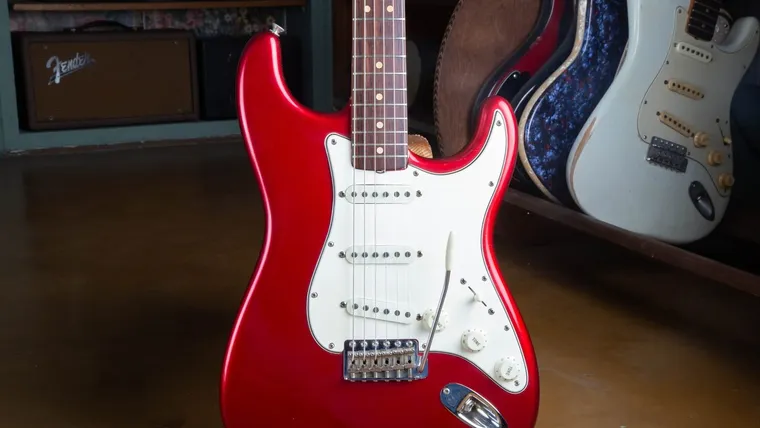
Classify it as early, mid-year, or late 1965 before pricing it. Then verify the metallic undercoat, protected paint, guard material, plate style, headstock, and component dates.
Let a dealer handle the photos, the listing, the authentication, and the buyers. I offer consignment from as low as 8% on top-tier instruments.
The quickest, simplest route: a fair cash offer and payment up front, with me handling shipping or pickup. Sell your Fender to me directly.
You can sell it yourself, but a high-end vintage guitar carries real liability. Most dealers keep an insurance policy over $100,000 just for shipments. If you go this route, Reverb’s buyer protection is worth the fees.

Have a vintage guitar to sell or a question? I’m here to help.