Model-by-model authentication guides, serial-number dating help, and honest advice on valuing and selling vintage guitars, written by Joe Dampt from real instruments handled at the shop.
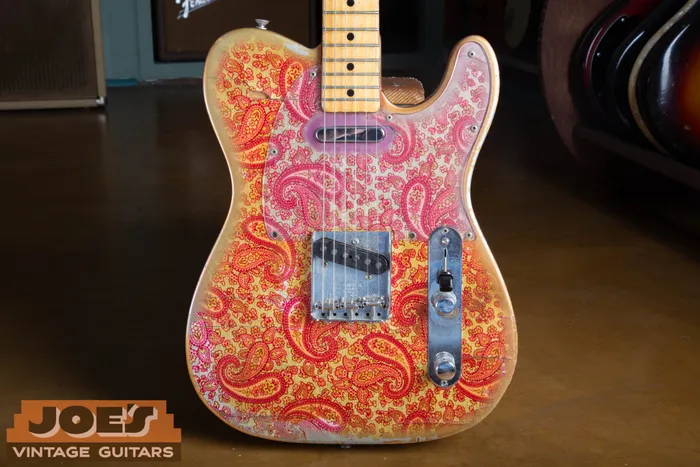
An original 1968 or 1969 Fender Pink Paisley Telecaster takes some careful checking to authenticate. This guide covers the Cling-Foil finish chemistry, neck dating, CBS-era hardware, and the “puzzle piece” test every serious buyer needs to know.
If you've built your collection over decades, or just inherited one you don't know how to value, selling a large guitar collection is a real job, not a weekend project. This guide covers every selling avenue honestly: Reverb, eBay, Facebook Marketplace, local dealers, consignment, auction houses, and more. We've handled collections of 700+ instruments and help with every step, including identification, documentation, and organization. Read the full breakdown, then decide what's right for you.
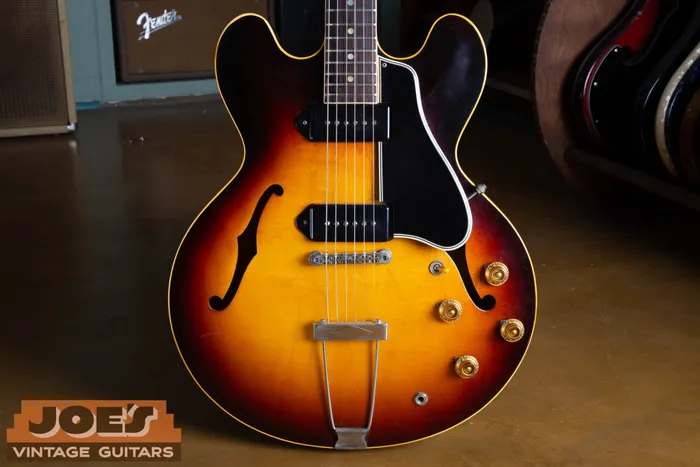
The dot-neck Gibson ES-330 is one of the more misunderstood guitars of Gibson’s golden era. Fully hollow, dogear P-90 equipped, and joining the body at the 16th fret (not the 17th, not the 19th), it’s a very different instrument from the ES-335 it’s so often compared to. This guide covers every specification of the 1959 to 1962 dot-neck era in detail: neck profiles by year, knob changes, saddle materials, serial numbers, FON dating, cases, pickguard construction, vibrato variants, and the other details that separate an original example from a modified one, and a 1959 from a 1962.
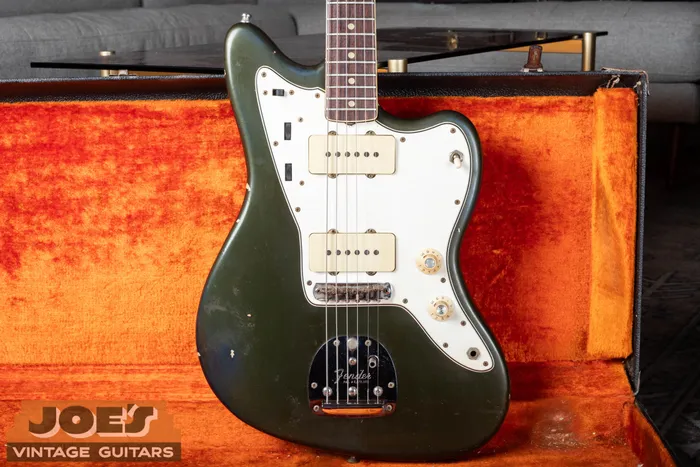
The Fender Jazzmaster changed more times in its first 14 years than almost any other model in the Fender lineup. This guide documents every spec change year by year: gold guard to tortoiseshell, slab to veneer, clay dots to pearl to blocks, spaghetti to CBS black logo, Klusons to F-tuners, and a complete custom color reference with the correct pickguard pairing for every finish.
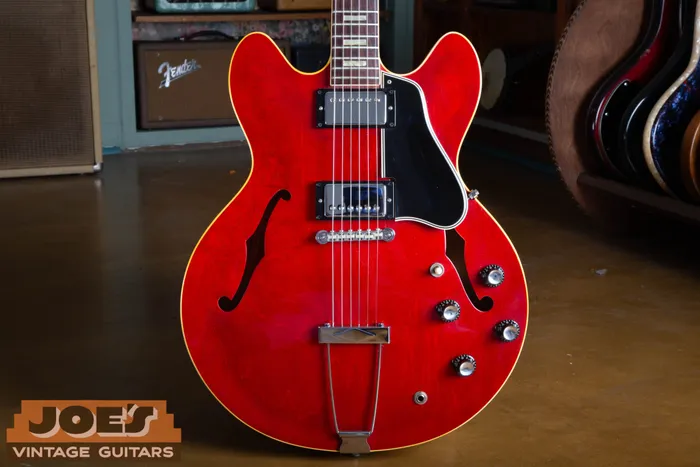
The 1966 Gibson ES-335 is a pre-Norlin Kalamazoo instrument built to the same standard as the early 1960s examples: Patent Number humbuckers, ABR-1 bridge with nylon saddles, trapeze tailpiece, and tortoise side dots most buyers don’t know to look for. This guide walks through every authentication detail with close-up photos of a clean original, including a full set of intact case candy, one of the rarest things to find on a vintage Gibson.
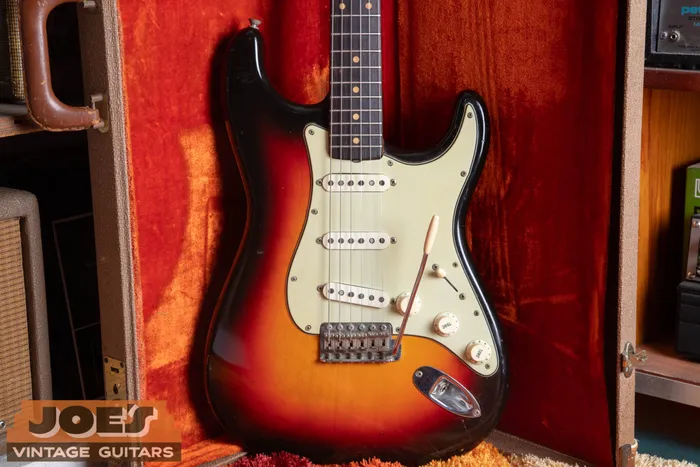
The 1962 Fender Stratocaster comes from the end of the pre-CBS golden age of Fullerton production: pre-CBS, pre-veneer on early examples, and built to a standard Fender rarely hit again. The main challenge in authenticating a 1962 is the mid-year slab-to-veneer rosewood transition, but there’s more to it: black-bottom pickups, pot codes, the puzzle-piece finish test, nail holes with bare wood inside, and a mint-green pickguard that only original celluloid produces. This guide covers every detail.
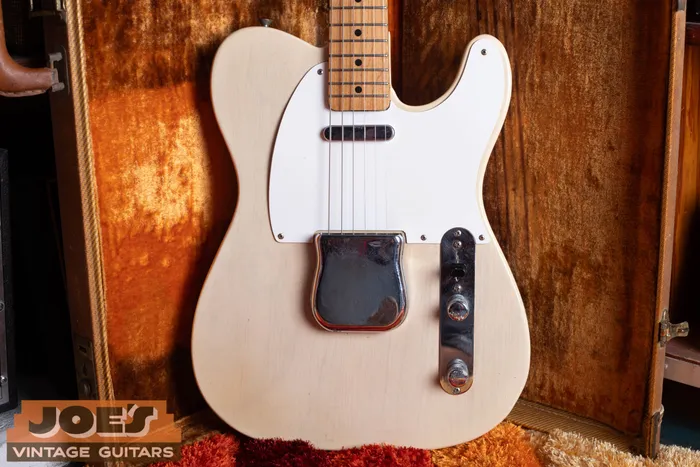
The 1959 Fender Telecaster packs more changes into one year than any other in the model's history: slab rosewood fingerboard, top-loader bridge reversal, the Telecaster Custom introduction, and a mid-year gap where Fender employees were ordered to stop dating necks entirely. This guide covers every feature change, every dating method, and every detail that separates a genuine 1959 from a reissue or misrepresented example.
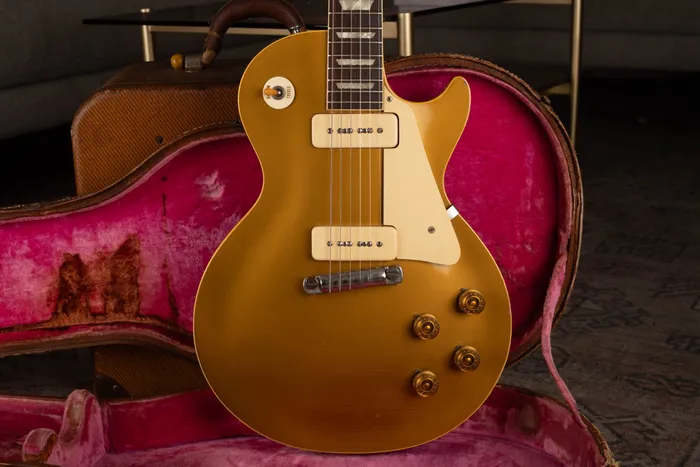
A year-specific authentication reference for the 1954 Gibson Les Paul Goldtop, the first full production year with the corrected neck pitch and wrap tail bridge. Covers serial numbers, no-line Kluson tuners, Grey Tiger capacitors, barrel knobs, P-90 pickups, bullion gold finish, and how to tell a genuine 1954 from a reissue or a date-shifted neighbor.