
Model Name
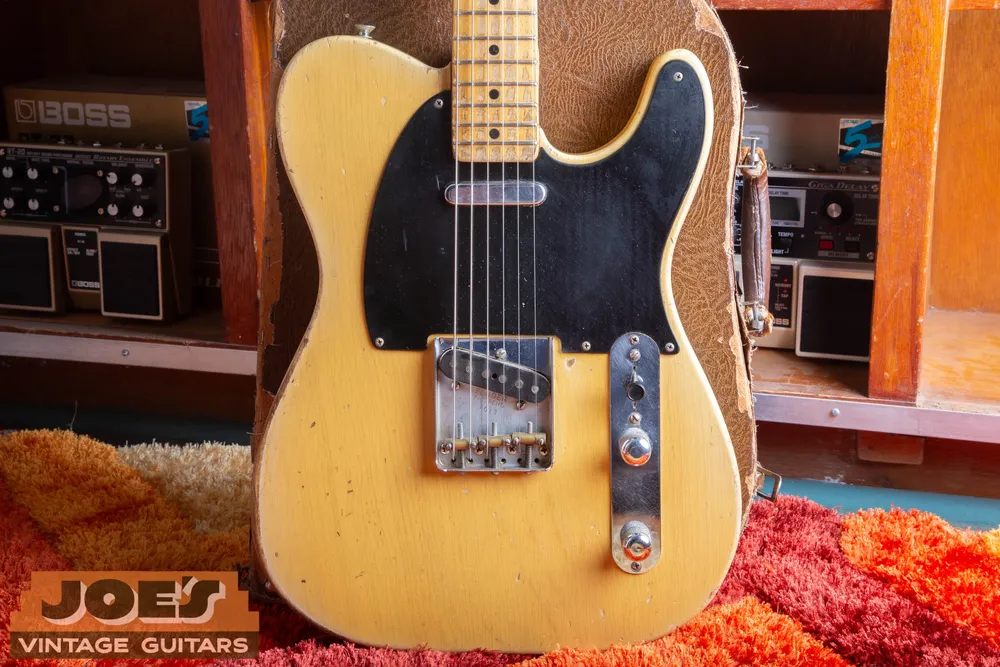
The headstock decal carries the Broadcaster name. The later clipped-decal Nocaster period did not begin until 1951.
Current values, factory features, and the evidence that separates a real 1950 Fender Broadcaster from a mixed or modified guitar.
The short answer
An excellent, all-original 1950 Fender Broadcaster with its original case is generally worth about $90,000 to $175,000. The production window was short, so originality, condition, and a coherent early specification can move the result sharply inside that range.
The two-pickup Broadcaster followed Fender's single-pickup Esquire during 1950. It established the ash body, one-piece maple neck, bridge pickup and metal bridge plate that became the Telecaster platform, but it still carries the short-lived Broadcaster model name.
At this level, the decal, bridge-plate serial, finish, neck, pickups, electronics, and hardware all need to agree. A correct-looking black guard is only the beginning; replacement decals, refinishes, mixed parts, and modern recreations materially change the value.
2026 market estimate
Start with the correct range, then adjust for what is actually present. These are retail-value estimates, not automatic cash offers or insurance replacement values. The headline range assumes a blonde example unless a custom-color range is stated.
| Condition and originality | Estimated value | How to use it |
|---|---|---|
| Excellent and all original | $90,000 to $175,000 | The headline blonde range, assuming the original case and a coherent, authenticated guitar. |
| Very good and largely original | $68,000 to $158,000 | About 75% to 90% of the excellent range. Honest play wear, normal checking, or a professional refret can fit here when the original finish and major parts remain intact. |
| Professional refinish | $41,000 to $105,000 | About 45% to 60% of a comparable original. The remaining original parts, quality of the work, sanding, extra routes, and changed wood determine the final deduction. |
| Major parts mismatch | Value component by component | A replacement neck or body, extra routes, mixed-year parts, or uncertain provenance prevents a dependable whole-guitar comparison. |
Year-specific evidence
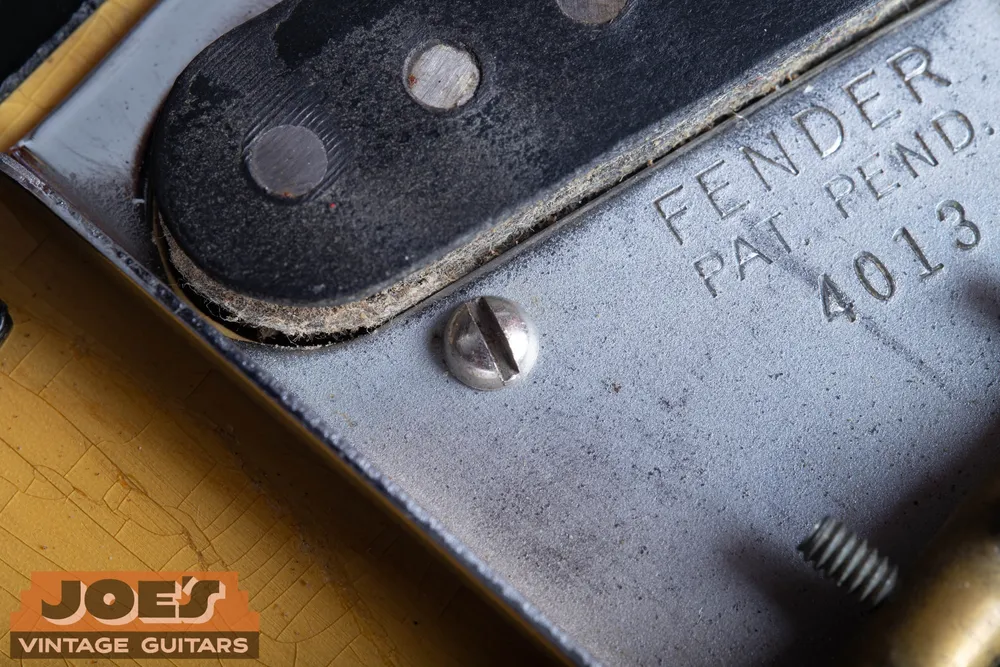
Start with this year-specific visual checkpoint: Broadcaster decal, bridge-plate serial, and black phenolic guard. That narrows the production window; it does not authenticate the guitar by itself. The strongest conclusion comes from several independent details agreeing.
The headstock decal carries the Broadcaster name. The later clipped-decal Nocaster period did not begin until 1951.
The serial is stamped into the bridge plate rather than a neck plate, a defining feature of the earliest Fender production.
A one-piece maple neck with rear skunk stripe and a black phenolic pickguard belong to the core specification.
Brass saddles, no-line Kluson tuners, a round string guide, and period screws should support the rest of the guitar.
For the full chronology, use the Fender Telecaster dating guide. Then compare component evidence with the Fender serial number guide, neck-date guide, pickup-date guide, and pot-code guide.
Before you set a price
Do not remove a neck, pickup, bridge, or pickguard unless you know how to do it safely. Clear photos of the front, back, headstock, serial, case, and any visible repairs are enough to begin a free appraisal.
Worked example
A coherent 1950 Broadcaster with its original blonde finish, decal, bridge plate, pickups, harness, and case belongs near the strongest part of the market. A refinished or mixed-part guitar needs a component-by-component appraisal instead.
This is an illustrative appraisal using the real guitars and details pictured on this site, not a claimed public sale record. I first place the guitar in the correct model, year, finish, and specification, then adjust for originality, condition, repairs, case, and provenance.
Asking prices can show seller expectations, but completed comparable sales and firsthand inspection carry more weight. Read the main Telecaster price table and change-and-deduction guide before applying a headline number.
Selling a 1950 Broadcaster? See how to sell a vintage Fender directly to Joe.

Have a vintage guitar to sell or a question? I’m here to help.