
One Factory Pickup
The Esquire left Fender with one bridge pickup and an Esquire-specific control circuit. A Telecaster with its neck pickup removed is still a modified Telecaster, even if it now has a blank pickguard.
Current Esquire values from 1950 to 1968, plus the evidence that separates a factory Esquire from a converted Telecaster.
1950 to 1968 Price Guide
A vintage Esquire is not merely a Telecaster with one pickup removed. It is a factory model with its own decal and wiring, built on the same basic Fender platform. The published excellent-original ranges below run from about $7,000 to $56,500. The rarest 1950 examples require individual appraisal.
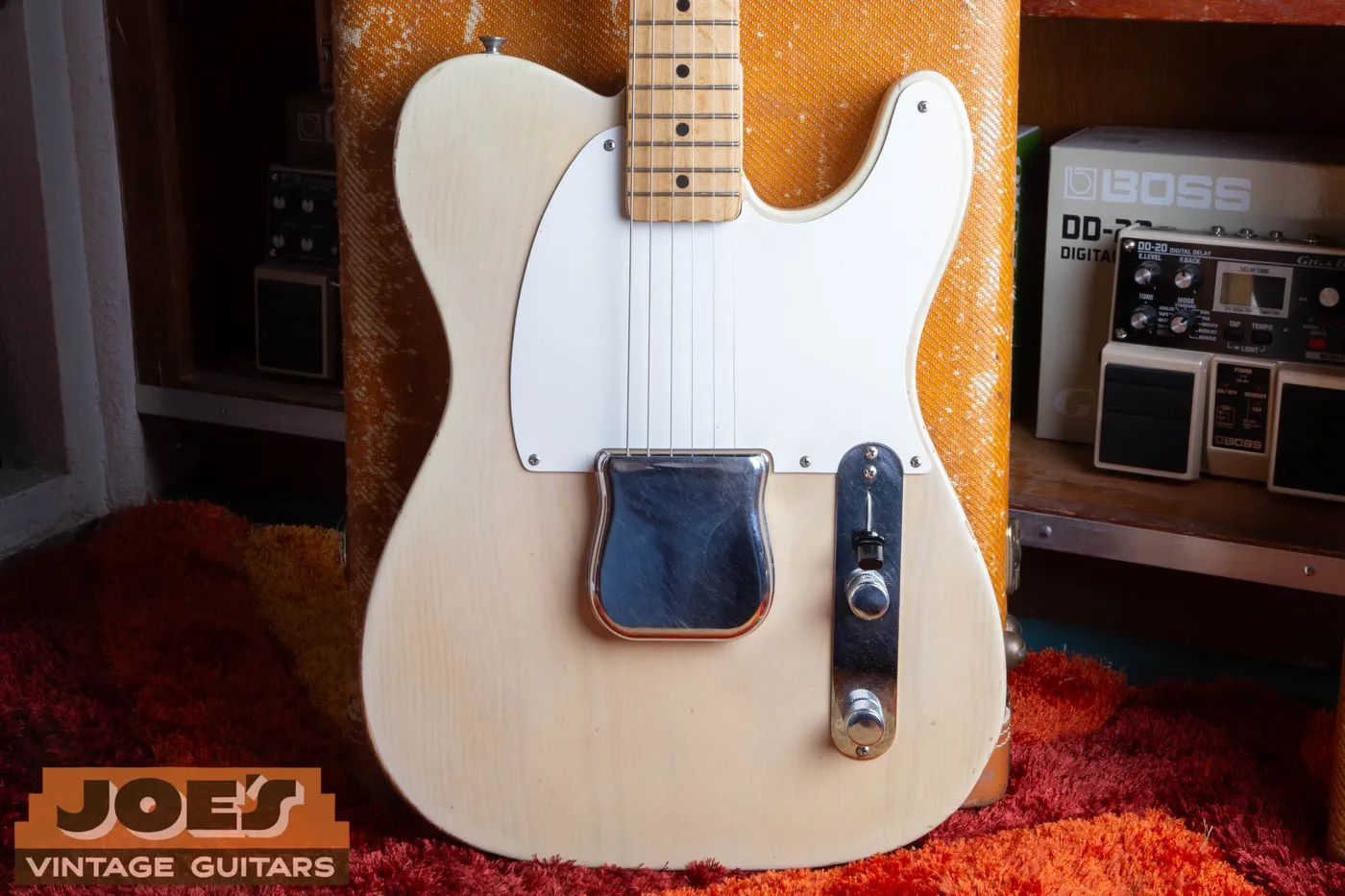
These ranges are for all-original guitars in excellent condition with the original case. A refinish, changed electronics, added routes, repairs, or uncertain factory identity requires a separate appraisal. Market reviewed September 2026.
| Year or Era | Excellent, Original | Shared Year Details |
|---|---|---|
| 1950 EsquireThe earliest Esquires are too scarce and specification-sensitive for one dependable price band. | Individual appraisal required | 1950 Fender family guide |
| 1951 blondeFor an all-original example in excellent condition with its original case. | $34,000 to $56,500 | 1951 Telecaster value guide |
| 1952 to 1953 blondeBlackguard specifications and bridge-plate serial details should agree with the claimed year. | $30,000 to $45,000 | 19521953 |
| 1954 black pickguardThe earlier part of the 1954 transition retains the black phenolic guard. | $30,000 to $45,000 | 1954 transition guide |
| 1954 white pickguardThe whiteguard transition is a distinct 1954 value checkpoint. | $30,000 to $37,500 | 1954 transition guide |
| 1955 to 1957 blondeOriginal finish, electronics, decal, pickguard, and case determine where the guitar falls in the range. | $28,500 to $37,500 | 195519561957 |
| 1958 to 1959 blondeCheck the bridge style carefully because the top-loader period falls inside this range. | $19,000 to $26,500 | 19581959 |
| 1960 to 1962 blondeRosewood-board construction and the surrounding specification changes become important. | $16,500 to $24,000 | 196019611962 |
| 1963 to 1964 blondeL-series plates, neck dates, decal details, and the fingerboard should tell a consistent story. | $11,500 to $19,000 | 19631964 |
| 1965 to 1968 blondeThe transition logo, patent block, F plate, and later CBS details must fit the production window. | $7,000 to $16,500 | 19651966, 1967 and 1968 |
The Esquire left Fender with one bridge pickup and an Esquire-specific control circuit. A Telecaster with its neck pickup removed is still a modified Telecaster, even if it now has a blank pickguard.
For price-guide purposes, an original Esquire is typically about 75% of a comparable same-year, same-color Telecaster. It is a practical relationship, not a substitute for inspecting the guitar.
Esquires and Telecasters share most body, neck, bridge, tuner, pickguard, and serial-number changes. Use the Telecaster value hub and its year guides for the detailed specification checkpoints linked from the table.
Esquires follow most of the same construction changes as Telecasters, but the decal and control circuit remain model-specific evidence. These broad checkpoints narrow the period before the internal dates and parts are compared with the exact year guide.
1950 to mid-1954
Blonde finishes, black phenolic guards, one-piece maple necks, and blackguard-era bridge hardware define the early look. Bridge-plate serial numbers and the earliest model details require especially careful inspection.
Late 1954 to mid-1958
The whiteguard transition arrives while the maple neck and string-through-body bridge continue. Guard material, saddles, tuners, dates, decal, and finish should all fit the claimed production year.
Mid-1958 to 1962
Top-loading bridges are associated mainly with mid-1958 through 1959, with documented overlap into early 1960. Rosewood fingerboards appear during 1959, followed by the slab-to-veneer transition in 1962.
1963 to 1968
Veneer rosewood boards, L-series plates, transition decals, F plates, and later CBS details create distinct windows. The neck, serial plate, logo, hardware, and electronics must tell the same story.
For the exact hardware and dating checkpoints, use the linkedTelecaster year guides; the body platform changed alongside the Esquire even though the pickup configuration and wiring differed.
The Esquire has one bridge pickup, but its three-way switch is not decorative. Fender used the switch to select different electrical paths for that pickup. The exact capacitors, resistor, switch order, and tone behavior evolved, so a 1965 assembly should not be judged against a 1951 diagram.
One setting commonly routes the bridge pickup through the volume and tone controls for the familiar adjustable Esquire sound.
Another common vintage setting bypasses the tone control for a brighter, more immediate bridge-pickup response.
Many vintage circuits use a capacitor network for a dark preset voice. The parts and values must match the guitar's period.
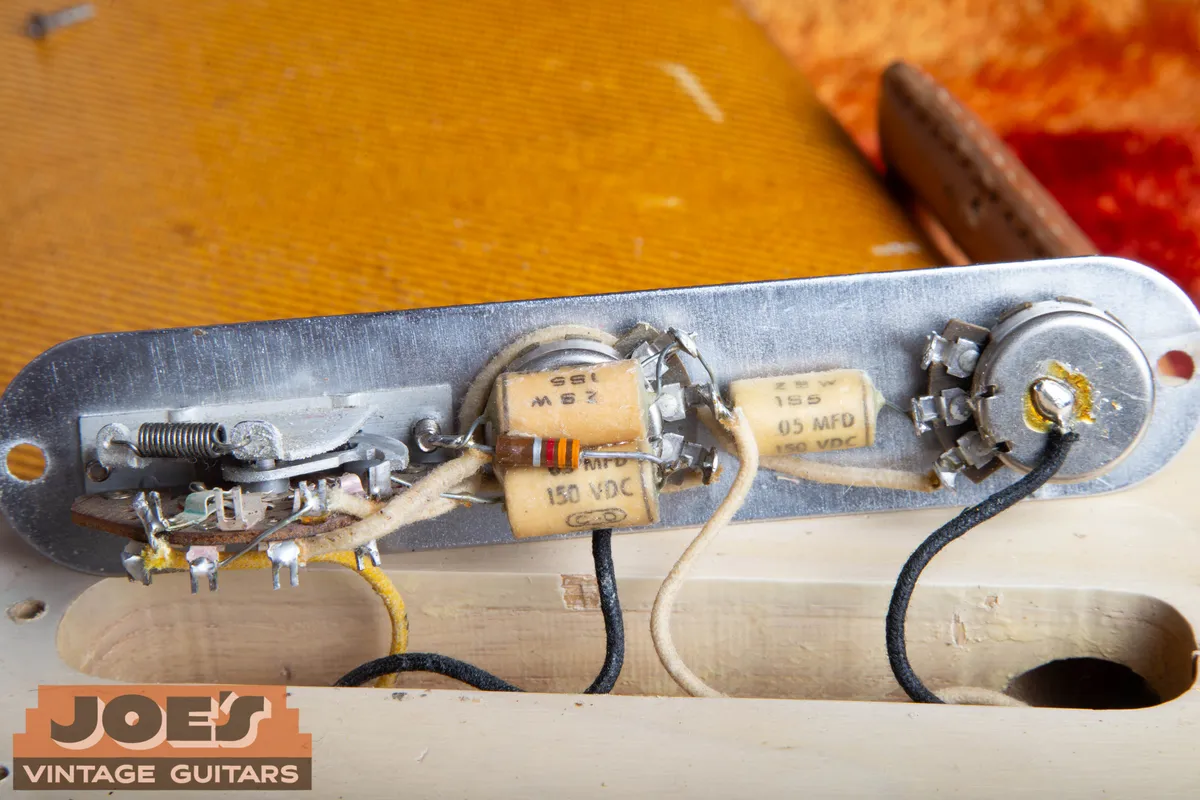
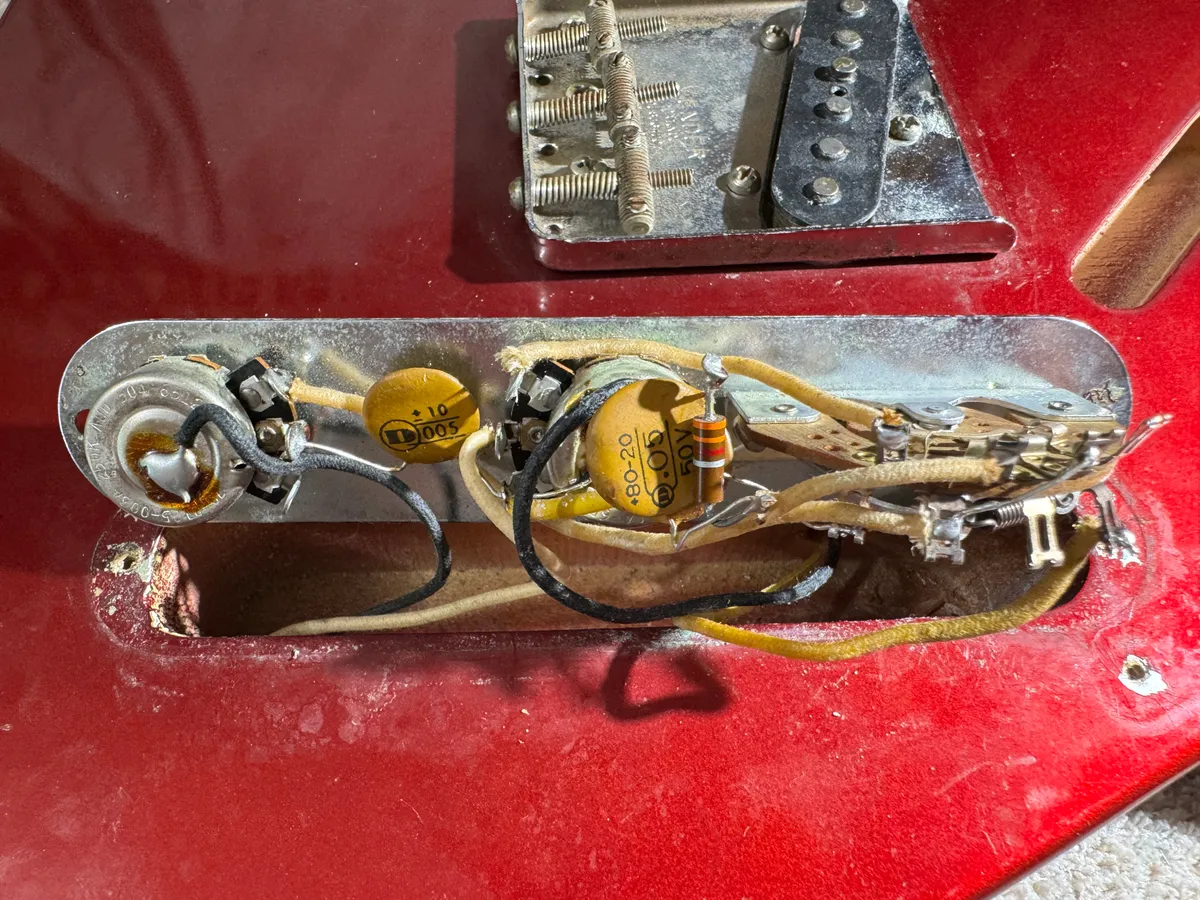
These photographs are useful visual checkpoints, but a photo never authenticates a guitar by itself. Finish claims, dates, parts, and the factory one-pickup configuration still need to be examined together.
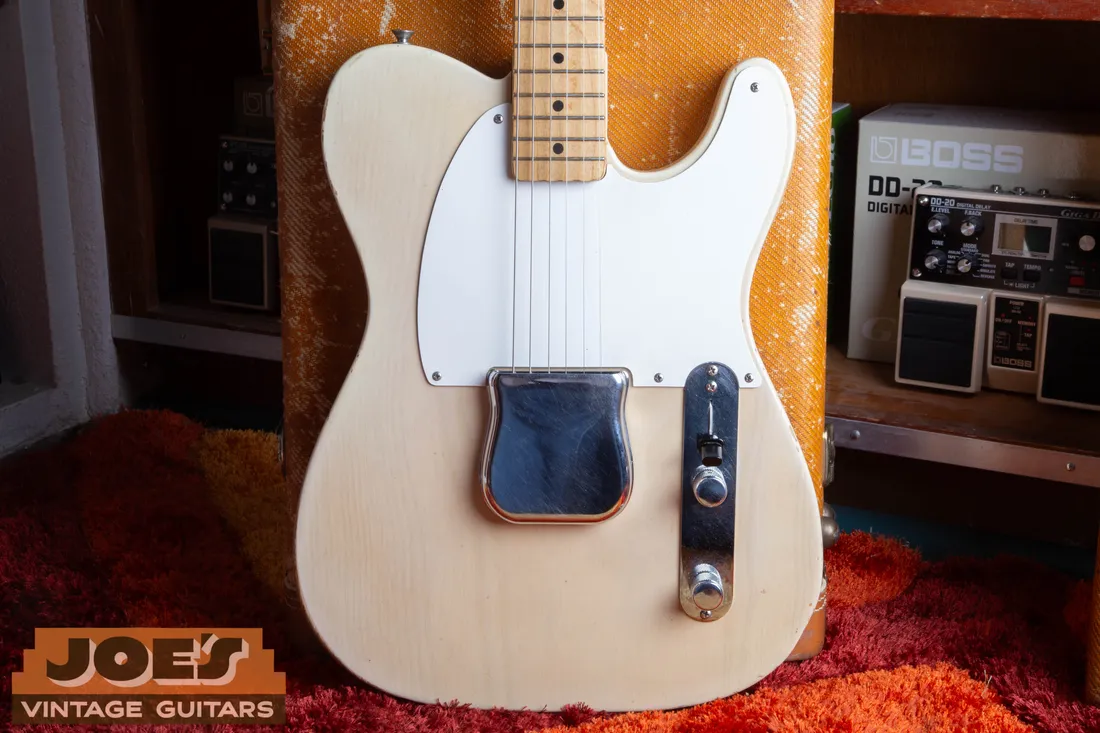
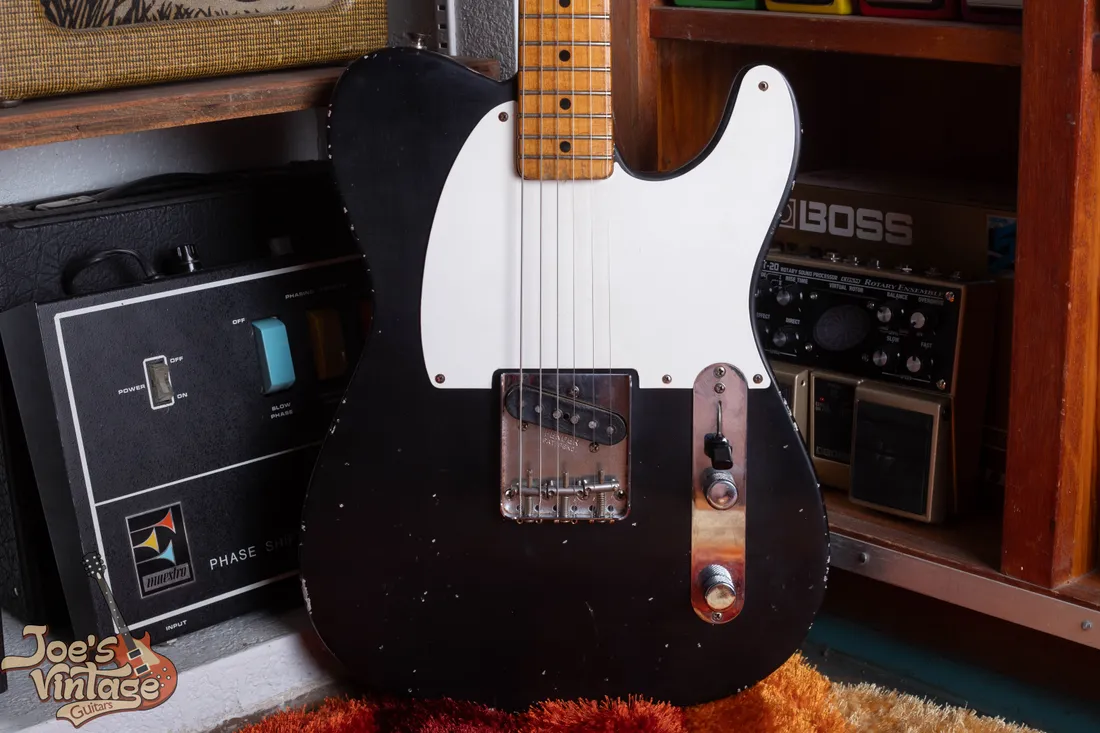
A blank guard is easy to install. Look for a correct Esquire decal, age-consistent finish, the proper wiring layout and parts, untouched solder, matching dates, and the absence of unexplained alteration.
Many factory Esquire bodies have a neck-pickup route under the guard. Fender could use the same body platform for both models, so the route alone neither proves nor disproves factory Esquire identity.
Compare the serial number, neck and body dates, pot codes, pickup construction, logo, bridge, tuners, pickguard, and finish. Start with the Fender serial-number guideand the Telecaster and Esquire dating guide.
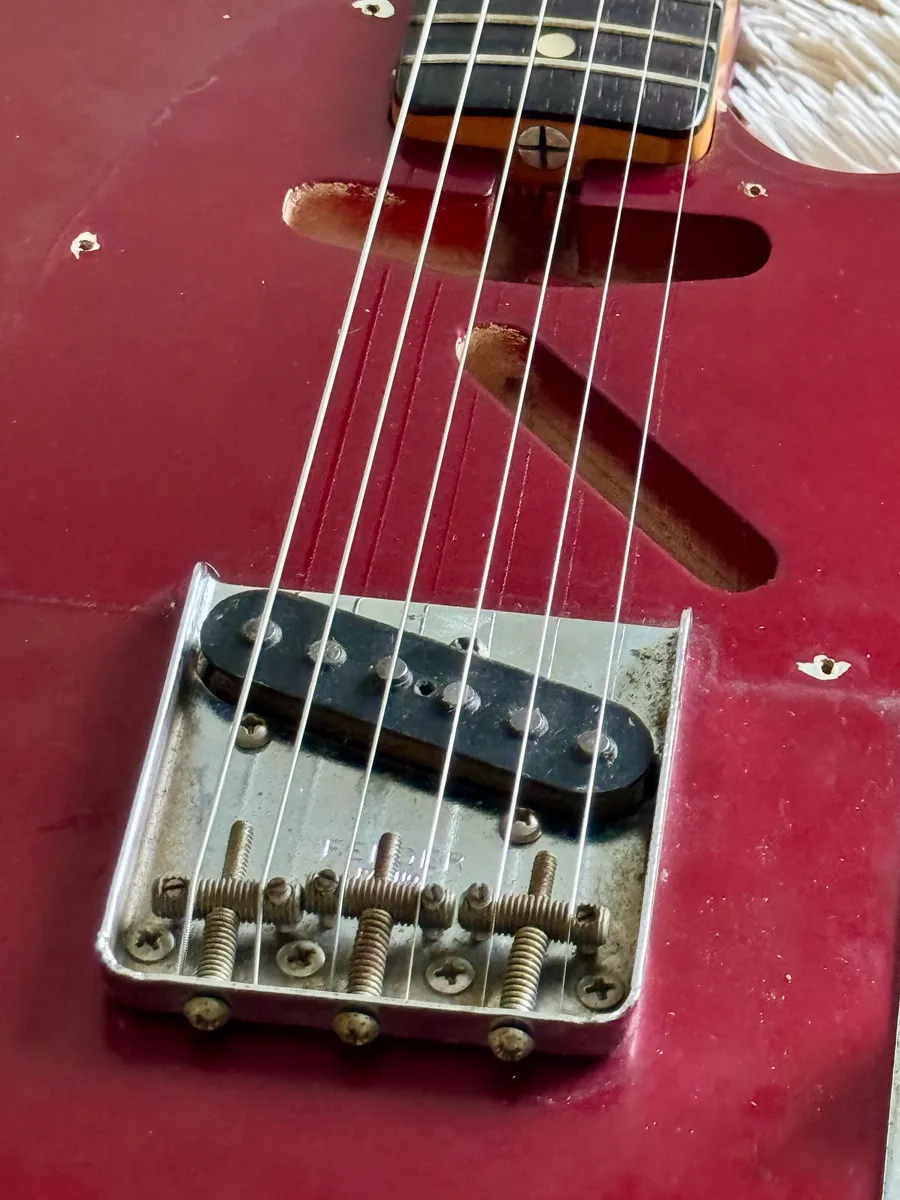
A Frequently Misread Detail
Fender could prepare the same basic body platform for either an Esquire or a Telecaster. Finding an unused neck-pickup route under a blank guard therefore does not automatically mean someone removed a Telecaster pickup.
The route must be read with the decal, original circuit, solder, screw holes, finish, dates, and provenance. An added route, disturbed wiring, or unexplained extra holes can still indicate a conversion or later modification.
One Guitar, Multiple Checkpoints
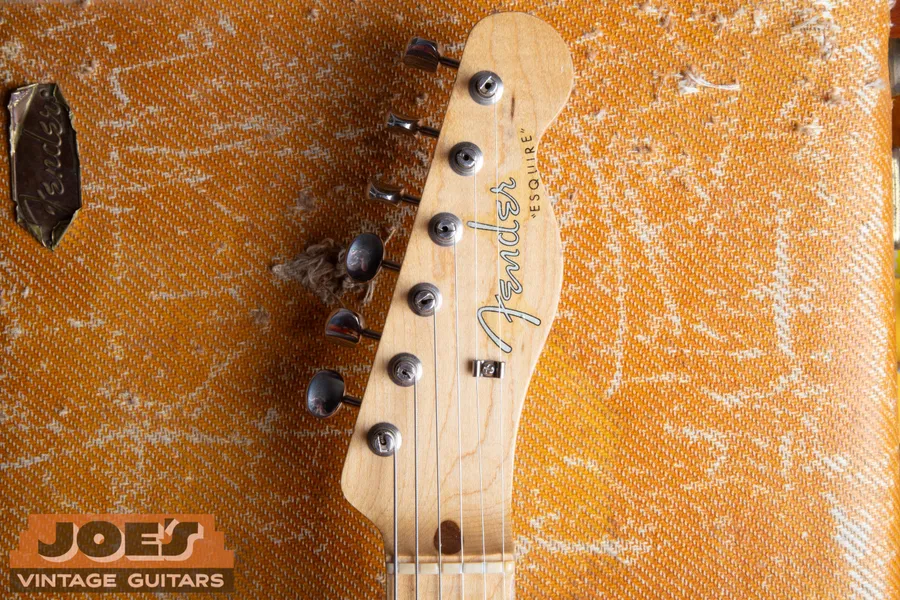
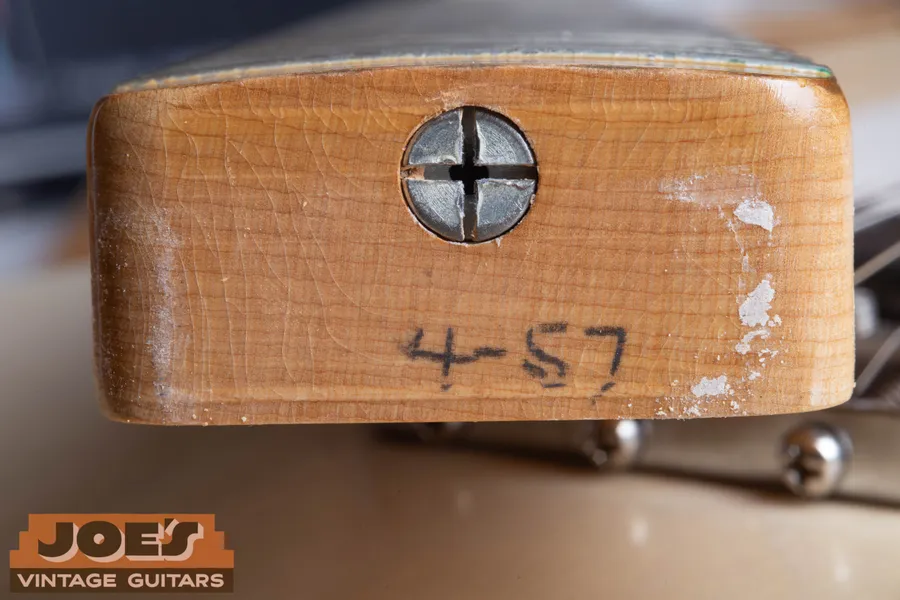
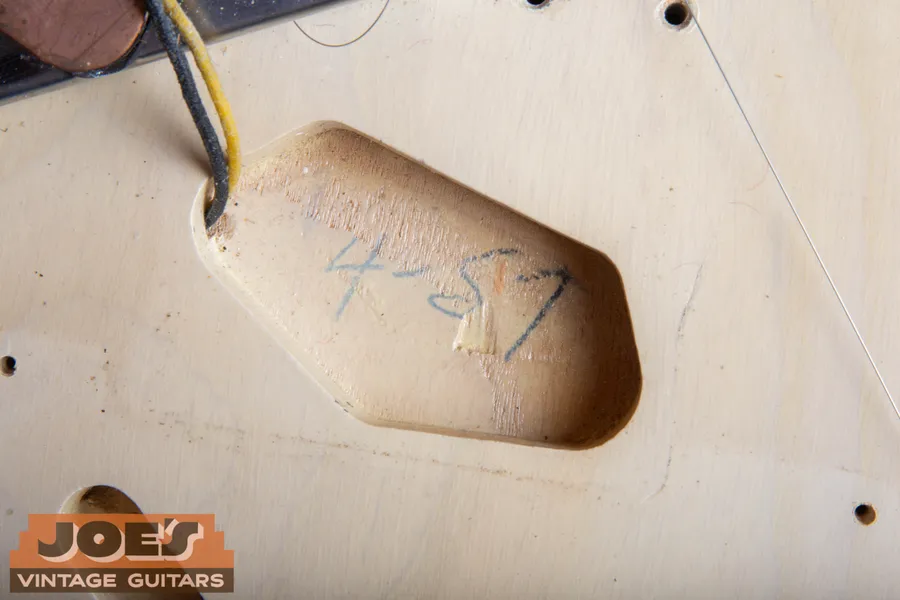
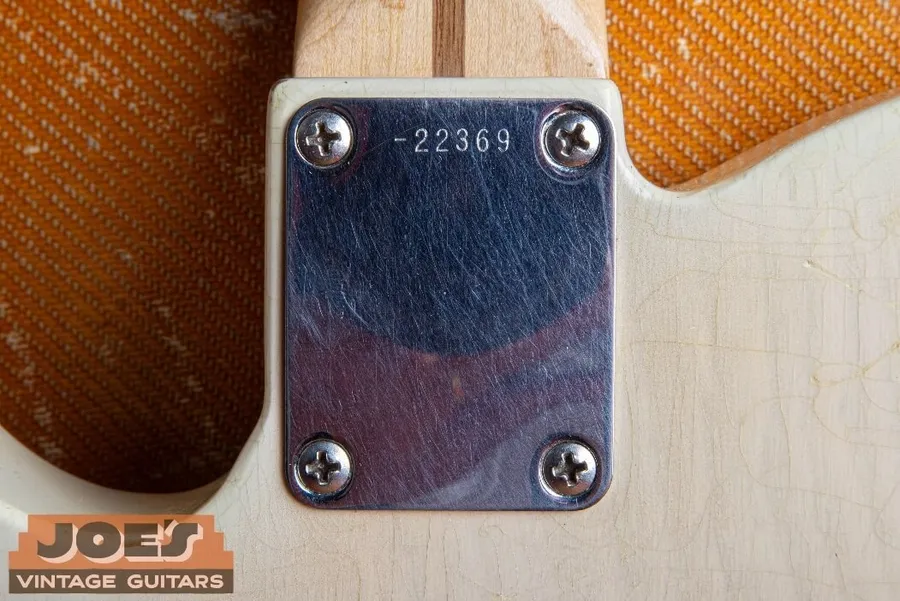
No single photograph proves the year or factory model. On this 1957 blonde Esquire, the model decal, April neck date, body-pocket markings, serial plate, wiring, hardware, and finish can be evaluated as one evidence trail. That agreement is what makes an attribution persuasive.
Conversion Warning
Removing a neck pickup, installing a blank guard, or rewiring the switch can create a convincing Esquire-style guitar. It does not change the guitar's factory model. A conversion should be described and priced as the underlying Telecaster with its modifications, not from the Esquire table above.
If the model identity is uncertain, begin with exterior photographs. Do not disturb old solder or remove the neck simply to satisfy a listing description.
A Telecaster converted to one-pickup operation is not valued as a factory Esquire. The decal, original wiring, solder joints, pickguard, parts, dates, and finish all need to agree.
Blonde was standard. A verified factory custom color can be worth more, but a refinish usually cuts the value sharply. Appearance alone cannot establish a custom color.
The bridge pickup, pots, switch, capacitor network, cloth wire, and untouched solder matter. A working modern Esquire circuit is not proof of a factory Esquire.
The guard, saddles, bridge, tuners, logo, neck construction, serial location, and dated parts should fit the claimed year. Use the Telecaster year guides for shared hardware details.
Honest playing wear is normal. Added routes, extra holes, overspray, body sanding, broken wood, and poorly repaired damage have a much larger effect than ordinary checking or a clean refret.
A correct original case, receipts, photographs, and a clear ownership history can support the upper end of the range when the guitar itself is already original and correctly identified.

Have a vintage guitar to sell or a question? I’m here to help.