
Early Decal
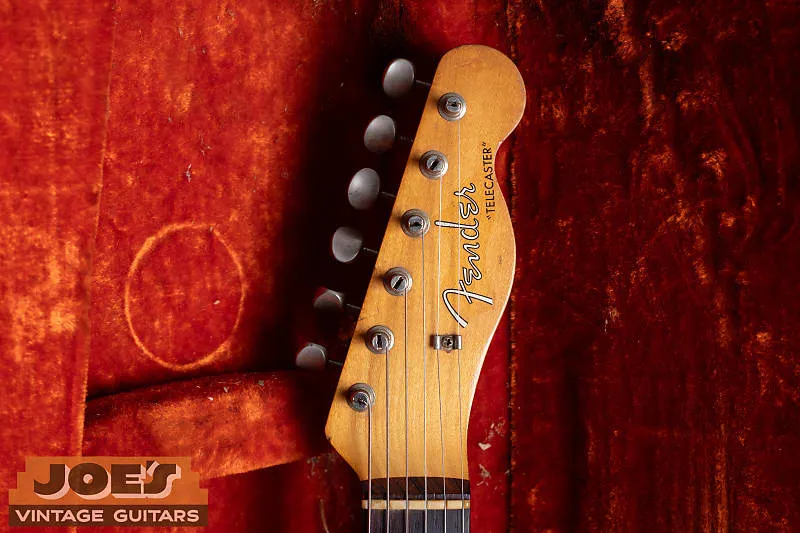
Earlier 1961 headstocks retain the silver spaghetti logo without patent numbers under the model name.
Current values, factory features, and the evidence that separates a real 1961 Fender Telecaster from a mixed or modified guitar.
The short answer
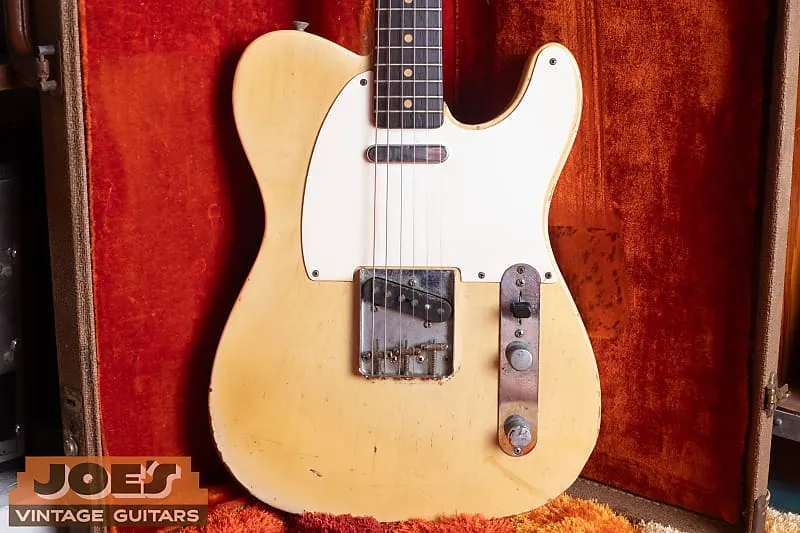
An excellent, all-original 1961 Fender Telecaster with its original case is generally worth about $22,000 to $32,000 in blonde. A verified original custom-color example can bring roughly $60,000 to $80,000.
The slab-board whiteguard specification continues through 1961. Late in the year, a block of three patent numbers appears under the Telecaster model name for the first time, creating the most useful outside transition.
The patent block helps separate late guitars, but an earlier no-patent decal can also be correct. Date the neck first, then read the logo, board, bridge, pots, pickups, and solder around it.
2026 market estimate
Start with the correct range, then adjust for what is actually present. These are retail-value estimates, not automatic cash offers or insurance replacement values. The headline range assumes a blonde example unless a custom-color range is stated.
| Condition and originality | Estimated value | How to use it |
|---|---|---|
| Excellent and all original | $22,000 to $32,000 | The headline blonde range, assuming the original case and a coherent, authenticated guitar. |
| Very good and largely original | $17,000 to $29,000 | About 75% to 90% of the excellent range. Honest play wear, normal checking, or a professional refret can fit here when the original finish and major parts remain intact. |
| Professional refinish | $10,000 to $19,000 | About 45% to 60% of a comparable original. The remaining original parts, quality of the work, sanding, extra routes, and changed wood determine the final deduction. |
| Major parts mismatch | Value component by component | A replacement neck or body, extra routes, mixed-year parts, or uncertain provenance prevents a dependable whole-guitar comparison. |
Year-specific evidence
Start with this year-specific visual checkpoint: Three patent numbers appear under the model name late in the year. That narrows the production window; it does not authenticate the guitar by itself. The strongest conclusion comes from several independent details agreeing.
Earlier 1961 headstocks retain the silver spaghetti logo without patent numbers under the model name.
Late in the year, three patent numbers appear beneath Telecaster for the first time.
The thick rosewood board with clay dots remains standard throughout the year.
String-through construction, threaded saddles, and the single-ply white guard continue.
For the full chronology, use the Fender Telecaster dating guide. Then compare component evidence with the Fender serial number guide, neck-date guide, pickup-date guide, and pot-code guide.
Before you set a price
Do not remove a neck, pickup, bridge, or pickguard unless you know how to do it safely. Clear photos of the front, back, headstock, serial, case, and any visible repairs are enough to begin a free appraisal.
Worked example
A late-1961 Telecaster with the correct three-number patent block, slab board, original blonde finish, and matching components supports the full range. An early no-patent decal is not a deduction when the neck date agrees.
This is an illustrative appraisal using the real guitars and details pictured on this site, not a claimed public sale record. I first place the guitar in the correct model, year, finish, and specification, then adjust for originality, condition, repairs, case, and provenance.
Asking prices can show seller expectations, but completed comparable sales and firsthand inspection carry more weight. Read the main Telecaster price table and change-and-deduction guide before applying a headline number.
Selling a 1961 Telecaster? See how to sell a vintage Fender directly to Joe. You can also compare the same year's 1961 Fender Stratocaster value guide.

Have a vintage guitar to sell or a question? I’m here to help.