
Broadcaster
Fender’s first two-pickup solid-body electric carried the Broadcaster name in 1950. Only about 200 were made before Gretsch objected to the name, making surviving original examples exceptionally scarce.
Current values by year for Broadcasters, Nocasters, Telecasters, and Esquires, plus the details that move the price.
1950 to 1968 Price Guide
Vintage Fender Telecaster values span an unusually wide market. An all-original later CBS example may sit in the high four figures, while a clean Broadcaster, Nocaster, or rare original custom-color Telecaster can reach well into six figures. The name on the headstock matters, but the year, finish, parts, condition, and evidence of originality decide where an individual guitar belongs.
Know the serial number but not the year? Start with the Fender serial-number lookup and dating guide, then return to the matching year below. This price guide covers vintage Telecasters from 1950 through 1968; later and modern instruments should not be priced from these ranges.
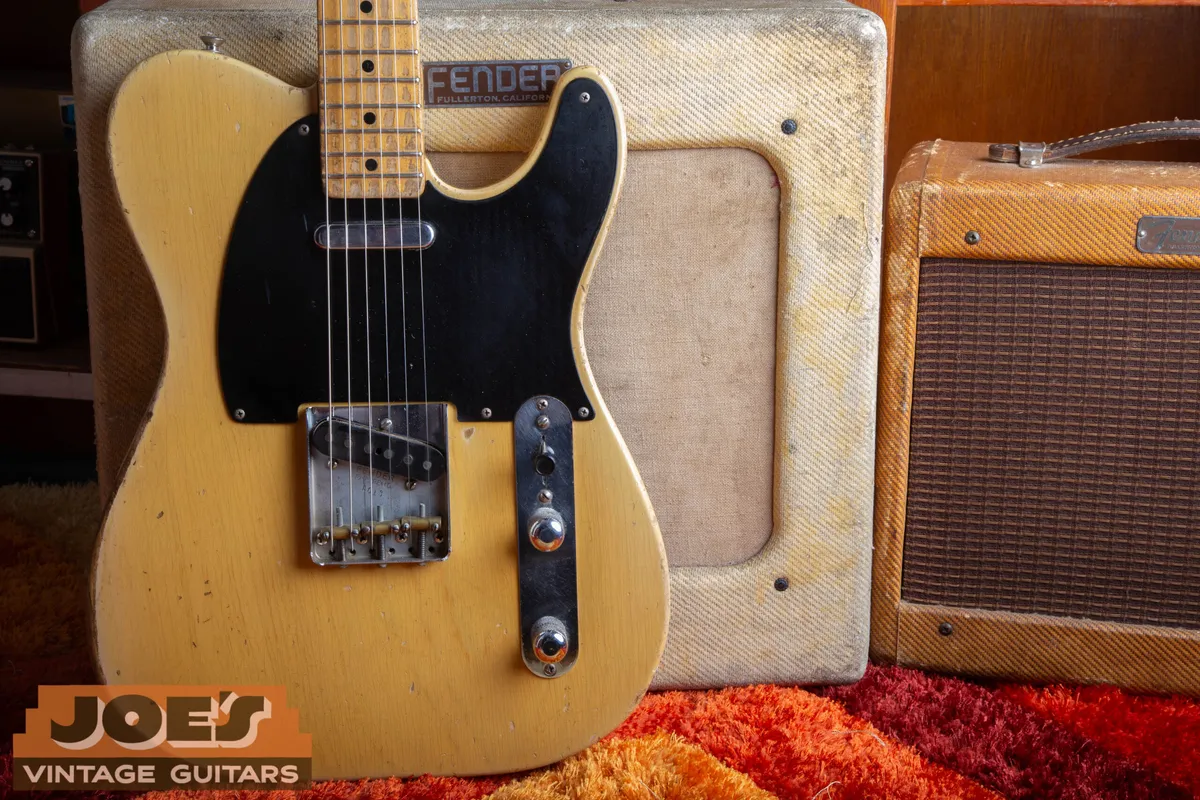
These instruments share the same basic family, but collectors do not price every name the same way. The short Broadcaster and Nocaster periods are the rarest, while the Esquire uses one pickup instead of the Telecaster’s two.
Fender’s first two-pickup solid-body electric carried the Broadcaster name in 1950. Only about 200 were made before Gretsch objected to the name, making surviving original examples exceptionally scarce.
In early 1951 Fender clipped the model name from the decal and shipped guitars marked only ‘Fender.’ Collectors call these transitional instruments Nocasters. The short production window is a major part of their value.
Fender settled on the Telecaster name later in 1951. The earliest examples have black phenolic pickguards and are known as blackguards. White pickguards arrived during 1954.
An Esquire uses the same basic platform with one pickup instead of two. It is still a serious vintage Fender collectible and is usually worth about 75% of a same-year, same-color Telecaster.
These price ranges are for all-original guitars in excellent condition with the original case. A guitar with a refinish, changed parts, repairs, or heavy damage should not be priced from the top of the range. Custom-color values apply only to verified original finishes. Read the Fender custom-color authentication guide before paying a color premium. An Esquire is typically worth about 75% of a same-year, same-color Telecaster; see the complete Esquire value guide. Market reviewed September 2026.
| Model and Year | Value | Detailed Guides |
|---|---|---|
| Broadcaster (1950) | $90,000 to $175,000 | 1950 Broadcaster value |
| Esquire (1950) | Individual appraisal required | Esquire value guide |
| Nocaster (1951) | $65,000 to $110,000 | 1951 Nocaster value |
| Telecaster (1951) | $45,000 to $75,000 | 1951 Telecaster value |
| Esquire (1951, blonde) | $34,000 to $56,500 | Esquire value guide |
| Telecaster (1952 to 1953) | $40,000 to $60,000 | 1952 Telecaster value1953 Telecaster value |
| Esquire (1952 to 1953, blonde) | $30,000 to $45,000 | Esquire value guide |
| Telecaster (1954, black pickguard) | $40,000 to $60,000 | 1954 Telecaster value |
| Esquire (1954, black pickguard) | $30,000 to $45,000 | Esquire value guide |
| Telecaster (1954, white pickguard) | $40,000 to $50,000 | 1954 Telecaster value |
| Esquire (1954, white pickguard) | $30,000 to $37,500 | Esquire value guide |
| Telecaster (1955 to 1957) | $38,000 to $50,000 | 1955 Telecaster value1956 Telecaster value1957 Telecaster value |
| Esquire (1955 to 1957, blonde) | $28,500 to $37,500 | Esquire value guide |
| Telecaster (1958 to 1959, blonde) | $25,000 to $35,000 | 1958 Telecaster value1959 Telecaster value |
| Esquire (1958 to 1959, blonde) | $19,000 to $26,500 | Esquire value guide |
| Telecaster (1958 to 1959, custom color) | $80,000 to $100,000 | 1958 Telecaster value1959 Telecaster value |
| Telecaster (1960 to 1962, blonde) | $22,000 to $32,000 | 1960 Telecaster value1961 Telecaster value1962 Telecaster value |
| Esquire (1960 to 1962, blonde) | $16,500 to $24,000 | Esquire value guide |
| Telecaster (1960 to 1962, custom color) | $60,000 to $80,000 | 1960 Telecaster value1961 Telecaster value1962 Telecaster value |
| Telecaster (1963 to 1964, blonde) | $15,000 to $25,000 | 1963 Telecaster value1964 Telecaster value |
| Esquire (1963 to 1964, blonde) | $11,500 to $19,000 | Esquire value guide |
| Telecaster (1963 to 1964, custom color) | $40,000 to $65,000 | 1963 Telecaster value1964 Telecaster value |
| Telecaster (1965 to 1968, blonde) | $9,000 to $22,000 | 1965 Telecaster value1966, 1967 and 1968 Telecaster value |
| Esquire (1965 to 1968, blonde) | $7,000 to $16,500 | Esquire value guide |
| Telecaster (1965 to 1968, custom color) | $15,000 to $35,000 | 1965 Telecaster value1966, 1967 and 1968 Telecaster value |
A useful appraisal starts with the table, but it does not stop there. Two Telecasters from the same year can sell for very different amounts when one has its original finish and electronics and the other has been refinished or routed.
Broadcasters, Nocasters, and early blackguard Telecasters lead the market. Values generally step down as production increases and the guitar moves into the later 1950s and CBS years.
Blonde was the standard finish. A verified original custom color can bring a large premium, while a refinish usually puts the guitar near half the value of a comparable original-finish example.
Pickups, bridge, saddles, tuners, pickguard, pots, switch, knobs, and wiring all matter. One changed part does not make the guitar worthless, but every change should be identified before a price is assigned.
Honest play wear is normal and can be attractive to collectors. Breaks, added routes, overspray, severe corrosion, or poorly repaired damage have a much larger effect than ordinary checking and edge wear.
The serial number is only one clue. Neck and body dates, pot codes, pickup construction, pickguard material, bridge details, logo, and tuners should agree with the claimed year.
The correct original case, hang tags, receipts, photographs, and a clear ownership history can support the top of a range. They help most when the guitar itself is already clean and original.
There is no honest universal deduction for every replaced screw or worn fret. The importance of a change depends on whether it is reversible, whether original wood or finish was removed, and whether the original part stays with the guitar. This table gives the right direction without pretending every guitar is identical.
| Change | Typical Effect | What to Know |
|---|---|---|
| Refinished Body or Neck | Major | A refinish usually places the guitar near half the value of a comparable original-finish example. Overspray and touch-up work need a separate evaluation. |
| Changed Pickups or Electronics | Moderate to Major | Original pickups and untouched solder joints are important. Correct period replacements help, but they are not valued the same as factory-installed parts. |
| Changed Tuners or Bridge Parts | Moderate | The effect depends on what was changed and whether new holes were drilled. Keeping the removed original parts with the guitar helps. |
| Professional Refret | Usually Limited | A well-executed refret is generally less damaging to value than a refinish, route, or broken headstock. Poor work and an altered fingerboard are different matters. |
| Added Body Routes | Major | Routing the body for another pickup or control is permanent woodwork. Even if the original hardware survives, the alteration materially reduces collector value. |
| Missing Original Case | Limited to Moderate | A missing case does not change the guitar itself, but it can keep an otherwise exceptional example from reaching the top of the range. |
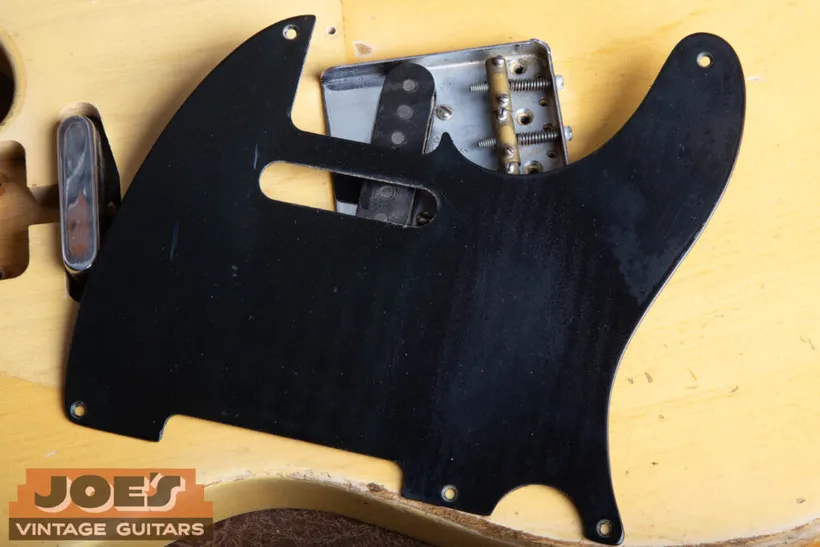
The easiest visible clues are the pickguard, fingerboard, bridge, and serial-number location. These three original guitars show how quickly the look changed from an early blackguard to the late 1950s whiteguard period and the rosewood-board years.
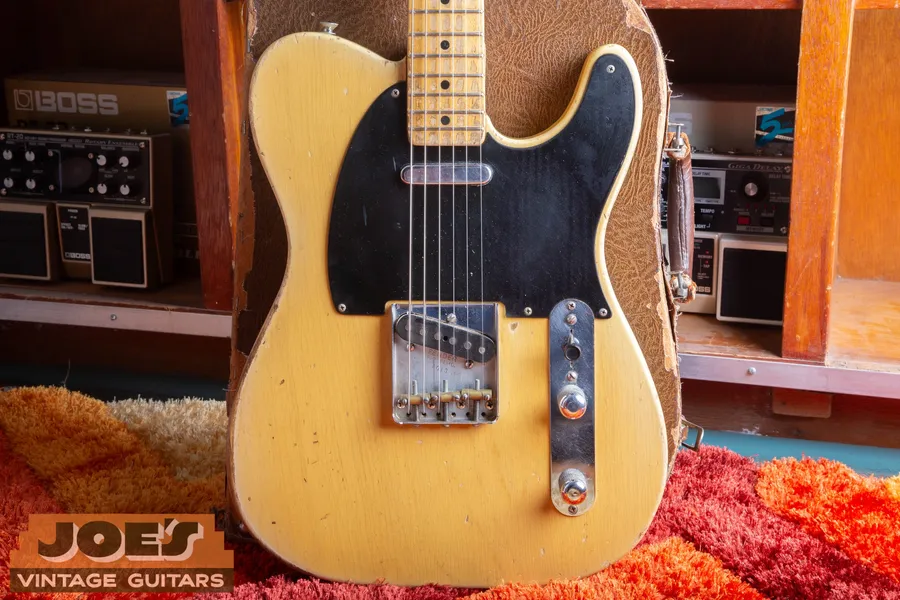
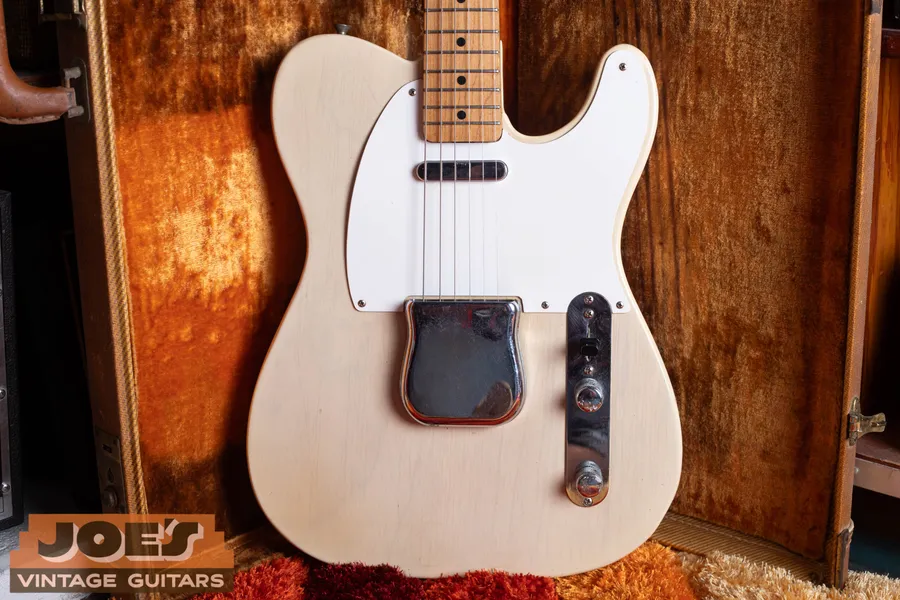
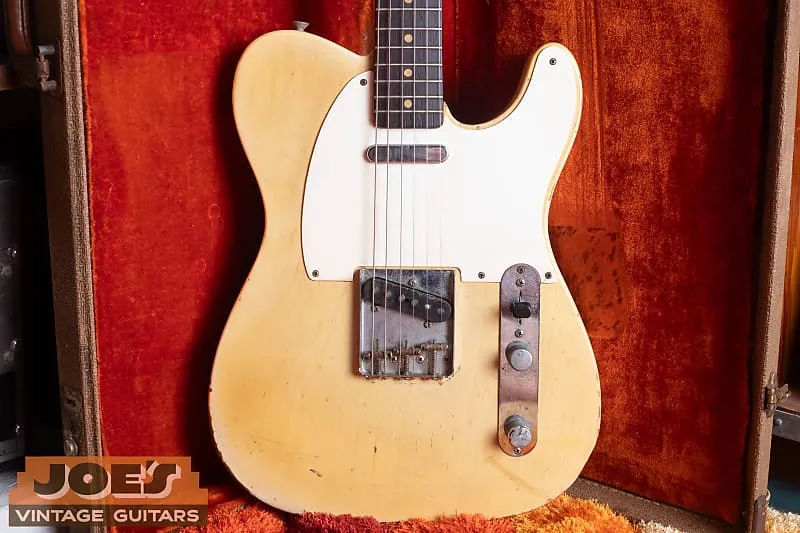
A black guard points to 1950 through about the summer of 1954. A white guard follows, and a top-loading bridge with strings anchored at the rear of the plate generally points to the mid-1958 through 1959 window, although documented overlap can continue into early 1960. The fingerboard, saddles, string tree, tuners, logo, and patent numbers narrow the period further. Work through the Fender Telecaster dating guide for a year-by-year comparison.
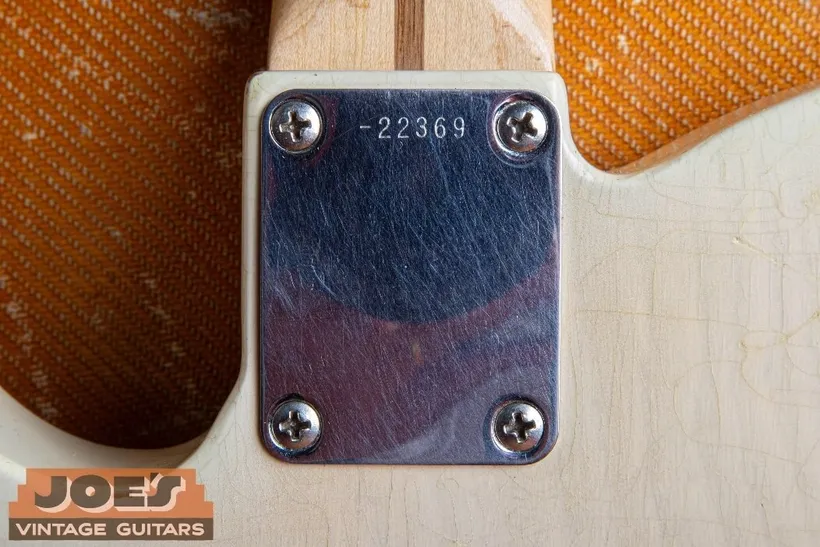
Early serial numbers appear on the bridge plate, later numbers move to the neck plate, L-series plates span the pre-CBS transition, and the large F plate arrives in 1965. A plate can move from one guitar to another, so the number should agree with the rest of the instrument. Check its format and location in the Fender serial number guide.
Neck and body dates, pot codes, pickup construction, solder joints, finish wear, and hidden paint edges can confirm or challenge the visible story. If a custom color is claimed, compare the undercoat, nail holes, routes, neck pocket, and aging patterns before assigning the premium.
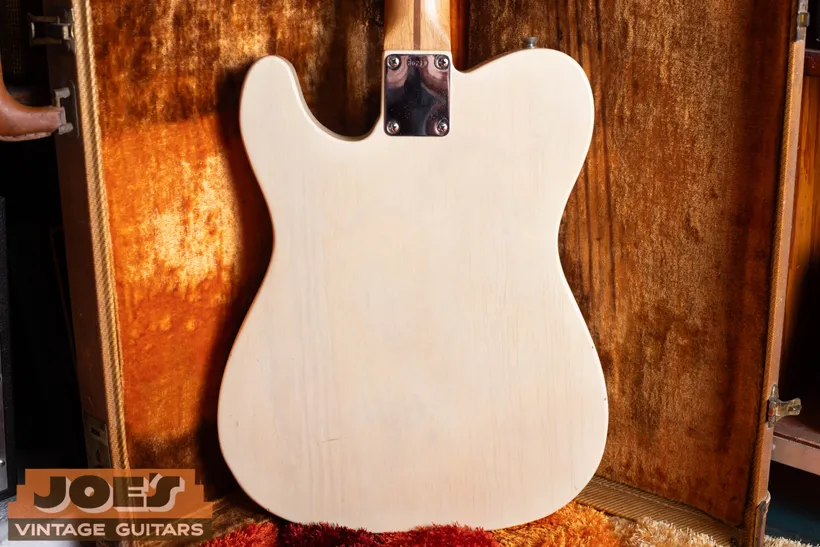
Good photos make the first estimate faster and more accurate. Use indirect daylight, fill the frame, and do not hide wear or changed parts. A phone camera is fine when the image is sharp.
Know What You Have
Send the photos you already have. I’ll identify the next details that matter and give you a realistic value range before you decide whether to keep, insure, consign, or sell the guitar.
Request a Free AppraisalCall or text (602) 900-6635Put the photography, authentication, listing, insurance, and buyer conversations in experienced hands. I offer vintage guitar consignment from as low as 8% on top-tier instruments.
Choose a direct sale when speed and simplicity matter. I make an up-front offer and can help with insured shipping or pickup. Sell your Fender guitar directly to me.
A private sale can bring a retail-level price, but the seller handles authentication, payment risk, insurance, packing, shipping, returns, and buyer questions. Photograph and document the guitar before it leaves.

Have a vintage guitar to sell or a question? I’m here to help.